
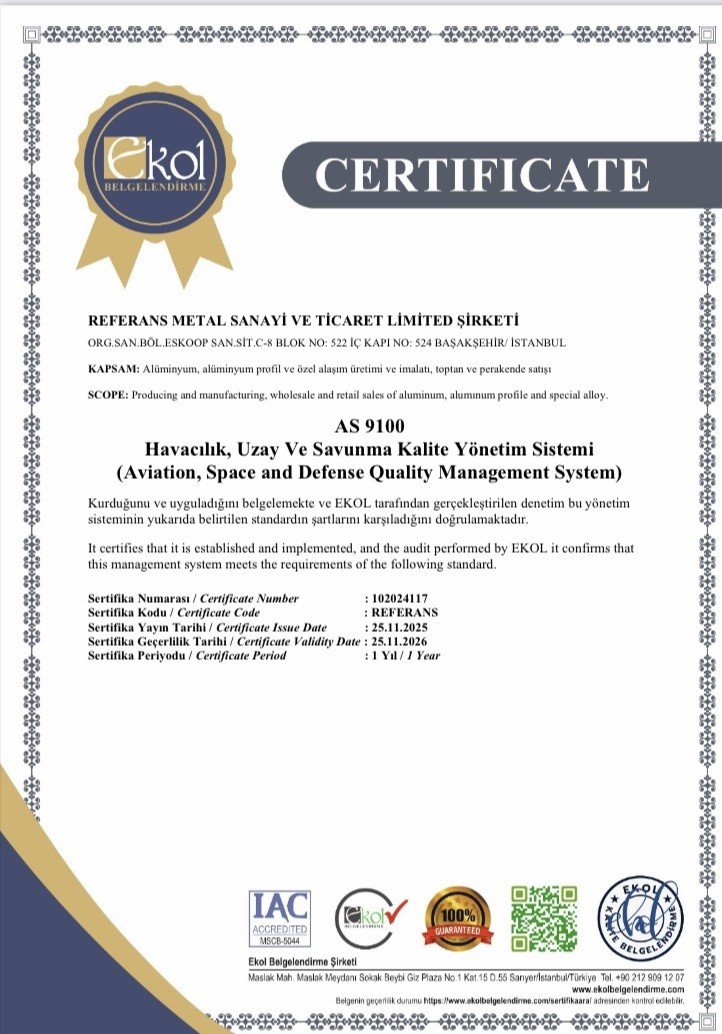
 AS 9100
 SPACE 2009
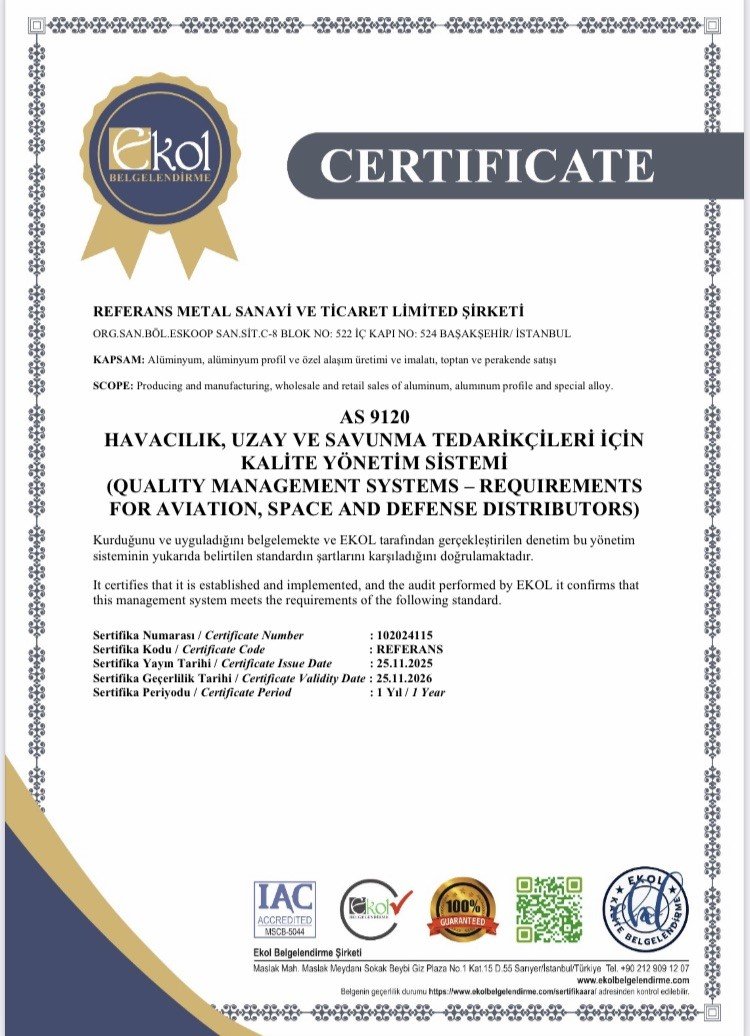 AS 9120




Plates
Sheets
Rod/Round Bar/Flat Bar
Tube/Extrusions/Profile
2219
AMS QQ-A-250/30 / AlCu6Mn / 2219 / T87
| Chemical Properties | % Value |
| Silicon (Si) | 0,00 - 0,20 |
| Manganese (Mn) | 0,20 - 0,40 |
| Magnesium (Mg) | 0,00 - 0,02 |
| Copper (Cu) | 5,80 - 6,80 |
| Titanium (Ti) | 0,02 - 0,25 |
| Iron (Fe) | 0,00 - 0,30 |
| Zinc (Zn) | 0,00 - 0,10 |
| Aluminium (Al) | Balance |
| Physical Properties | Value |
| Density | 2.85 g/cm³ |
| Melting Point | 543 °C |
| Thermal Expansion | 22.3 µm/m-°C |
| Modulus of Elasticity | 73.1 GPa |
| Thermal Conductivity | 120 W/m.K |
| Electrical Resistivity | 29% IACS |
| Mechanical Properties | Value |
| Proof Strength | 390 MPa |
| Yield Strength | 480 MPa |
| Shear Strength | 280 MPa |
| Elongation A50 mm | 7% |
| Hardness | 130 HB |
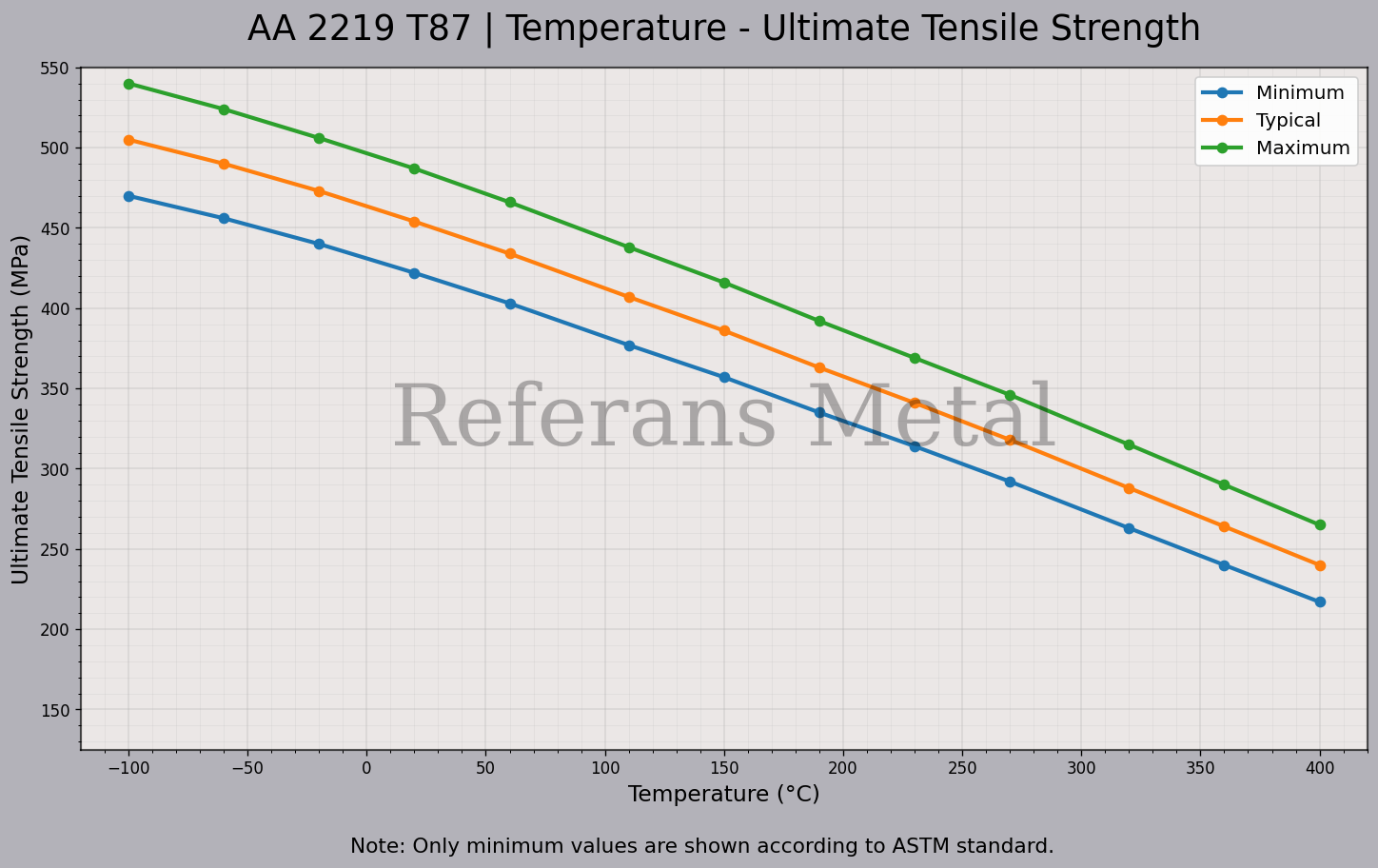
| 2219 T87 Temperature – Ultimate Tensile Strength Graph |
 |
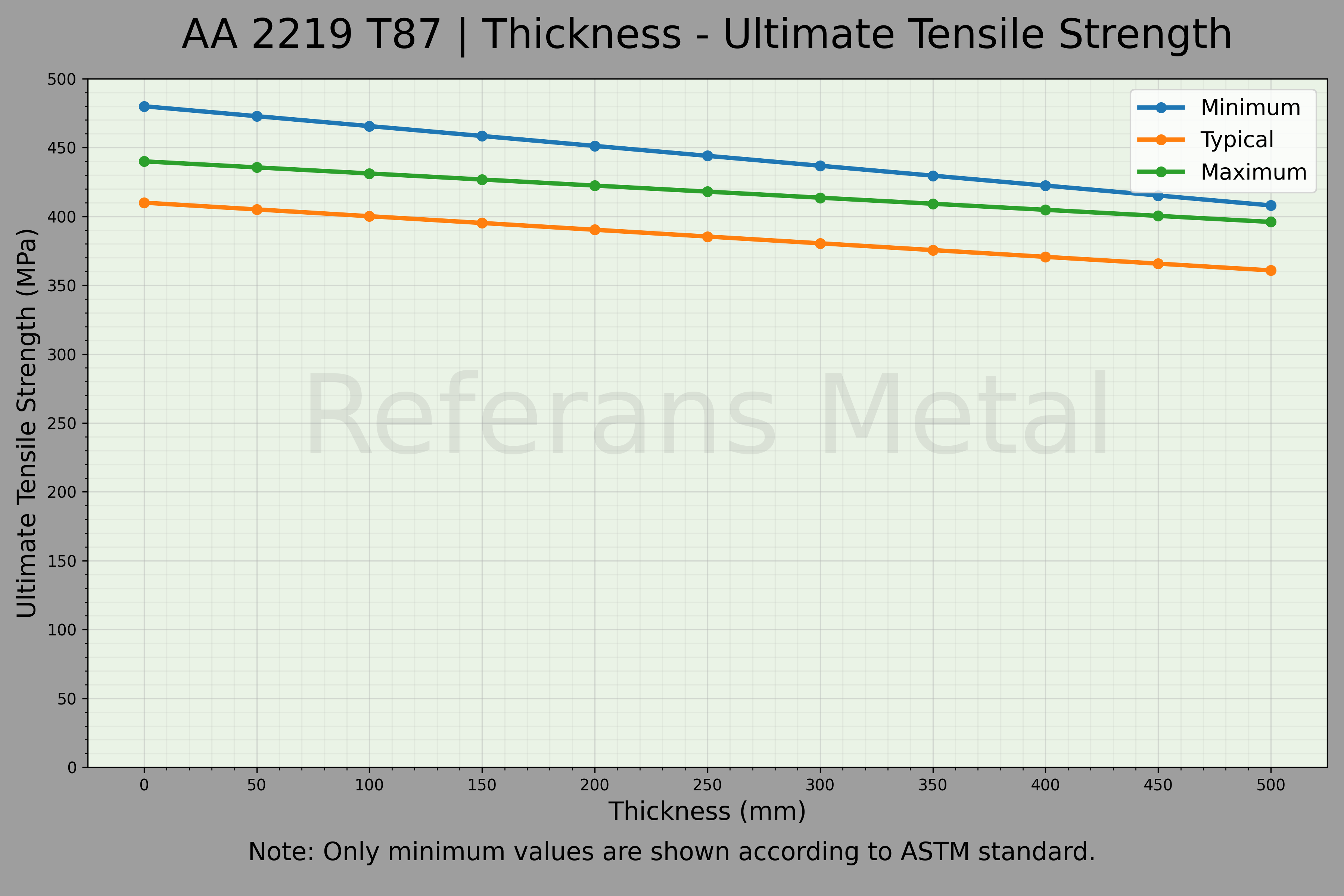
| 2219 T87 Thickness – Ultimate Tensile Strength Graph |
 |
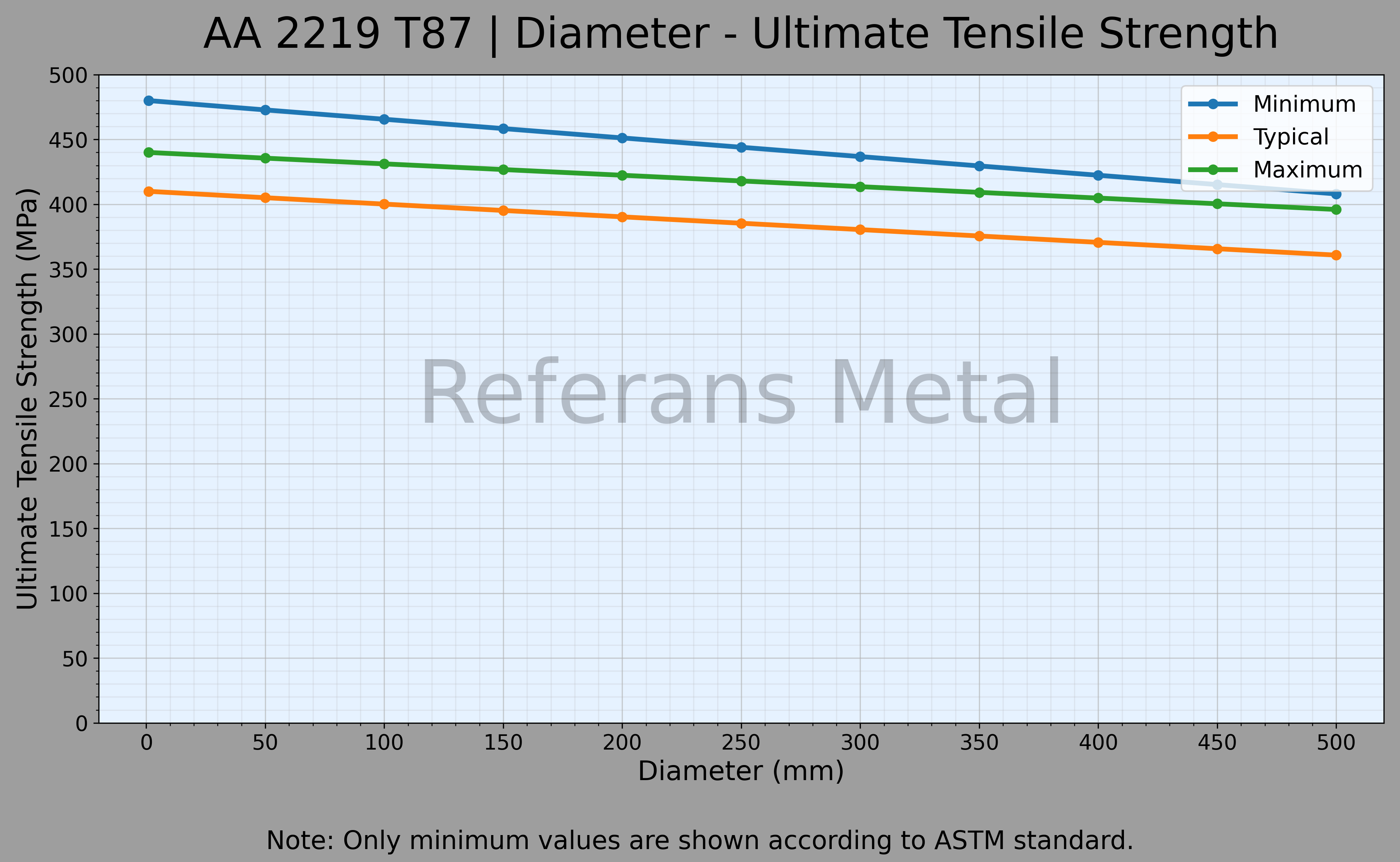
| 2219 T87 Diameter – Ultimate Tensile Strength Graph |
 |
2219 T87 aluminum alloy stands out with its high-temperature strength and excellent mechanical properties, making it especially preferred in aerospace applications. This alloy is solution heat-treated, cold worked, and artificially aged in the T87 temper condition. Thanks to this, it provides high yield and tensile strength while maintaining its mechanical properties even at elevated temperatures. Alloy 2219 is widely used in cryogenic tanks, rocket fuel systems, and structural components of spacecraft.
In terms of corrosion resistance, 2219 T87 alloy does not exhibit as high resistance as pure aluminum, but it offers very good performance with appropriate surface treatments and coatings. Its corrosion resistance can be improved especially by anodizing and alclad coating methods. Compared to alloy 2024, it shows similar corrosion resistance, while generally performing better than 7075 alloy. Alloy 6061, on the other hand, typically has better natural corrosion resistance, but falls behind 2219 in high-temperature performance.
Regarding strength and mechanical properties, 2219 T87 has very high strength values and stands out with its ability to maintain strength at elevated temperatures. While 7075-T6 alloy offers higher strength at room temperature, 2219 behaves more stable at high temperatures. Compared to 2024-T3 alloy, 2219 provides better high-temperature performance and better post-weld properties. These characteristics make it preferable for applications involving significant thermal loads.
In terms of machinability and bending properties, 2219 alloy has moderate machinability. In the T87 temper condition, formability is limited and forming operations are usually performed in softer tempers. Alloy 6061 is more advantageous in machinability and formability. However, 2219 performs well under vibration and has high fatigue resistance, making it suitable for aerospace applications involving dynamic loading.
In terms of weldability and coatability, 2219 alloy has one of the best weldability characteristics among aluminum alloys. Successful results are achieved especially with TIG and MIG welding methods, and post-weld strength loss is lower compared to other high-strength alloys. While 7075 alloy is generally not weldable, 2219 provides a major advantage in this regard. Its performance can be enhanced through anodizing and other surface treatments. Therefore, it is widely used in advanced engineering sectors such as defense, aerospace, space, and cryogenic systems.
MATERIAL COMPOSITION STANDARDS
The 2219 T87 alloy can comply with the following standards:
• 2219 T87 Sheet; ASTM B209, UNS A92219, ISO AlCu6Mn, AMS 4295D, MIL-A-22771
• 2219 T87 Plate; ASTM B209, UNS A92219, ISO AlCu6Mn, AMS 4295D, MIL-A-22771
Characteristic Properties of 2219 T87:
- Strength: Excellent
- Machinability: Poor
- Weldability: Very Good
- Formability: Moderate
- Corrosion Resistance: Above Average
- Heat Treatment: Yes
Common Applications of 2219 T87:
It has a wide range of uses, from camping equipment to pressurized tanks.
In landing gear and engine structures,
It is also used in high-strength welds in the aerospace sector.
STOCK
We produce/supply 2219 T87 in sheet/plate form.
- Sheet
- Plate
 Weight Calculator