
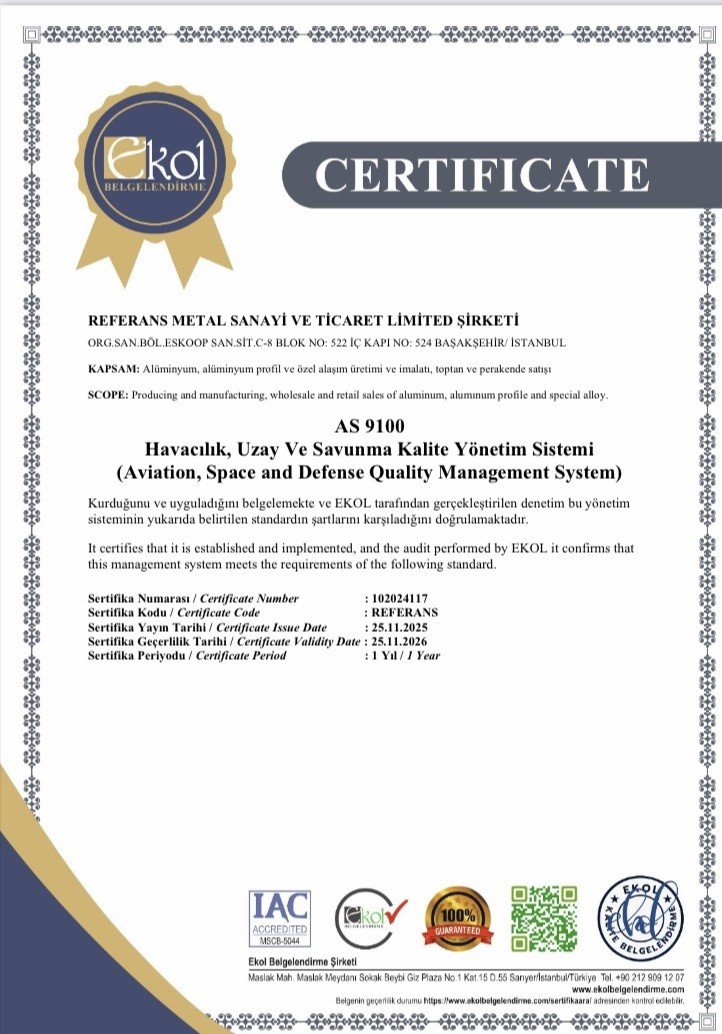
 AS 9100
 SPACE 2009
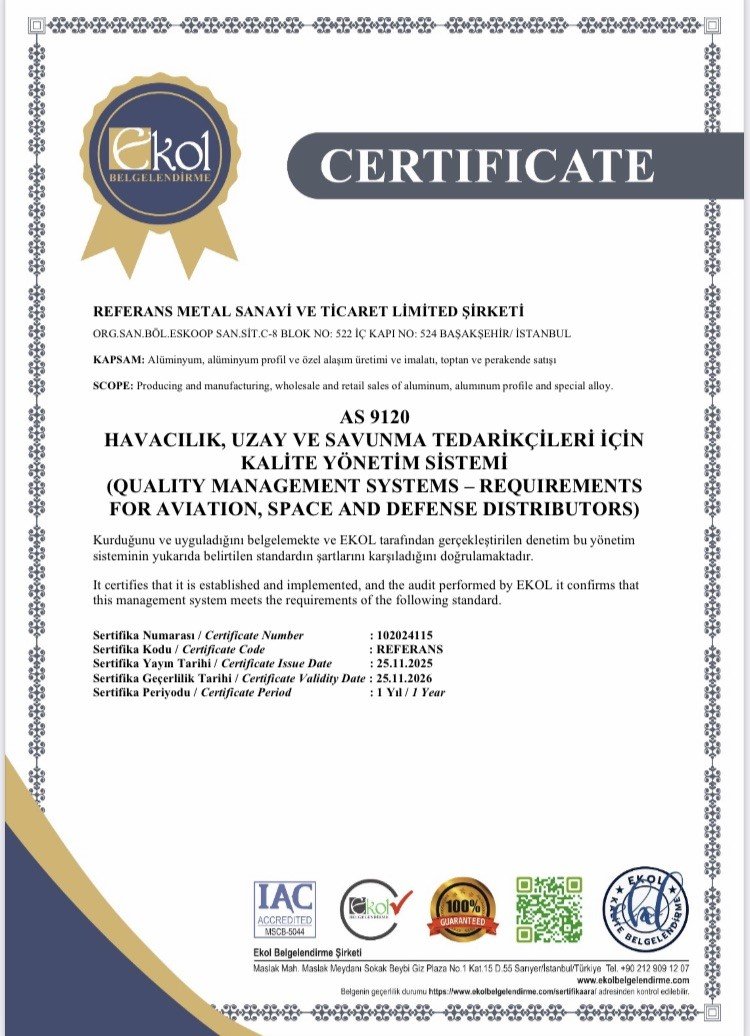 AS 9120




Plates
Sheets
Rod/Round Bar/Flat Bar
Tube/Extrusions/Profile
2030
ASTM B221 / AlCu4PbMg / 2030 / T4
| Chemical Properties | % Value |
| Silicon (Si) | 0,00 - 0,80 |
| Chromium (Cr) | 0,00 - 0,10 |
| Manganese (Mn) | 0,20 - 1,00 |
| Magnesium (Mg) | 0,50 - 1,30 |
| Copper (Cu) | 3,30 - 4,50 |
| Titanium (Ti) | 0,00 - 0,20 |
| Iron (Fe) | 0,00 - 0,70 |
| Zinc (Zn) | 0,00 - 0,50 |
| Lead (Pb) | 0,80 - 1,50 |
| Aluminium (Al) | Balance |
| Physical Properties | Value |
| Density | 2.81 g/cm³ |
| Melting Point | 520 °C |
| Thermal Expansion | 23.0 µm/m.°C |
| Modulus of Elasticity | 73 GPa |
| Thermal Conductivity | 130 W/m.K |
| Electrical Resistivity | %34 IACS |
| Mechanical Properties | Value |
| Yield Strength | 240 MPa |
| Ultimate Strength | 380 MPa |
| Shear Strength | 220 MPa |
| Elongation A50 mm | 8% |
| Hardness | 112 HB |
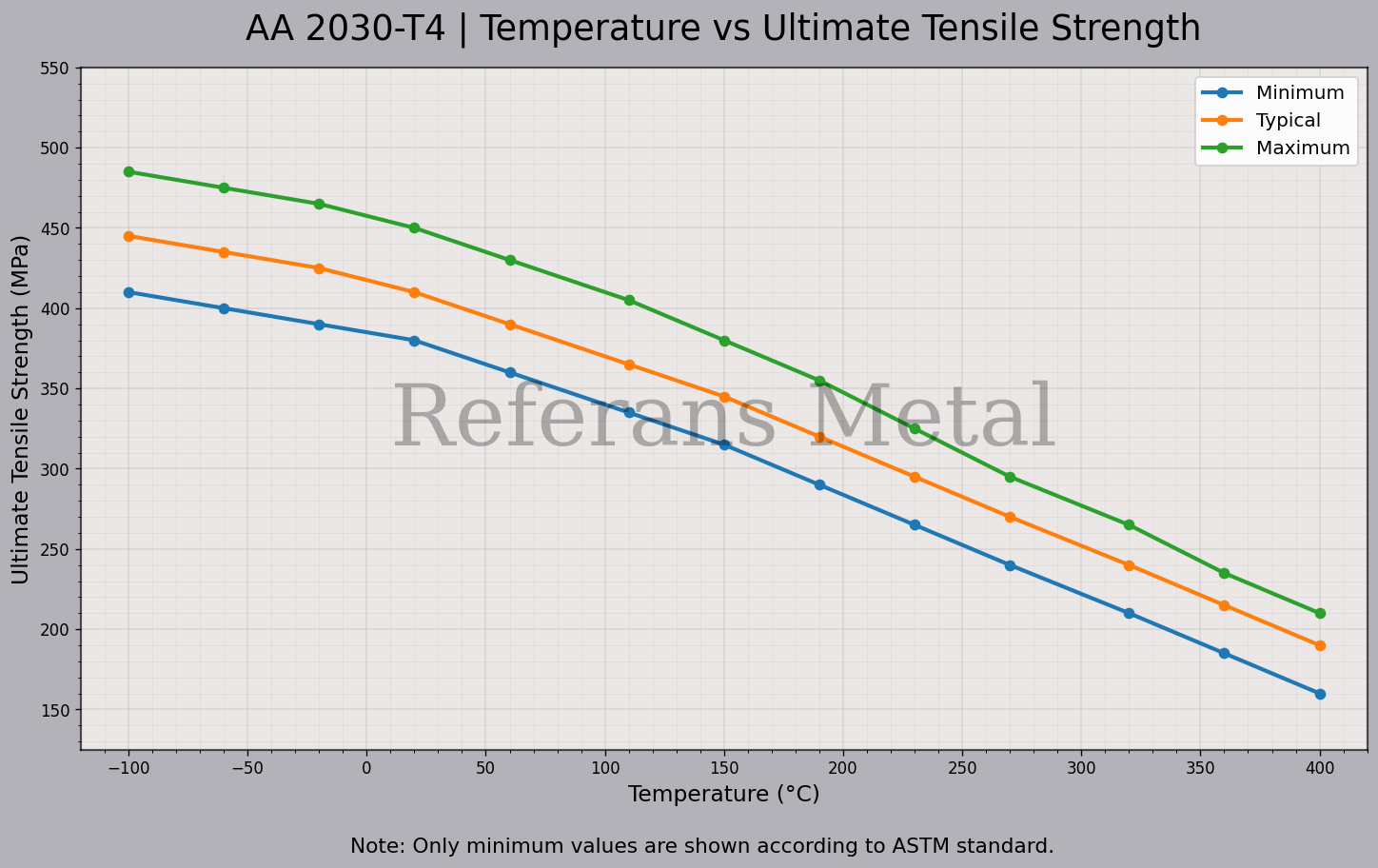
| 2030 T4 Temperature – Ultimate Tensile Strength Graph |
 |
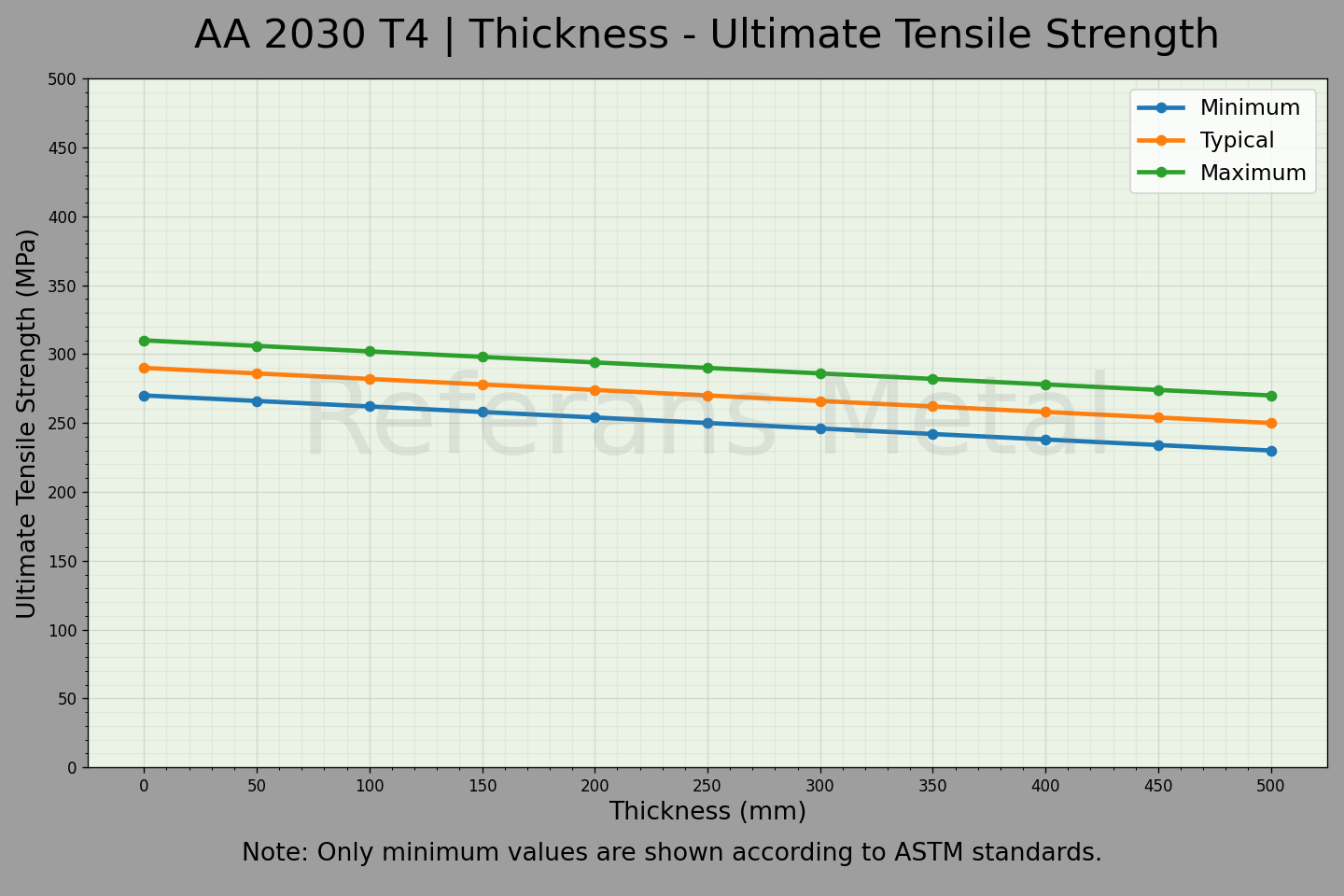
| 2030 T4 Thickness – Ultimate Tensile Strength Graph |
 |
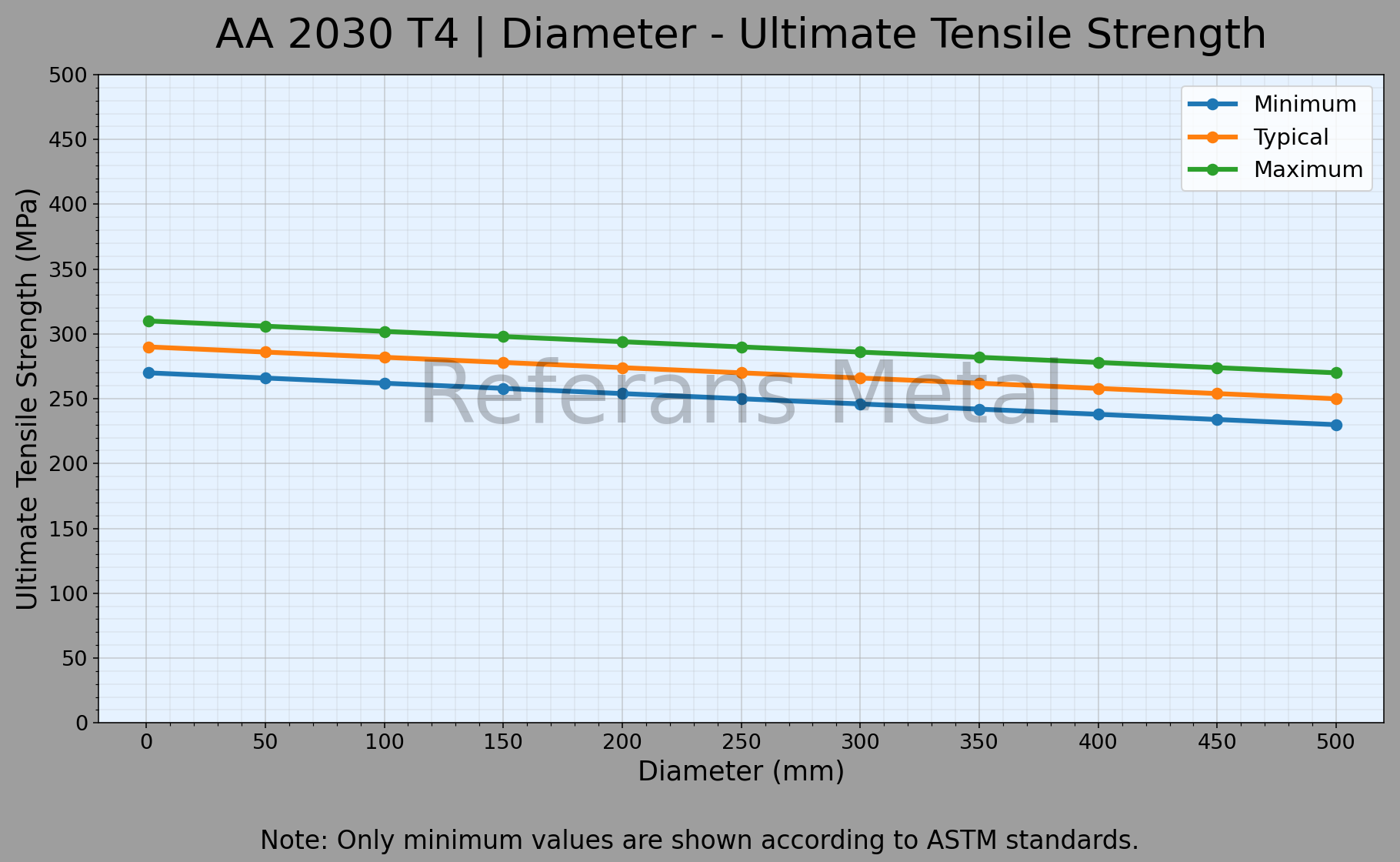
| 2030 T4 Diameter – Ultimate Tensile Strength Graph |
 |
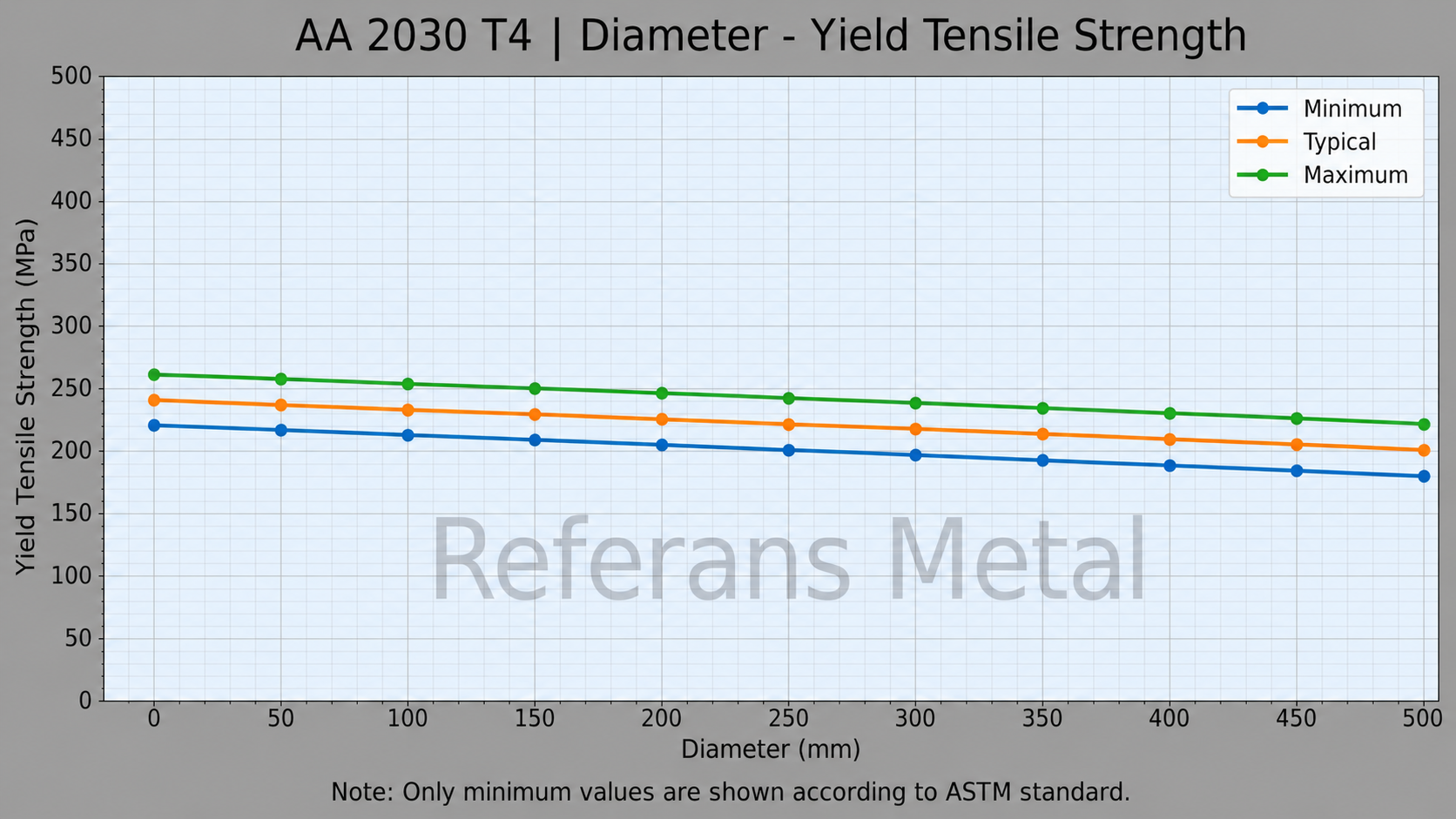
| 2030 T4 Diameter-Yield Tensile Strength |
 |
The 2030-T4 aluminum alloy is a material preferred especially in applications requiring high strength due to its high copper content. The T4 temper is obtained by solution heat treatment followed by natural aging, providing the alloy with a good balance of strength and ductility. This alloy is widely used in critical structural components, particularly in aerospace and automotive industries.
In terms of strength, the 2030-T4 alloy offers higher strength than general-purpose alloys such as 6061-T6 but does not reach the performance.png) level of 2024-T3. However, its corrosion resistance is relatively low due to the high copper content and usually requires surface protection treatments. Compared to 7075-T6, it offers lower strength but provides advantages in ductility and machinability.
level of 2024-T3. However, its corrosion resistance is relatively low due to the high copper content and usually requires surface protection treatments. Compared to 7075-T6, it offers lower strength but provides advantages in ductility and machinability.
Regarding machinability and bending properties, the 2030-T4 alloy is well-balanced. Thanks to the T4 temper, the alloy exhibits good formability and bendability. Compared to the 2024 alloy, it shows more controlled deformation behavior, while it is slightly harder to form than 6061 despite offering higher strength. These characteristics make it advantageous for producing parts with complex geometries.
In terms of weldability and coating capability, the 2030-T4 alloy is not very suitable for welding, and mechanical joining methods are generally preferred. However, it is suitable for anodizing and other coating processes, which can enhance corrosion resistance. In terms of vibration response, its high-strength structure provides good fatigue resistance and reliable performance under dynamic loads.
When examining applications, the 2030-T4 alloy stands out particularly in aerospace, defense, automotive, and machinery manufacturing sectors. It is preferred in structural components requiring high strength and moderate formability. Compared to 7075, it offers a more economical and machinable alternative, while providing higher performance than 6061.
Alloy Specifications
2030 T4 is available according to the following standards.
• 2030 T4 Extruded Round Bar; ISO AlCu4PbMg, DIN AlCuMgPb, UNS A92030, ASTM
• 2030 T4 Extruded Flat Bar; ISO AlCu4PbMg, DIN AlCuMgPb, UNS A92030, ASTM B221, AFNOR AU4Pb
• 2030 T4 Extruded Tube; ISO AlCu4PbMg, DIN AlCuMgPb, UNS A92030, ASTM B221, AFNOR AU4Pb
2030 T4 Selection Criteria
- Strength: High
- Machinability: Excellent
- Weldability: Moderate
- Formability: Moderate
- Corrosion Resistance: Low
- Heat Treatment: Yes
Some Well-Known Applications for 2030 T4
Ski poles,
Automotive industry,
Also used in precision machining applications.
Available Forms
2030 T4 is available in round/flat rods and tube/profile forms.
- Flat/Round Rod
- Tube/Profile
 Weight Calculator