
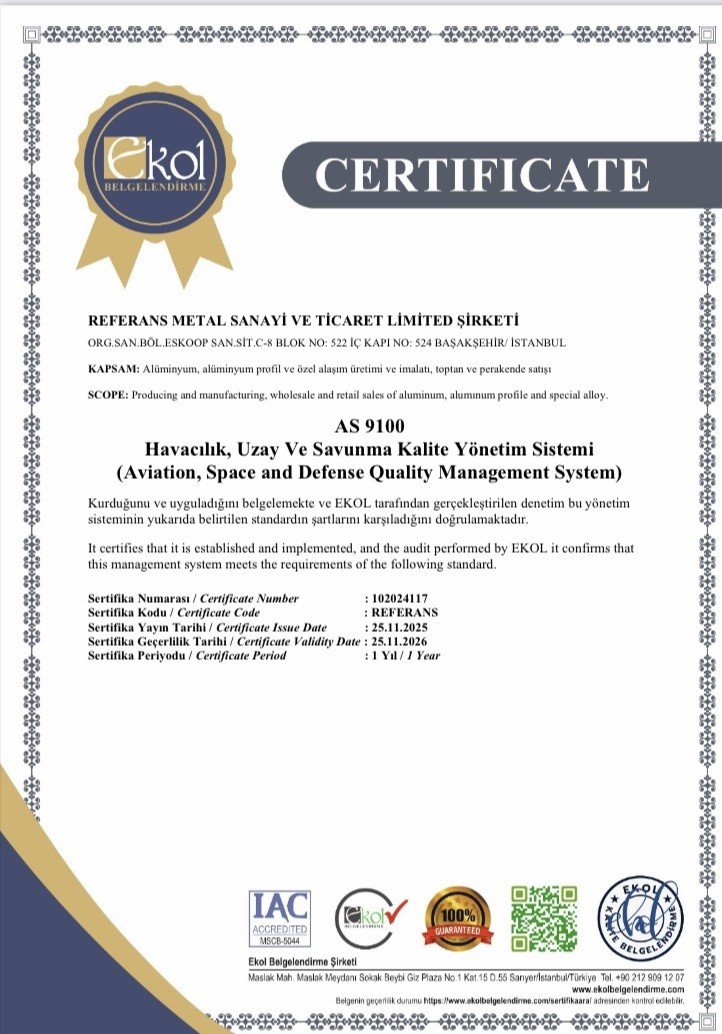
 AS 9100
 SPACE 2009
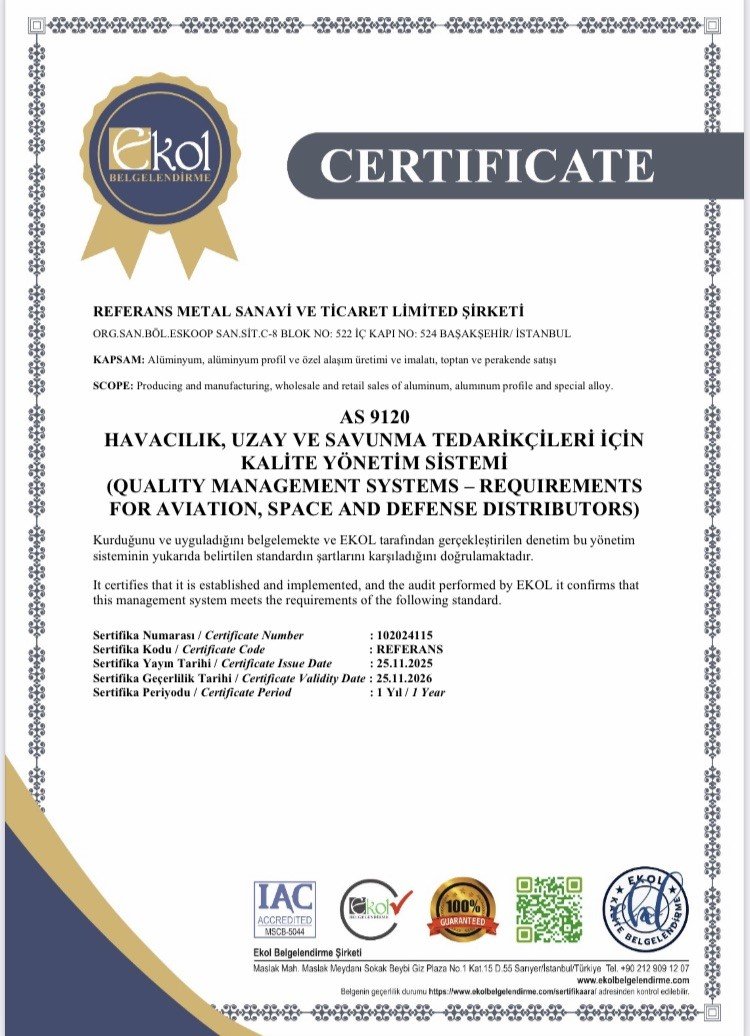 AS 9120




Plates
Sheets
Rod/Round Bar/Flat Bar
Tube/Extrusions/Profile
2219
AMS 4162 / AlCu6Mn / 2219 / T8511
| Chemical Properties | % Value |
| Silicon (Si) | 0,00 - 0,20 |
| Manganese (Mn) | 0,20 - 0,40 |
| Magnesium (Mg) | 0,00 - 0,02 |
| Copper (Cu) | 5,80 - 6,80 |
| Titanium (Ti) | 0,02 - 0,10 |
| Iron (Fe) | 0,00 - 0,30 |
| Zinc (Zn) | 0,00 - 0,10 |
| Aluminium (Al) | Balance |
| Physical Properties | Value |
| Density | 2.84 g/cm³ |
| Melting Point | 543 °C |
| Thermal Expansion | 22 µm/m°C |
| Modulus of Elasticity | 74 GPa |
| Thermal Conductivity | 120 W/m.K |
| Electrical Resistivity | %30 IACS |
| Mechanical Properties | Value |
| Proof Strength | 330 MPa |
| Yield Strength | 430 MPa |
| Shear Strength | 270 MPa |
| Elongation A50 mm | 8% |
| Hardness | 110 HB |
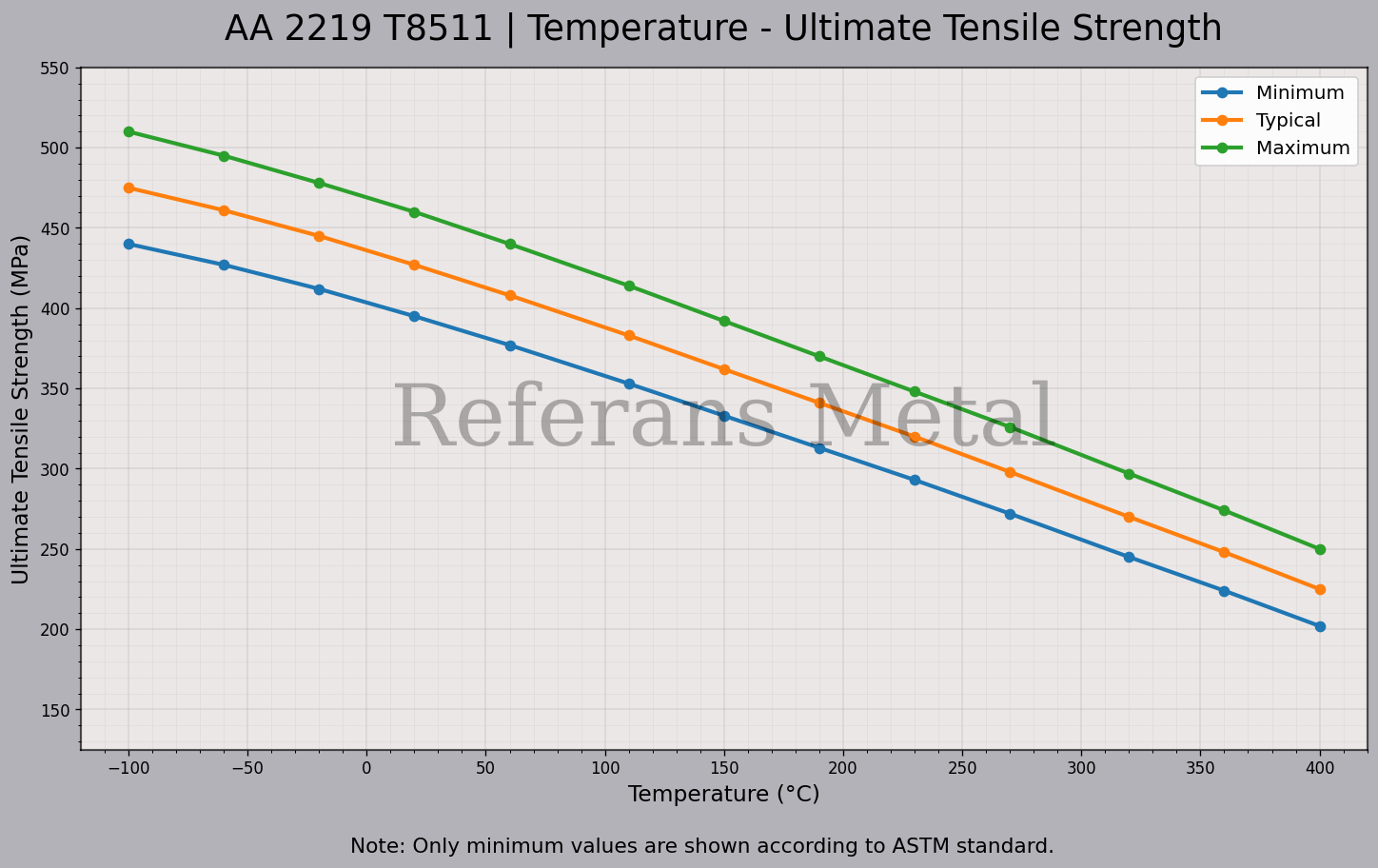
| 2219 T8511 Temperature – Ultimate Tensile Strength Graph |
 |
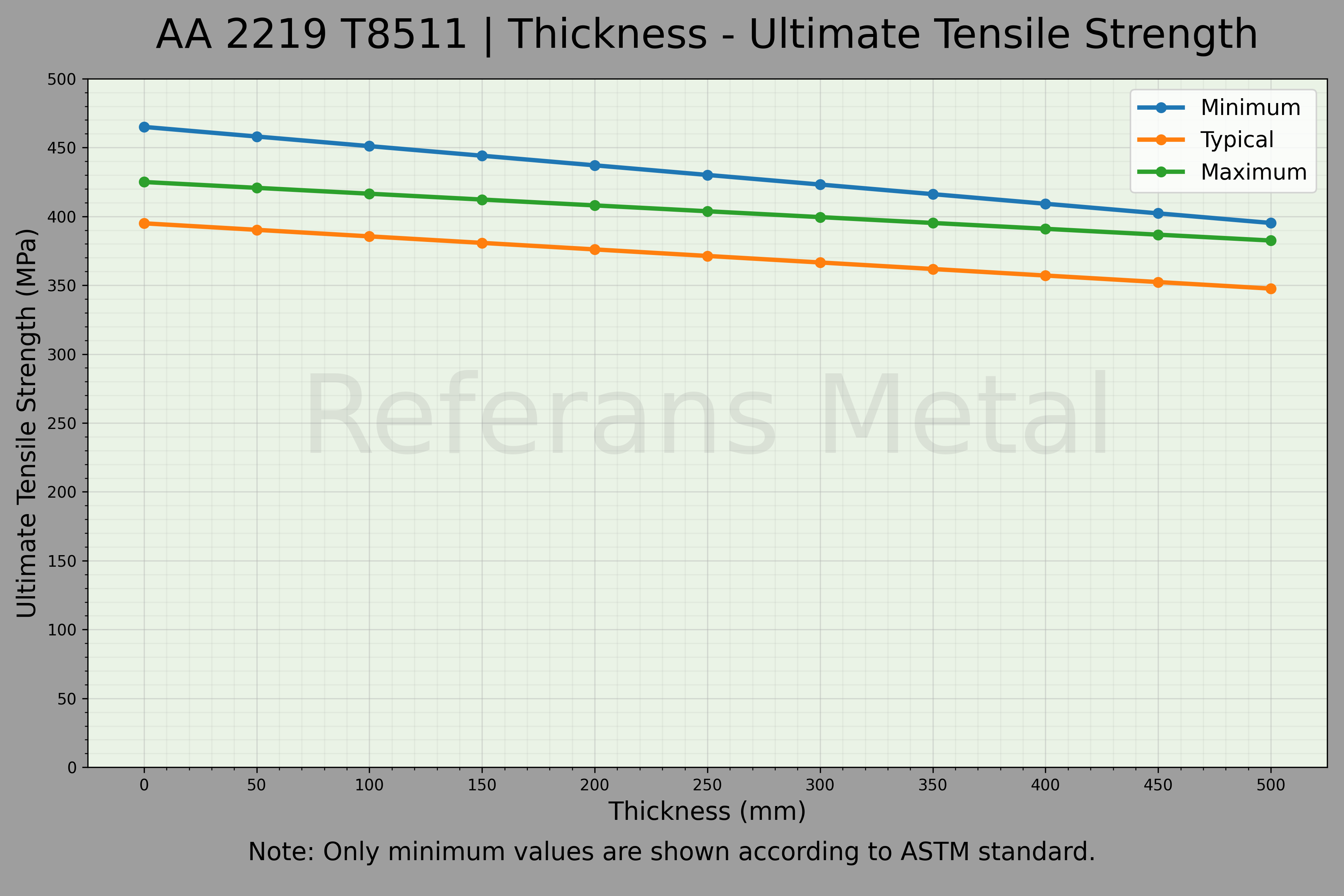
| 2219 T8511 Thickness – Ultimate Tensile Strength Graph |
 |
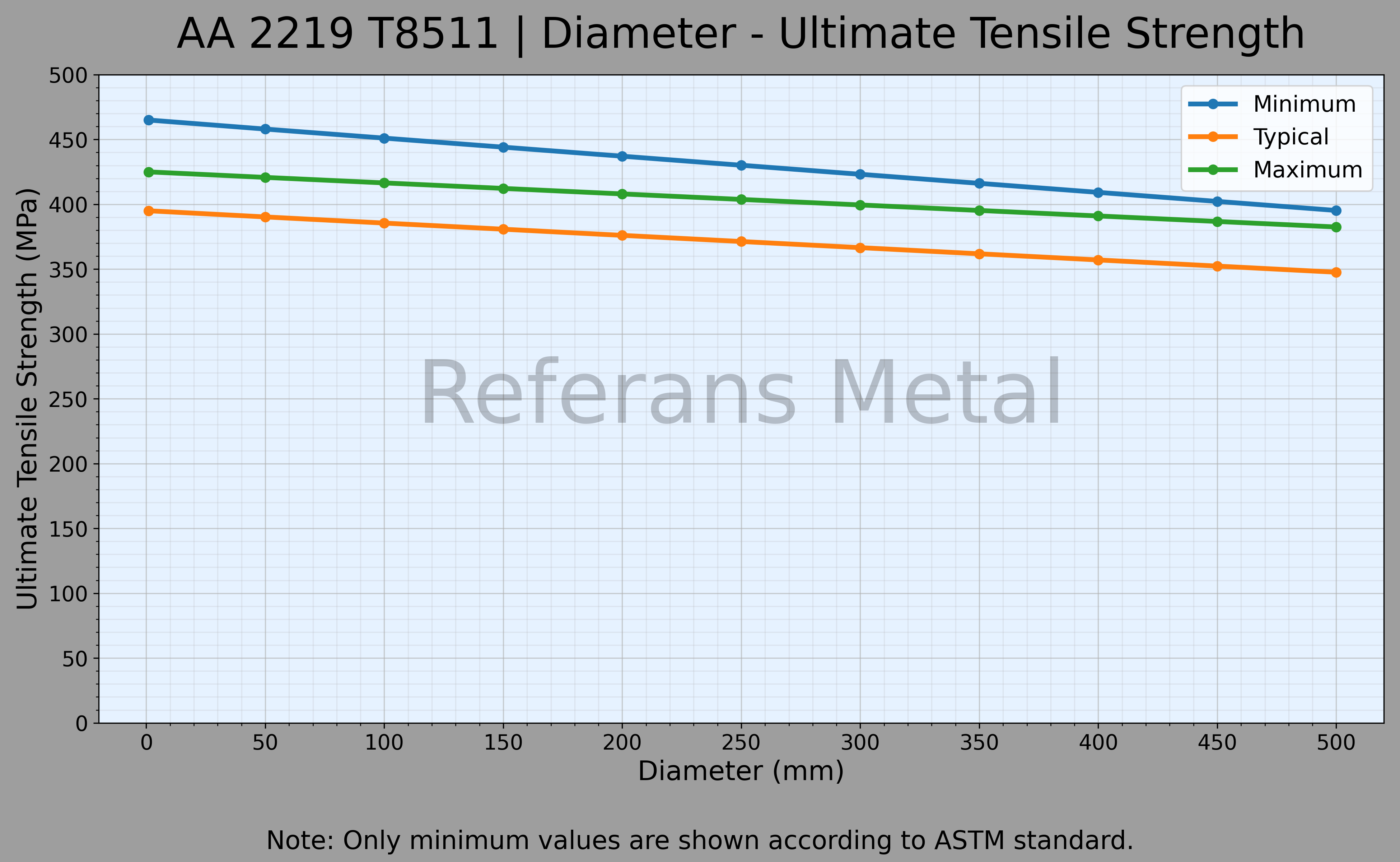
| 2219 T8511 Diameter – Ultimate Tensile Strength Graph |
 |
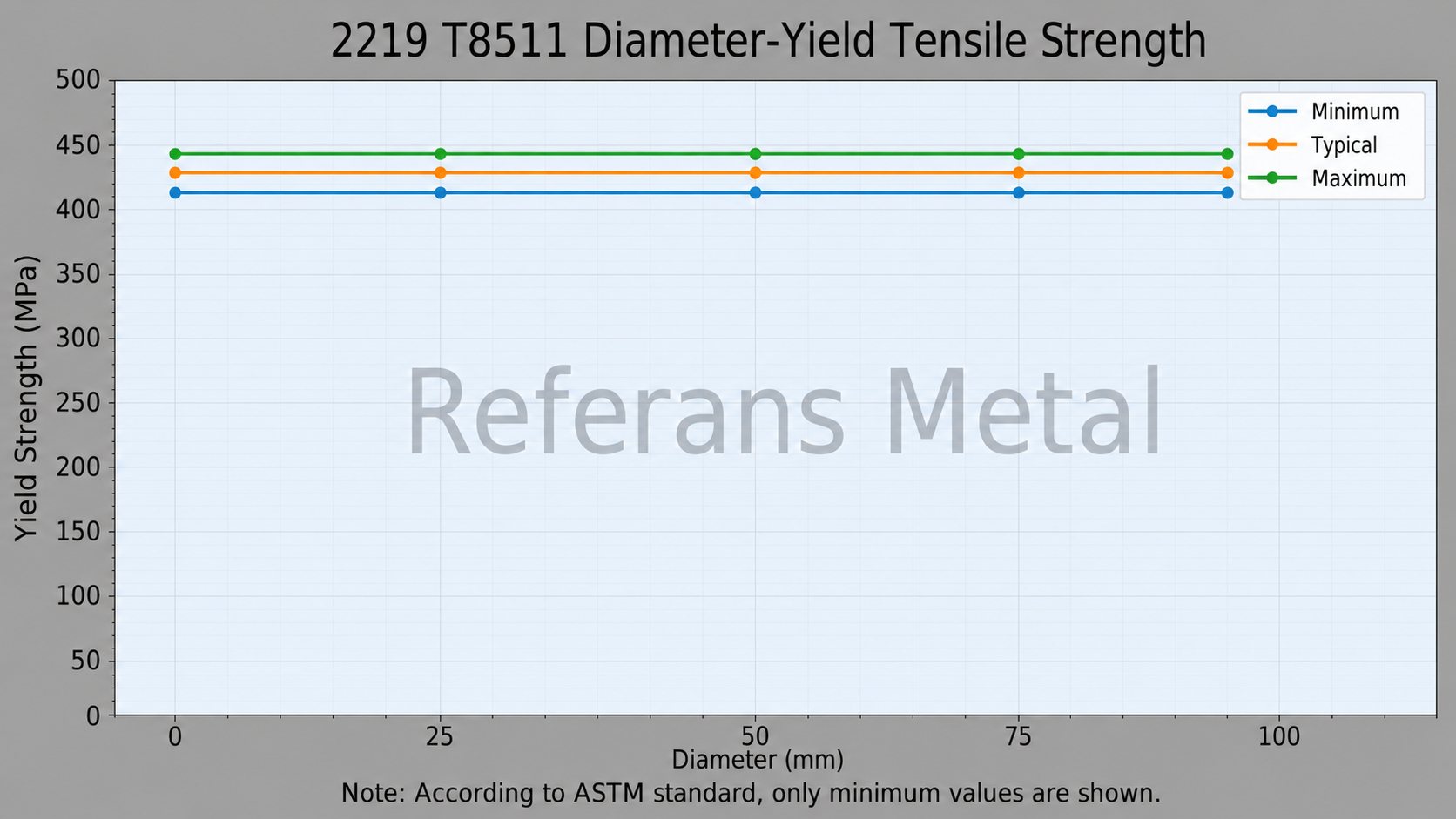
| 2219 T8511 Diameter-Yield Tensile Strength |
 |
The 2219-T8511 aluminum alloy is a copper-based (2xxx series) alloy known for its high strength and excellent high-temperature resistance. This alloy stands out in aerospace applications due to its ability to retain mechanical properties at elevated temperatures. The T8511 temper indicates a solution heat-treated, stress-relieved, and slightly stretched condition. This ensures high dimensional stability and reliable performance in precision engineering applications.
In terms of corrosion resistance, the 2219 alloy exhibits the general characteristics of the 2xxx series and has lower corrosion resistance compared to pure aluminum or 6xxx series alloys. However, this disadvantage can be largely mitigated with proper surface treatments and coatings (such as anodizing or painting). Compared to the 2024 alloy, 2219 shows more stable behavior at elevated temperatures and has better resistance to stress corrosion cracking.
In terms of strength, the 2219-T8511 alloy is notable for its high tensile and yield strength and can outperform the 7075 alloy at elevated temperatures. Although the 7075 alloy provides higher strength at room temperature, the 2219 alloy retains its mechanical properties better at temperatures above 200°C. Therefore, it is preferred in applications exposed to high temperatures such as rocket fuel tanks and spacecraft.
When evaluated in terms of machinability and bending properties, the 2219 alloy has moderate machinability and is more difficult to form compared to the 6061 alloy. Bending operations are limited especially in the T8511 temper and require careful process control. However, its weldability is quite good, and unlike many 2xxx series alloys, it exhibits minimal strength loss after welding. This provides a significant advantage in the production of large structural components.
In terms of vibration behavior and application areas, the 2219 alloy provides reliable performance under dynamic loads due to its high stiffness and stability. Therefore, it is widely used in aerospace, defense, and cryogenic tank production industries. Additionally, its suitability for surface treatments enhances its durability and long service life.
• 2219 T8511 As Extruded Round; ASTM B221, UNS A92219, AMS 4162, ISO AlCu6Mn
• 2219 T8511 As Extruded Flat Bar; ASTM B221, UNS A92219, AMS 4162, ISO AlCu6Mn
• 2219 T8511 As Extruded Tube; ASTM B221, UNS A92219, AMS 4162, ISO AlCu6Mn
Choosing Factors for 2219 T8511
- Strength: Very good
- Machining: Poor
- Weldability: Great
- Formability: Good
- Corrosion Resistance: High
- Heat Treating: Yes
Some Well-Known Applications for 2219 T8511
In weldaments requiring high strength,
In bicycle frames and engineering applications in general,
It has many uses, including camping equipment.
2219 T8511 is produced/supplied in round/flat bar and tube forms.
- Round Bar
- Tube
 Weight Calculator