
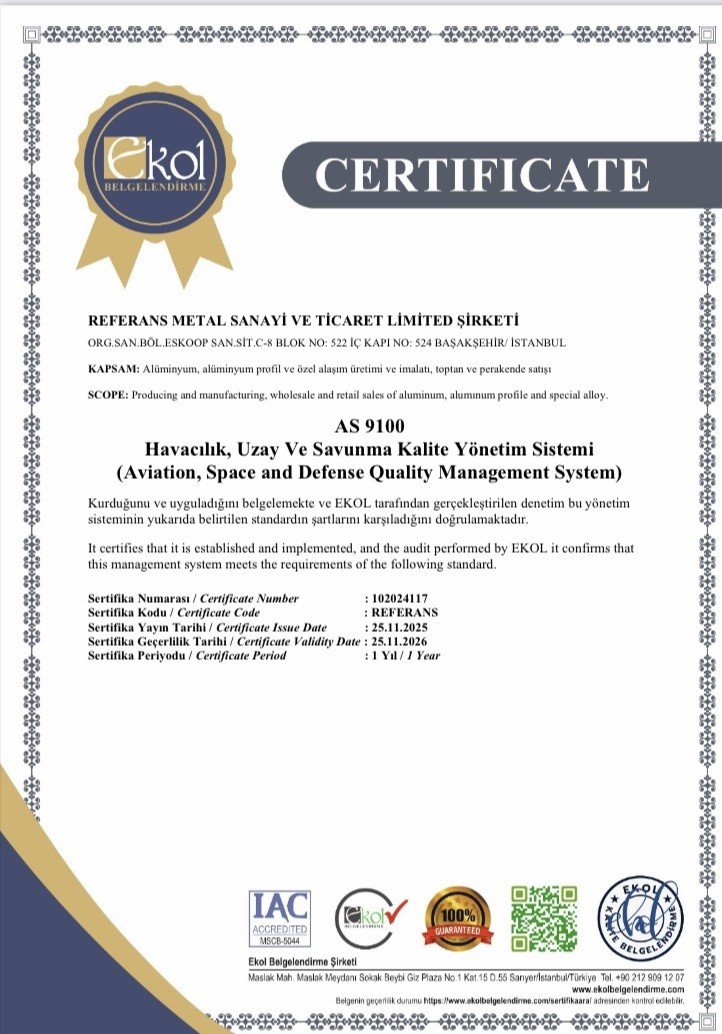
 AS 9100
 SPACE 2009
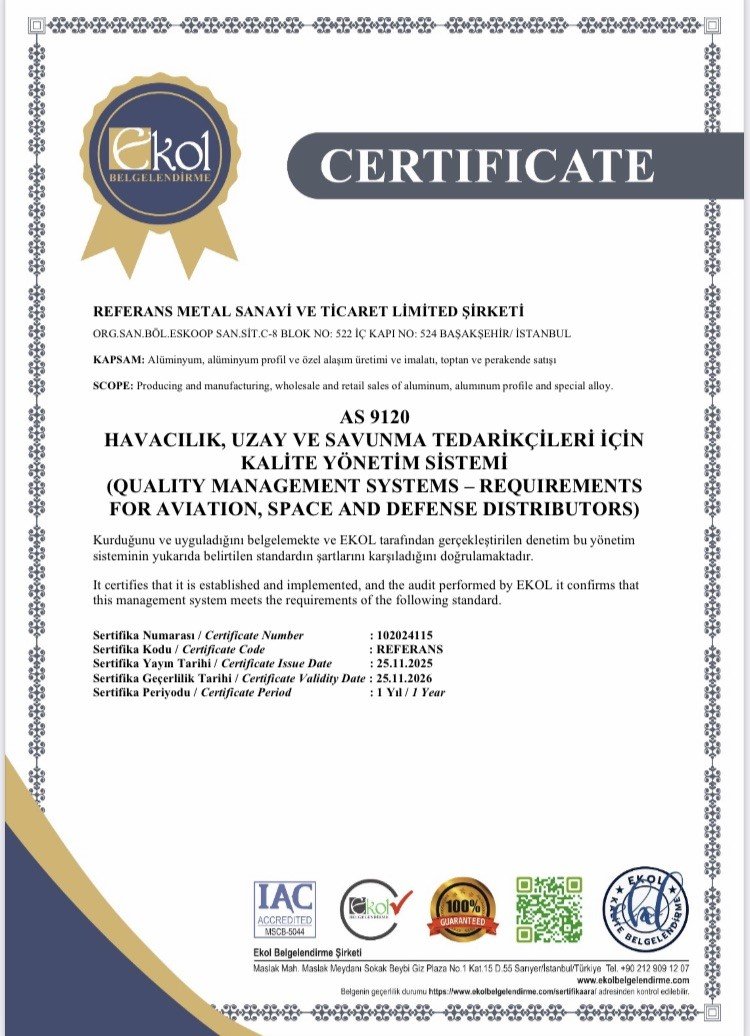 AS 9120




1200
BS 3L54 / Al99 / 1200 / F
| Chemical Properties | % Value |
| Silicon (Si) | 0,00 - 1,00 |
| Manganese (Mn) | 0,00 - 0,05 |
| Copper (Cu) | 0,00 - 0,05 |
| Lead (Pb) | 0,00 - 0,05 |
| Titanium (Ti) | 0,00 - 0,05 |
| Iron (Fe) | 0,00 - 0,50 |
| Zinc (Zn) | 0,00 - 0,10 |
| Aluminium (Al) | Balance |
| Physical Properties | Value |
| Density | 2.70 g/cm³ |
| Melting Point | 657 °C |
| Thermal Expansion | 23.4 µm/m.°C |
| Modulus of Elasticity | 69 GPa |
| Thermal Conductivity | 225 W/m.K |
| Electrical Resistivity | %58.5 IACS |
| Mechanical Properties | Value |
| Yield Strength | 28 MPa |
| Ultimate Strength | 85 MPa |
| Shear Strength | 54 MPa |
| Elongation A50 mm | 23% |
| Hardness | 27 HB |
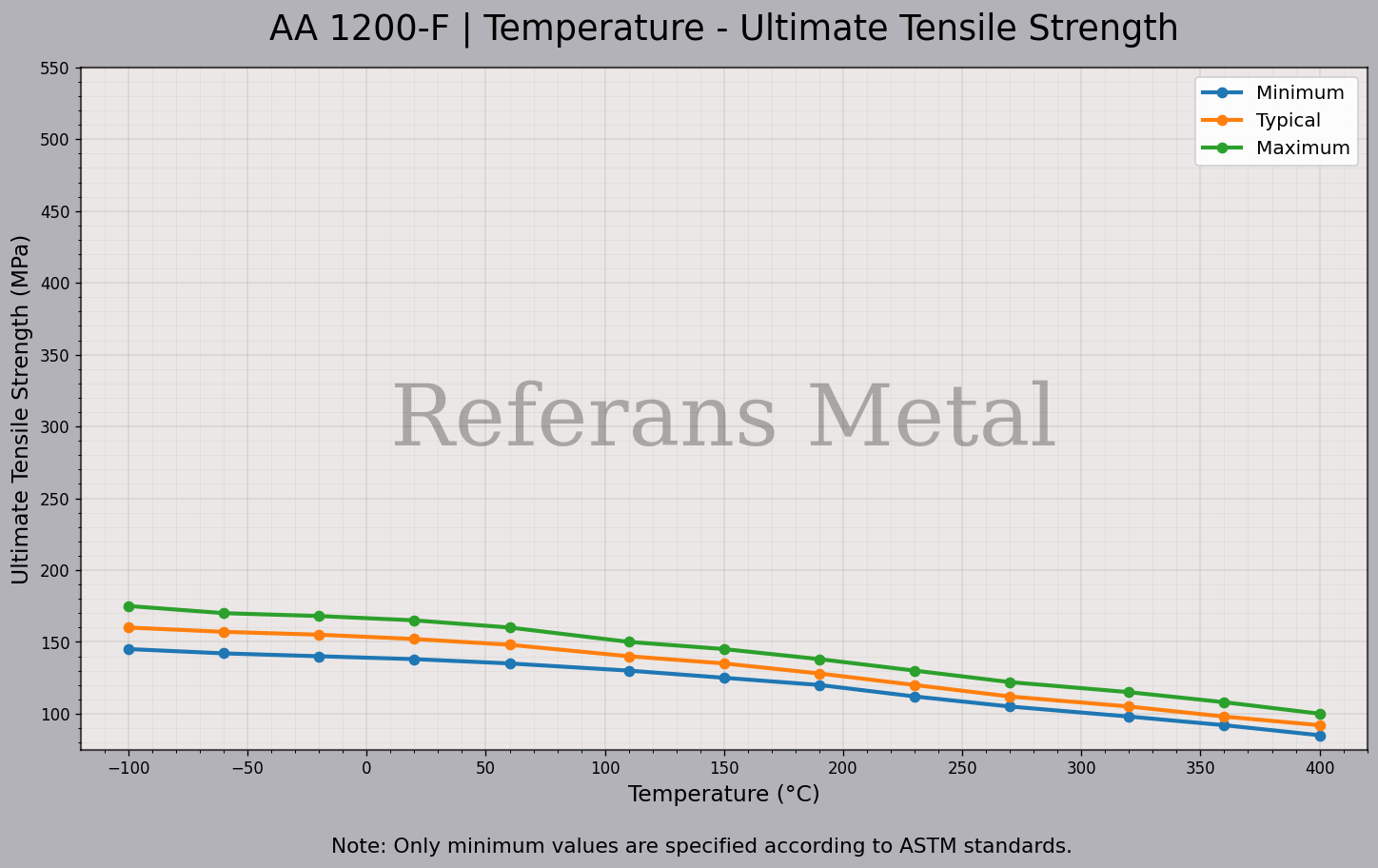
| 1200 F Temperature – Ultimate Tensile Strength Graph |
 |
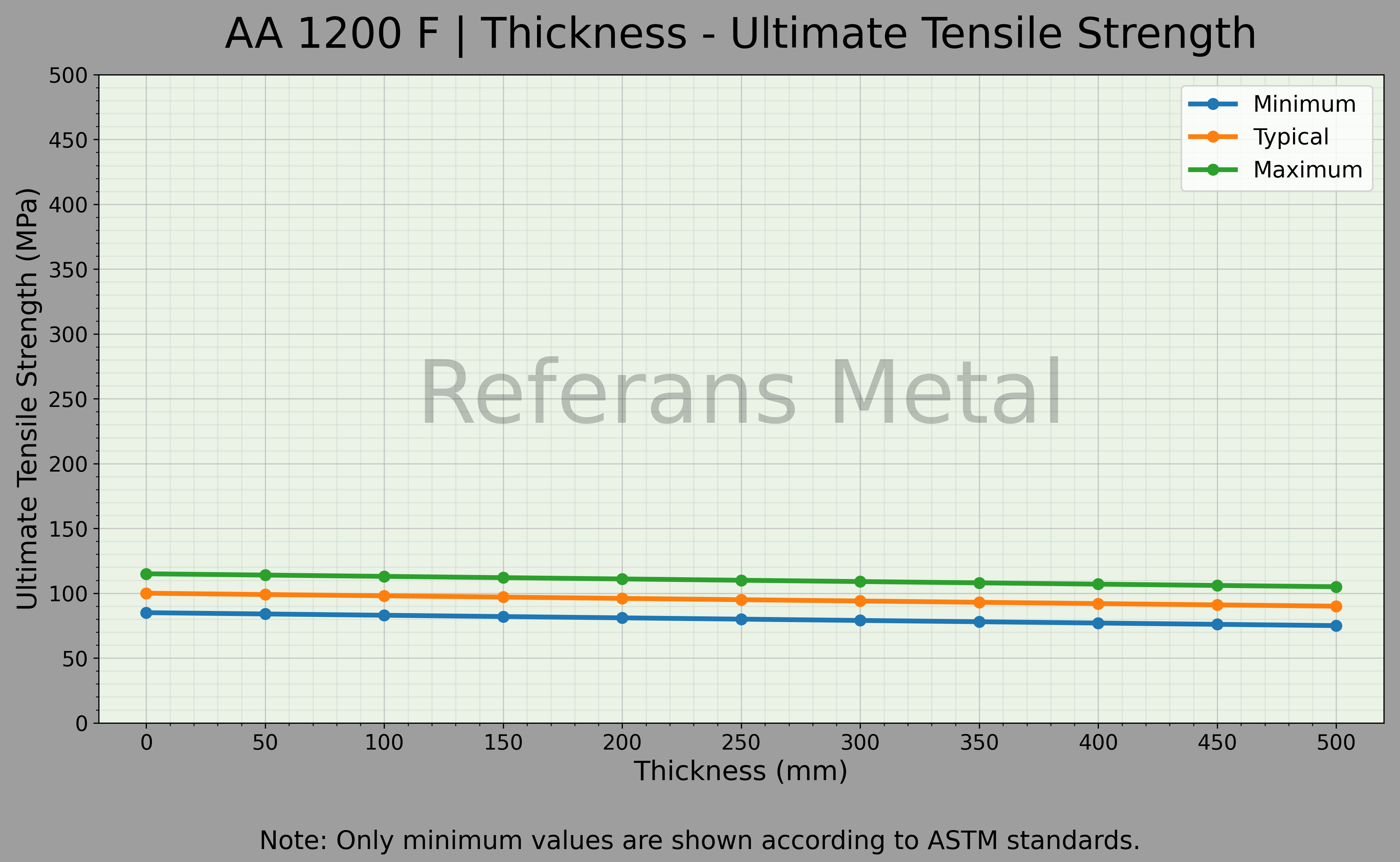
| 1200 F Thickness – Ultimate Tensile Strength Graph |
 |
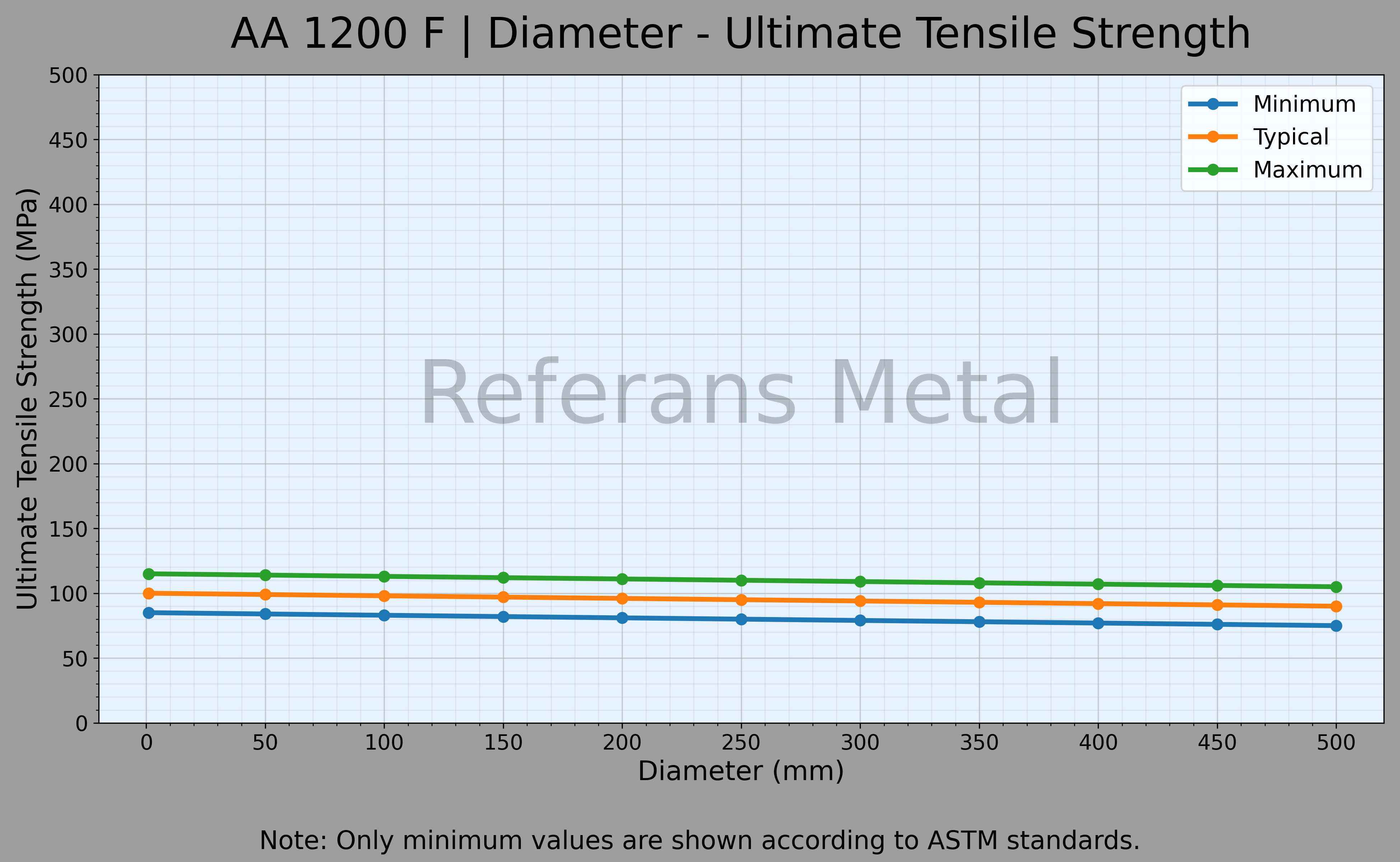
| 1200 F Diameter – Ultimate Tensile Strength Graph |
 |
The 1200 F aluminum alloy belongs to the commercially pure aluminum group with a purity higher than 99.0%. The F temper (as fabricated) indicates that the material has not undergone any special thermal or mechanical treatment after fabrication. Therefore, its mechanical properties may vary depending on the manufacturing process and processing conditions. Nevertheless, the alloy is generally known for its excellent corrosion resistance, good ductility, and good electrical conductivity.
The mechanical strength of this alloy is considerably lower than that of high-strength aluminum alloys from the 2xxx or 7xxx series. For example, 2024-T3 or 7075-T6 alloys exhibit much higher tensile strength. However, the 1200 F alloy provides good electrical and thermal conductivity due to its high aluminum purity. Compared with 3003 alloy, the 1200 alloy offers higher purity and better conductivity, whereas 3003 generally provides slightly higher strength because of its manganese content.
In terms of machinability, the 1200 F alloy demonstrates moderate performance. Due to the high purity of aluminum, material adhesion may occur during machining operations. On the other hand, its bending and forming capability is quite good, making it suitable for many cold forming operations. Therefore, it can be used in the production of thin sheet products, decorative plates, and various industrial components.
Another important property of this alloy is its good coatability and suitability for surface treatments. Processes such as anodizing, painting, and other coating methods generally produce satisfactory results. Additionally, its ductile behavior under vibration and impact prevents brittle failure and reduces the risk of crack formation.
In terms of weldability, the 1200 F alloy performs very well and can easily be joined using TIG or MIG welding methods. This characteristic allows the alloy to be used in electrical equipment, chemical tanks, food processing equipment, and architectural applications. In general, the 1200 F alloy provides lower strength compared with high-strength alloys such as 2024 and 7075, while offering similar corrosion resistance and high purity advantages compared with alloys such as 3003 and 1100.
STANDARDS OF MATERIAL COMPOSITION
1200 F may be available in the following standards:
• 1200 F Sheet; ASTM B209, BS 6 L16, UNS A91200, BS 1C, ISO Al99.0, DIN Al99, WNR 3.0205
• 1200 F Extruded Tube; ASTM B221, UNS A91200, BS 1C, ISO Al99.0, DIN Al99, WNR 3.0205, BS 3L 54
• 1200 F Extruded Profile; ASTM B221, UNS A91200, BS 1C, ISO Al99.0, DIN Al99, WNR 3.0205, BS 3L 54
Characteristic Properties of 1200 F:
- Strength: Low
- Machinability: Poor
- Weldability: Very Good
- Formability: Very Good
- Corrosion Resistance: Excellent
- Heat Treatment: No
Some Well-Known Applications of 1200 F:
Railway wagons,
Chemical and machinery industries,
Shipbuilding and kitchen equipment.
STOCK
We manufacture/supply 1200 F in sheet and tube/profile forms.
- Sheet
- Tube/Profile
 Weight Calculator