
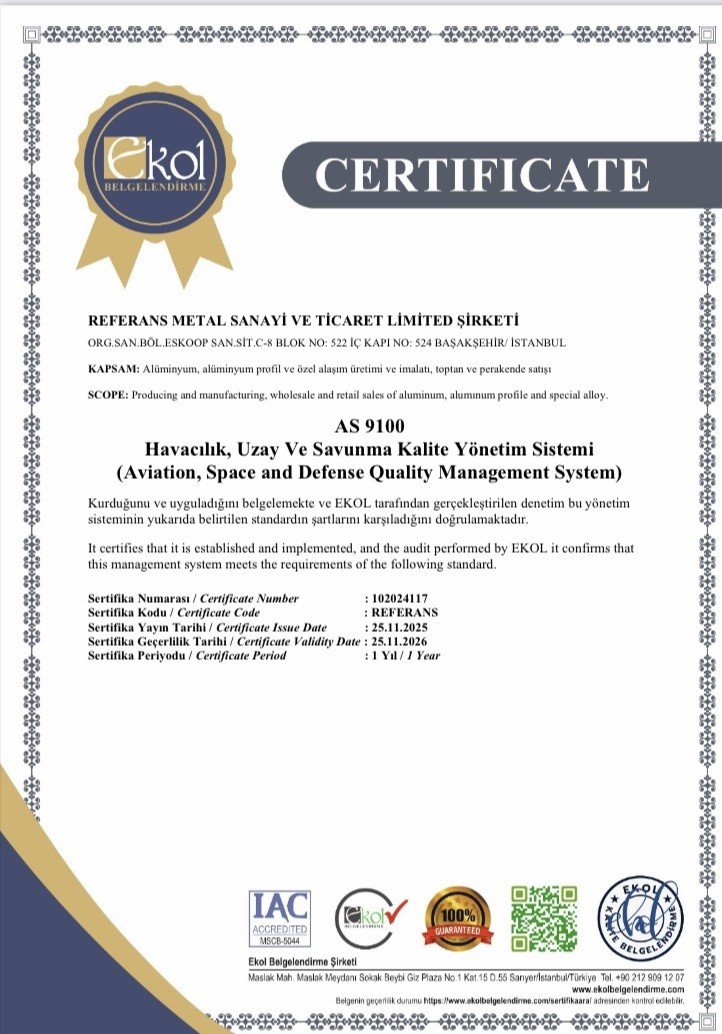
 AS 9100
 SPACE 2009
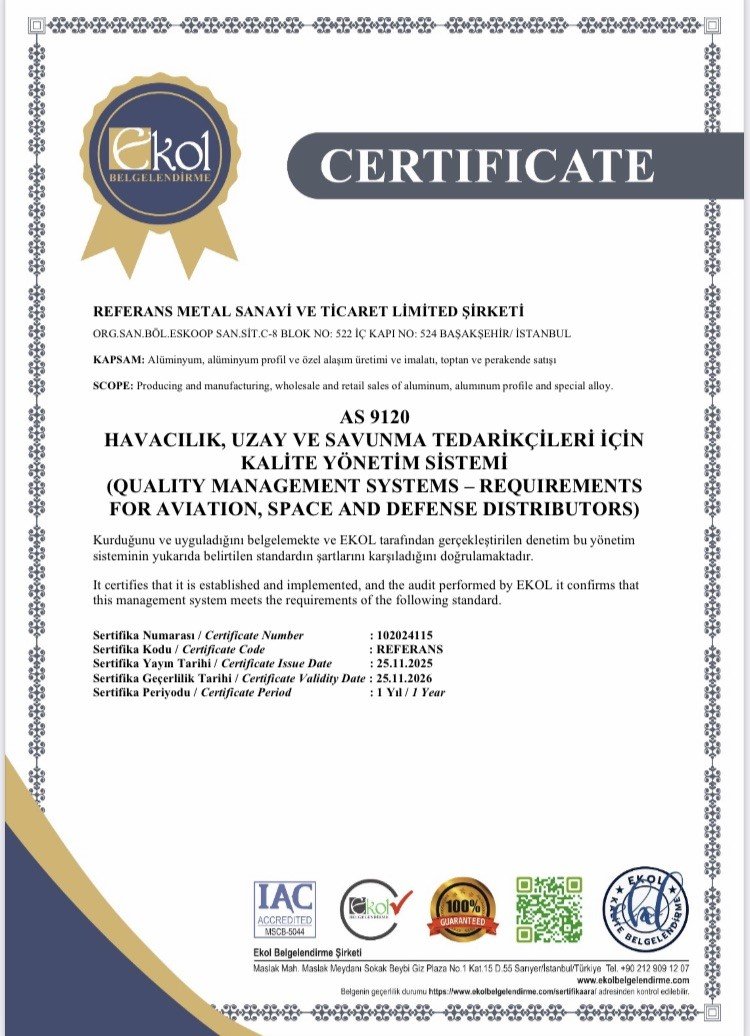 AS 9120


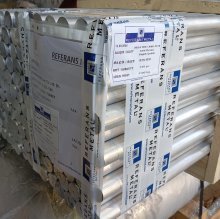

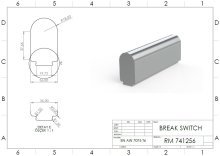

7175
EN 2512 / AlZn5.5MgCu(B) / 7175 / T7351
| Chemical Properties | % Value |
| Silicon (Si) | 0,00 - 0,15 |
| Chromium (Cr) | 0,18 - 0,28 |
| Manganese (Mn) | 0,00 - 0,10 |
| Magnesium (Mg) | 2,10 - 2,90 |
| Copper (Cu) | 1,20 - 2,00 |
| Iron (Fe) | 0,00 - 0,20 |
| Zinc (Zn) | 5,10 - 6,10 |
| Titanium (Ti) | 0,00 - 0,10 |
| Aluminium (Al) | Balance |
| Physical Properties | Value |
| Density | 2,80 g/cm³ |
| Melting Point | 477 °C |
| Thermal Expansion | 23.4 µm/m.°C |
| Modulus of Elasticity | 72 GPa |
| Thermal Conductivity | 155 W/m.K |
| Electrical Resistivity | 33 % IACS |
| Mechanical Properties | Value |
| Yield Strength | 435 MPa |
| Ultimate Strength | 505 MPa |
| Shear Strength | 300 MPa |
| Elongation A50 mm | 13% |
| Hardness | 135 HB |
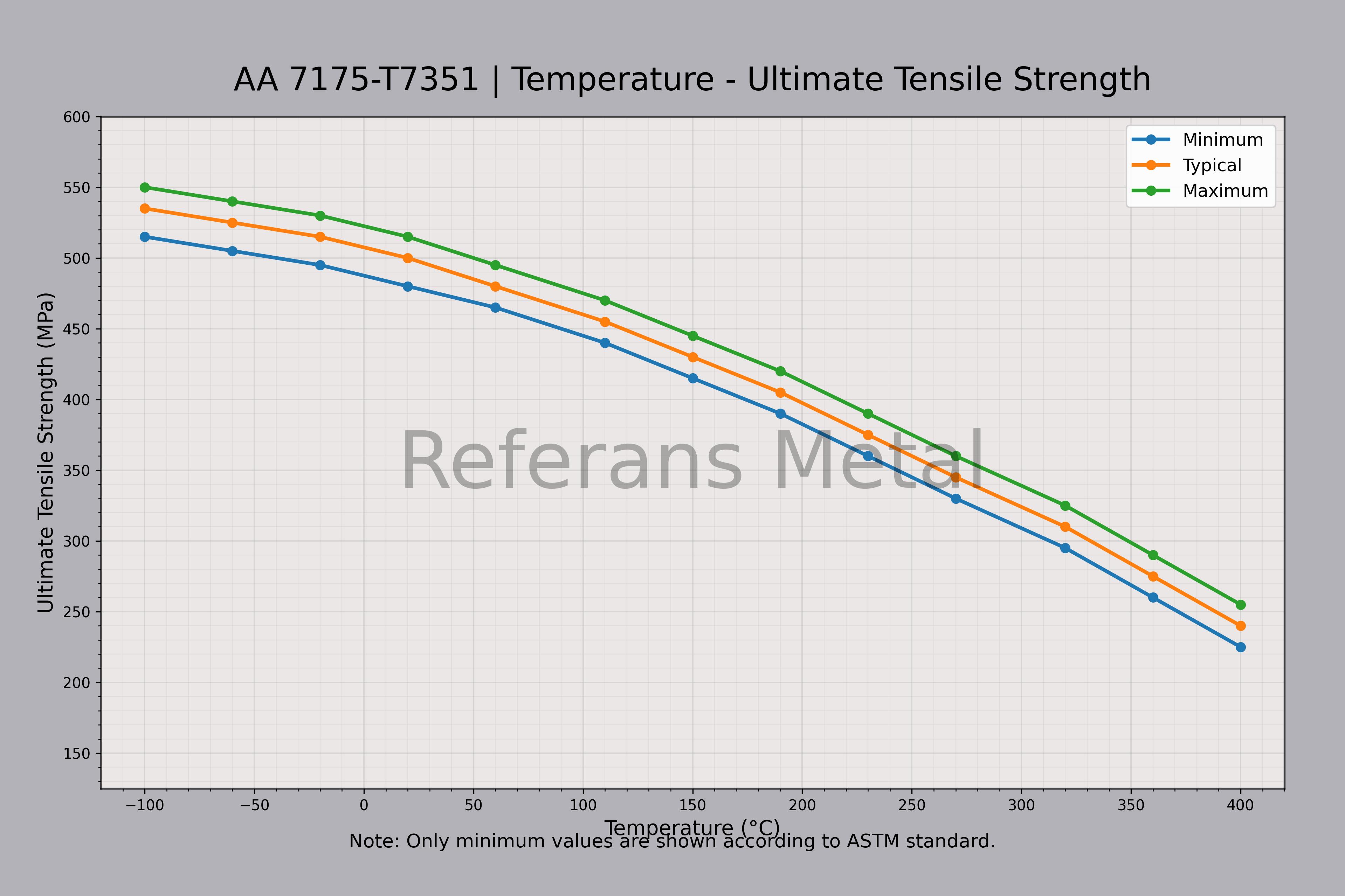
| 7175 T7351 Temperature – Ultimate Tensile Strength Graph |
 |
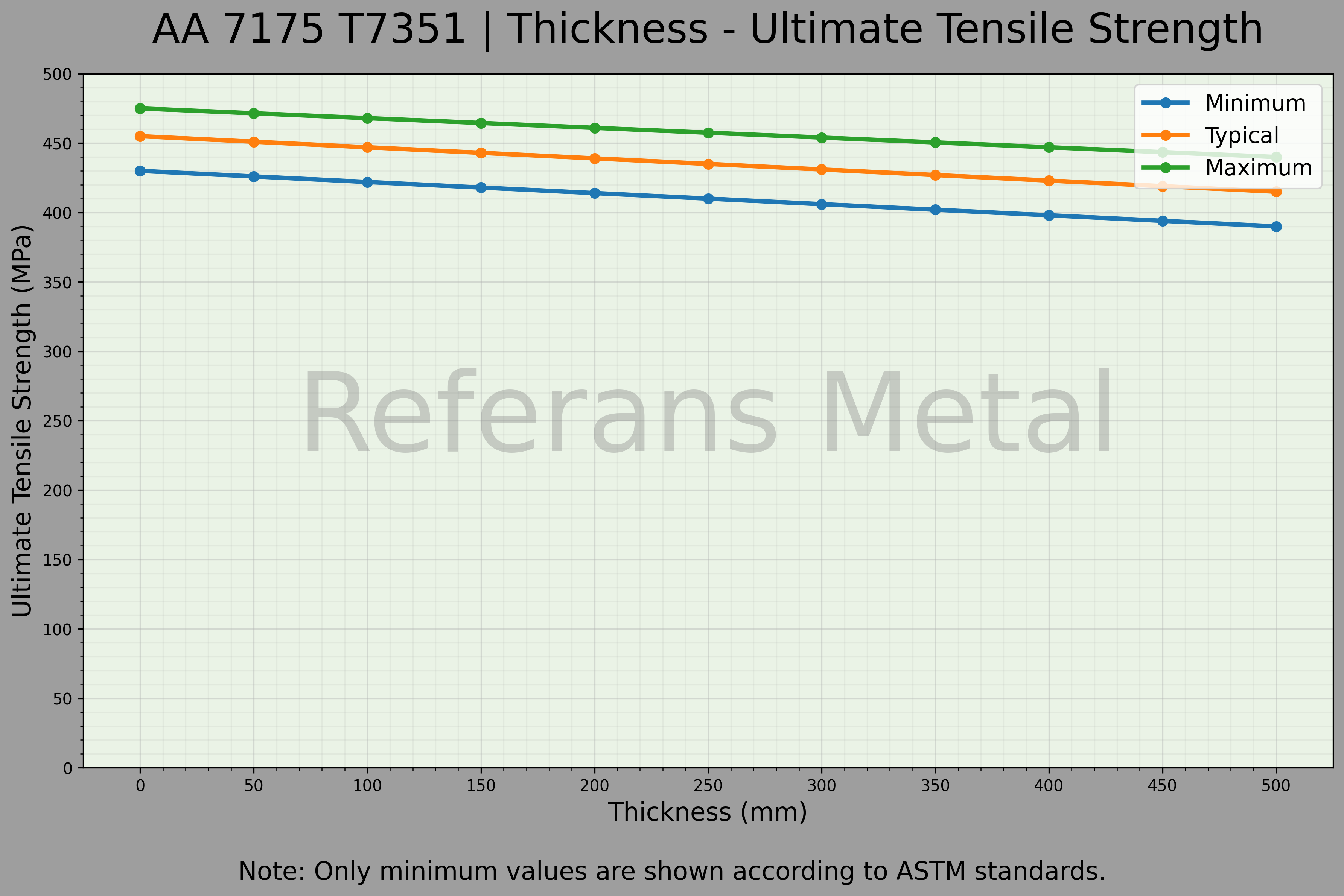
| 7175 T7351 Thickness – Ultimate Tensile Strength Graph |
 |
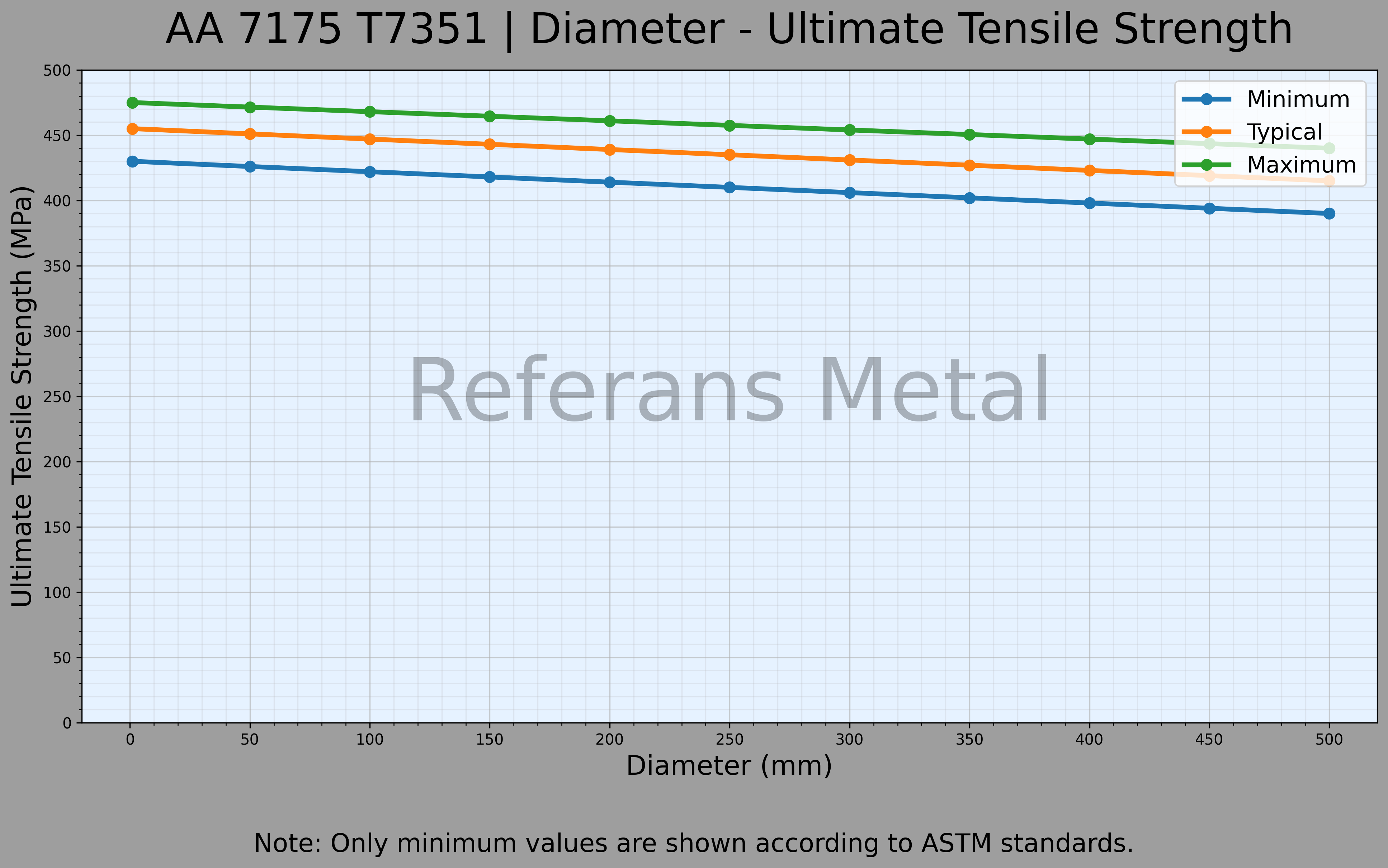
| 7175 T7351 Diameter – Ultimate Tensile Strength Graph |
 |
.png) In terms of corrosion resistance, the 7175 T7351 alloy offers improved performance compared with many standard 7xxx series alloys. The T7351 temper treatment is specifically applied to enhance resistance to stress corrosion cracking. However, its general corrosion resistance is still lower than that of many 5xxx series aluminum alloys. For this reason, surface treatments such as anodizing or protective coatings are often applied, particularly in aerospace applications. The alloy has good coatability and readily accepts surface treatments such as anodizing.
In terms of corrosion resistance, the 7175 T7351 alloy offers improved performance compared with many standard 7xxx series alloys. The T7351 temper treatment is specifically applied to enhance resistance to stress corrosion cracking. However, its general corrosion resistance is still lower than that of many 5xxx series aluminum alloys. For this reason, surface treatments such as anodizing or protective coatings are often applied, particularly in aerospace applications. The alloy has good coatability and readily accepts surface treatments such as anodizing.MATERIAL COMPOSITION STANDARDS
7175 T7351 is available according to the following standards:
• 7175 T7351 Sheet; EN 2512, ASTM B209, ISO AlZn5.5MgCu(B), WNR 3.4334, LN 9073, ABS 5064, DIN 3.4364
• 7175 T7351 Extruded Round Bar; ASTM B221, ISO AlZn5.5MgCu(B), WNR 3.4334
• 7175 T7351 Extruded Bar; ASTM B221, ISO AlZn5.5MgCu(B), WNR 3.4334
• 7175 T7351 Extruded Tube; ASTM B221, ISO AlZn5.5MgCu(B), WNR 3.4334
Characteristic Properties of 7175 T7351:
- Strength: High
- Machinability: Good
- Weldability: Poor
- Forming: Average
- Corrosion Resistance: Good
- Heat Treatment: Yes
Some Well-Known Applications for 7175 T7351:
Structural components in aerospace applications,
Gears and shafts in automotive components,
Aircraft parts requiring high strength.
STOCK
7175 T7351 is available as rod/bar, sheet, and tube/profile.
- Rod / Bar
- Tube / Profile
- Sheet
DELIVERY:
 Weight Calculator