
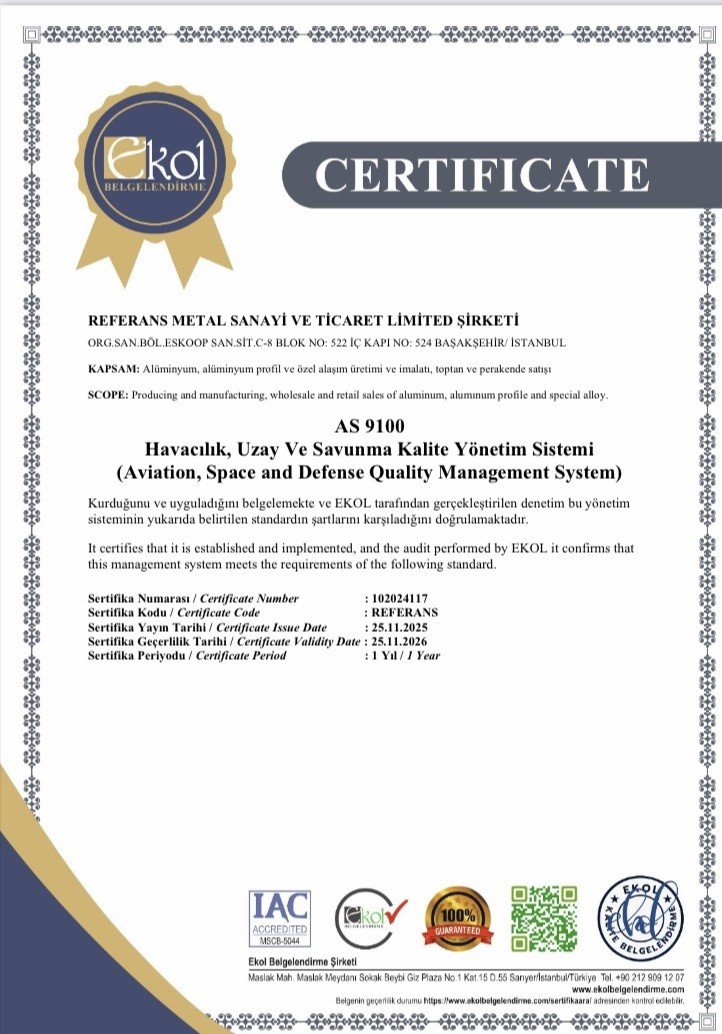
 AS 9100
 SPACE 2009
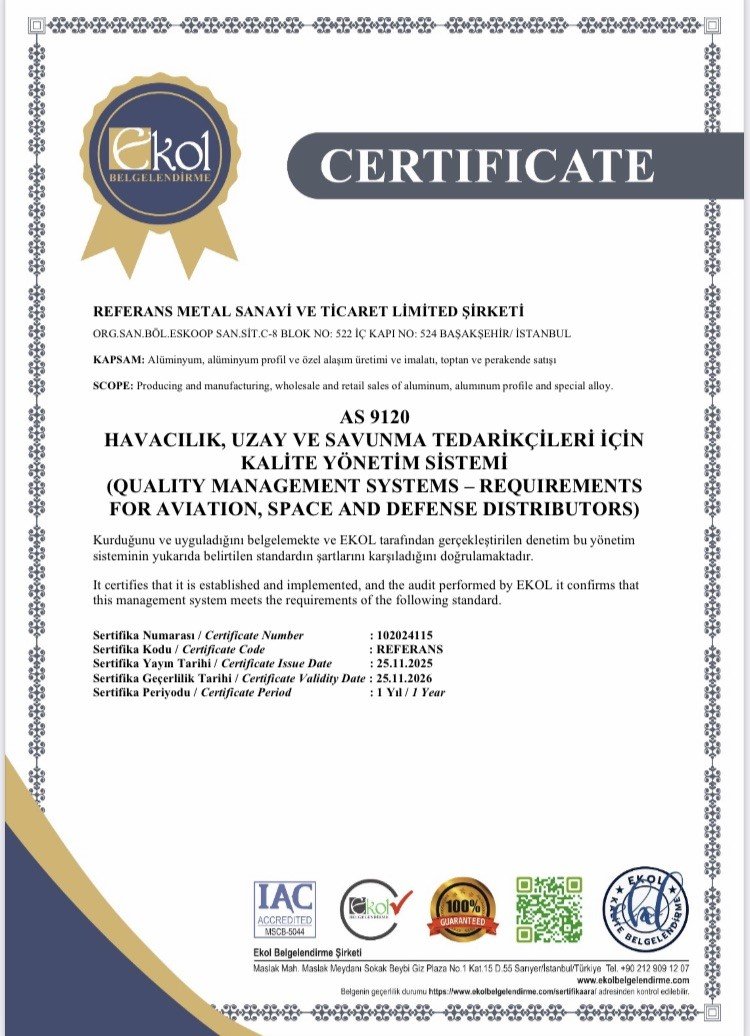 AS 9120




Plates
Sheets
Rod/Round Bar/Flat Bar
Tube/Extrusions/Profile
6061 clad
AMS 4021 / AlMg1SiCu / 6061 clad / O
| Chemical Properties | % Value |
| Silicon (Si) | 0,40 - 0,80 |
| Chromium (Cr) | 0,04 - 0,35 |
| Manganese (Mn) | 0,00 - 0,15 |
| Magnesium (Mg) | 0,80 - 1,20 |
| Copper (Cu) | 0,15 - 0,40 |
| Titanium (Ti) | 0,00 - 0,15 |
| Iron (Fe) | 0,00 - 0,70 |
| Zinc (Zn) | 0,00 - 0,25 |
| Aluminium (Al) | Balance |
| Physical Properties | Value |
| Density | 2.70 g/cm³ |
| Melting Point | 582 °C |
| Thermal Expansion | 23.4 µm/m.°C |
| Modulus of Elasticity | 69 GPa |
| Thermal Conductivity | 170 W/m.K |
| Electrical Resistivity | %43 IACS |
| Mechanical Properties | Value |
| Yield Strength | 76 MPa |
| Ultimate Strength | 130 MPa |
| Shear Strength | 84 MPa |
| Elongation A50 mm | 20 % |
| Hardness | 69 GPa |
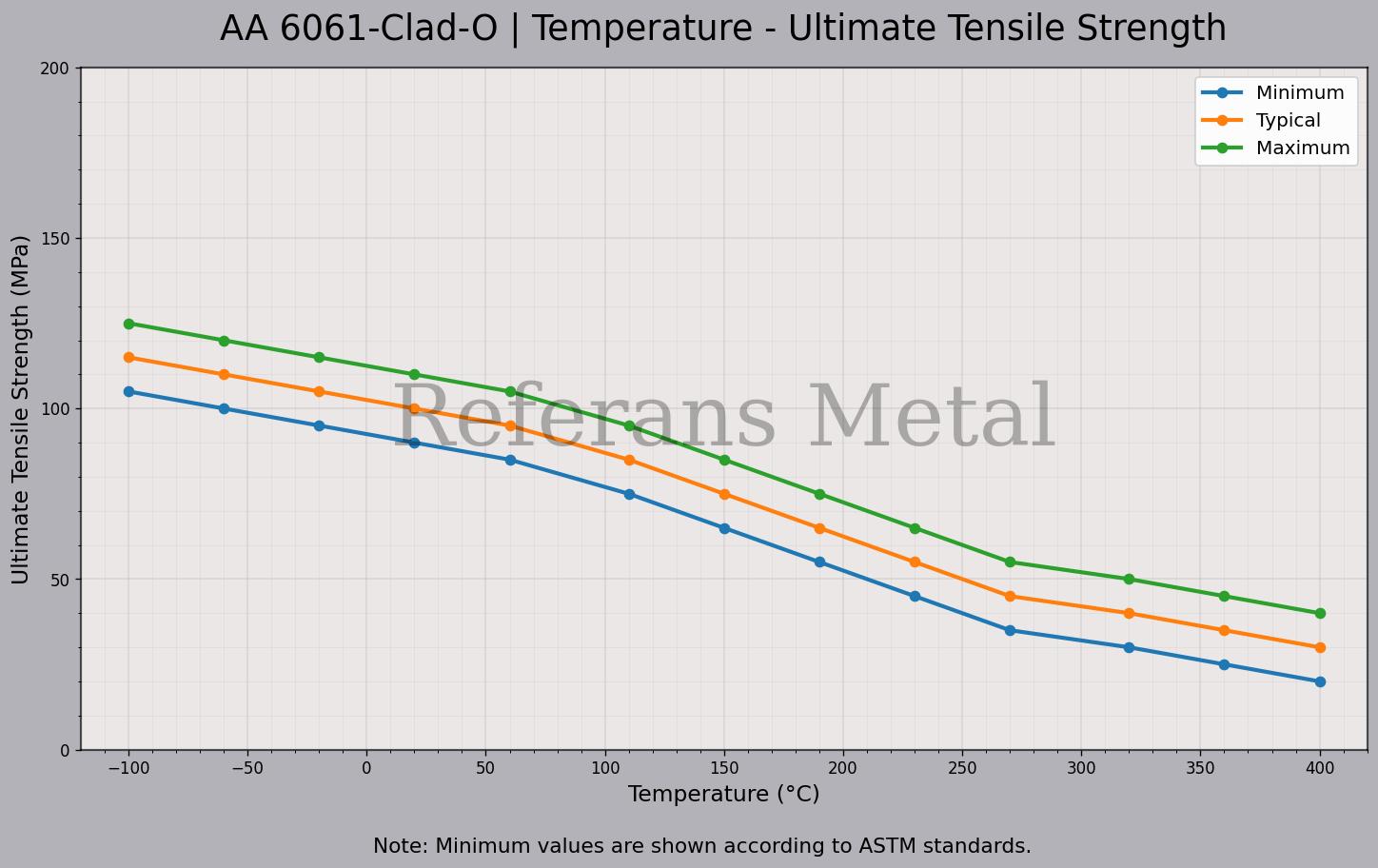
| 6061 clad O Temperature – Ultimate Tensile Strength Graph |
 |
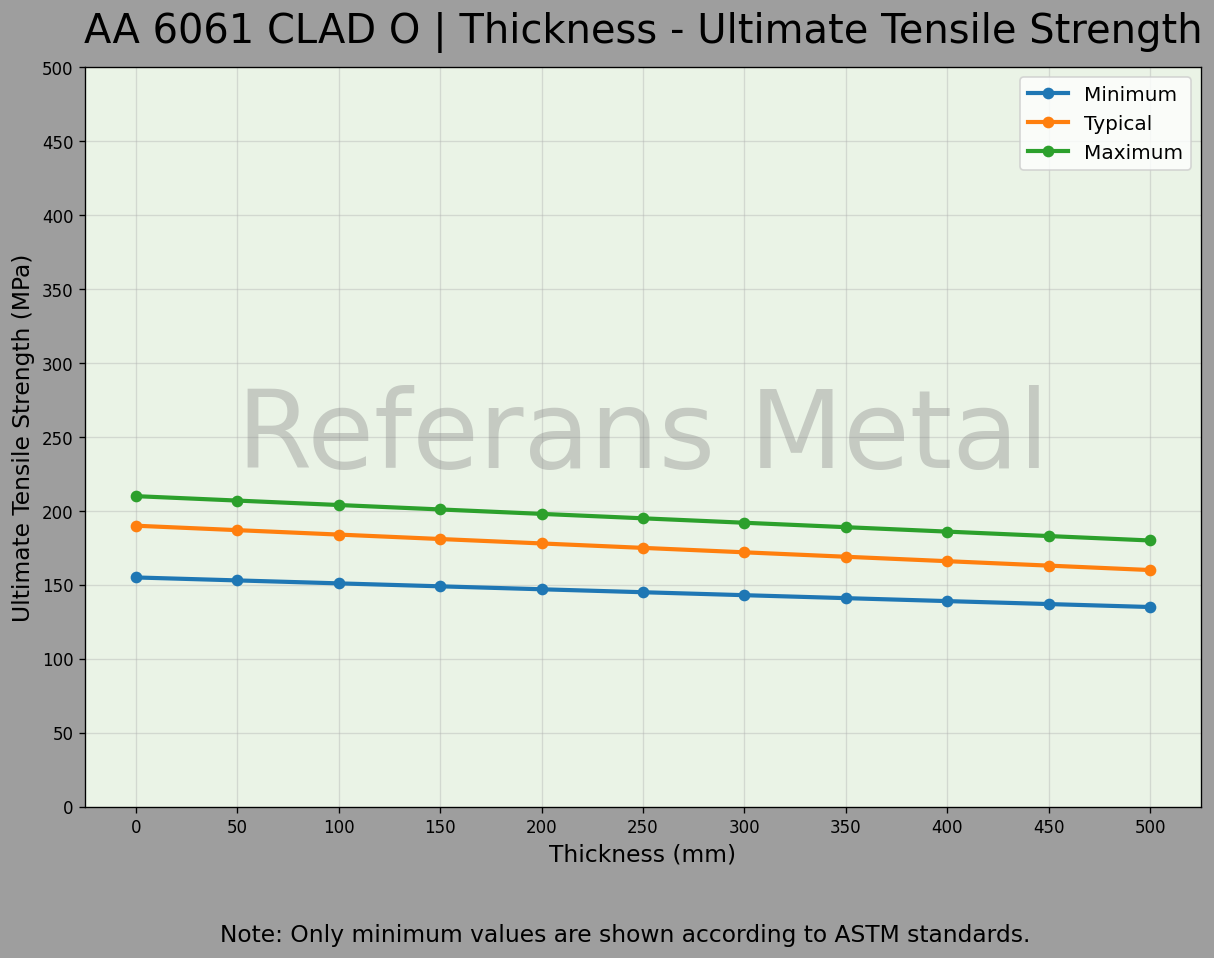
| 6061 clad O Thickness – Ultimate Tensile Strength Graph |
 |
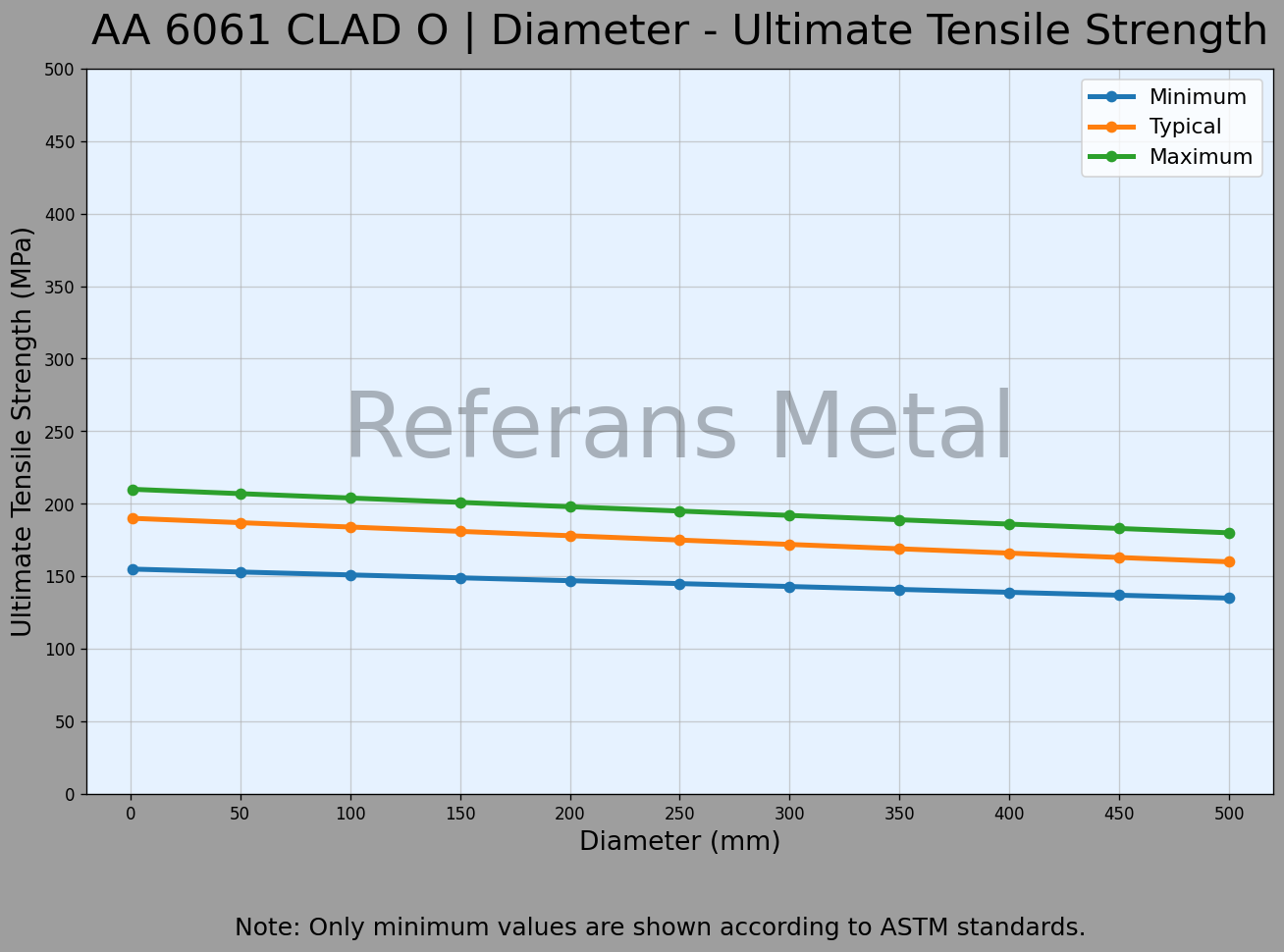
| 6061 clad O Diameter – Ultimate Tensile Strength Graph |
 |
6061 clad 0 aluminum alloy is a Mg and Si-based alloy belonging to the 6000 series, and thanks to its cladding layer, it offers enhanced corrosion resistance. In the O temper (annealed condition), it provides maximum ductility, making it highly suitable for forming processes. Since the cladding layer typically consists of purer aluminum, it protects the surface even in aggressive environments, thereby extending the service life of the alloy.
The strength of this alloy is lower compared to heat-treated conditions like T6; however, its high ductility in the O temper provides excellent impact resistance and energy absorption capability. For example, the 7075 alloy offers significantly higher strength but has lower corrosion resistance and weldability; in contrast, 6061 clad 0 provides a more balanced performance. Similarly, the 2024 alloy, despite its high strength, is more prone to corrosion and often requires cladding, making 6061 inherently more advantageous.
In terms of machinability, 6061 is generally considered good; however, in the O temper, its softness may lead to material adhesion during machining. Nevertheless, it can be processed effectively with proper cutting parameters. Its bendability is one of its strongest features; thanks to its high ductility, it can be bent into tight radii without cracking. This makes it especially advantageous for manufacturing complex-shaped components.
Regarding coating capability and surface treatments, 6061 is highly suitable; anodizing and other coating techniques can provide both aesthetic and protective surfaces. Additionally, in terms of vibration response, it demonstrates stable performance in dynamic environments due to its good energy damping capacity. This is particularly important in automotive and aerospace applications.
In terms of weldability, 6061 can be easily welded using MIG and TIG methods. In this respect, it is similar to the 5083 alloy, although 5083 offers superior seawater resistance while 6061 has a broader range of applications. 6061 clad 0 is widely used in industries such as aerospace, automotive, defense, construction, and machinery manufacturing, particularly where corrosion resistance and formability are critical.
Material Composition Standards
6061 O clad can conform to the following standards:
• 6061 O Alclad Sheets; AMS 4021, UNS A96061, WNR 3.3211, ISO AlMg1SiCu, ASTM B209
Characteristic Properties of 6061 O clad:
- Strength: Normal
- Machinability: Moderate
- Weldability: Excellent
- Formability: Good
- Corrosion Resistance: Very Good
- Heat Treatable: Yes
Some Well-Known Applications of 6061 O clad:
In structural materials requiring high strength,
In playgrounds and pipeline systems,
From solar panels to sports equipment, with many applications.
Stock We produce and supply 6061 O clad in sheet form.
- Sheets
 Weight Calculator