
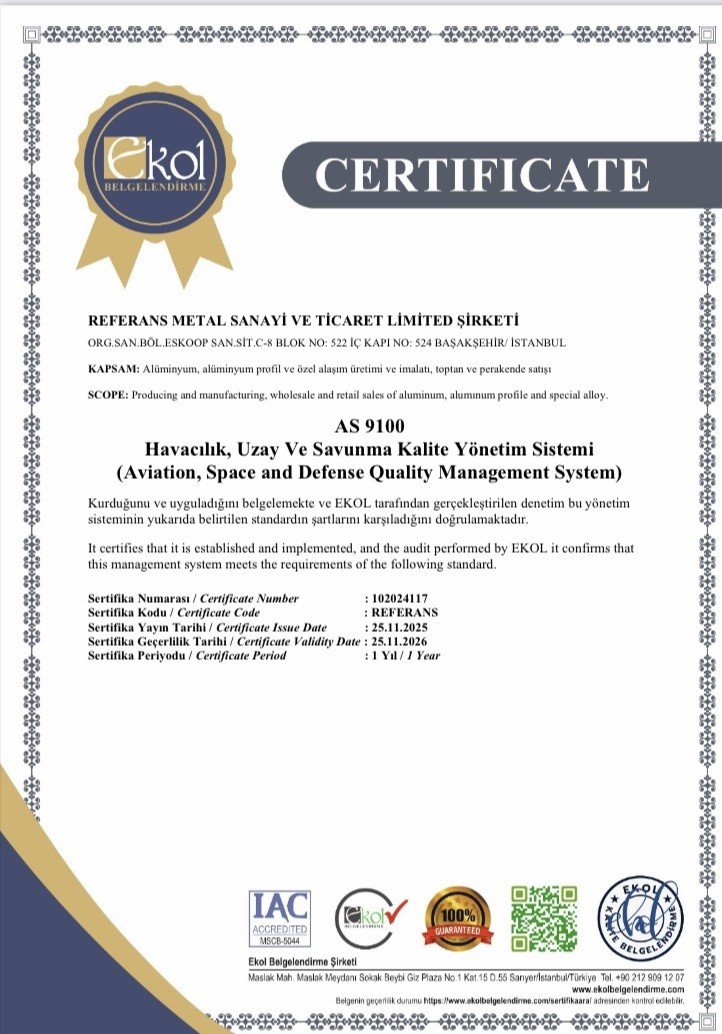
 AS 9100
 SPACE 2009
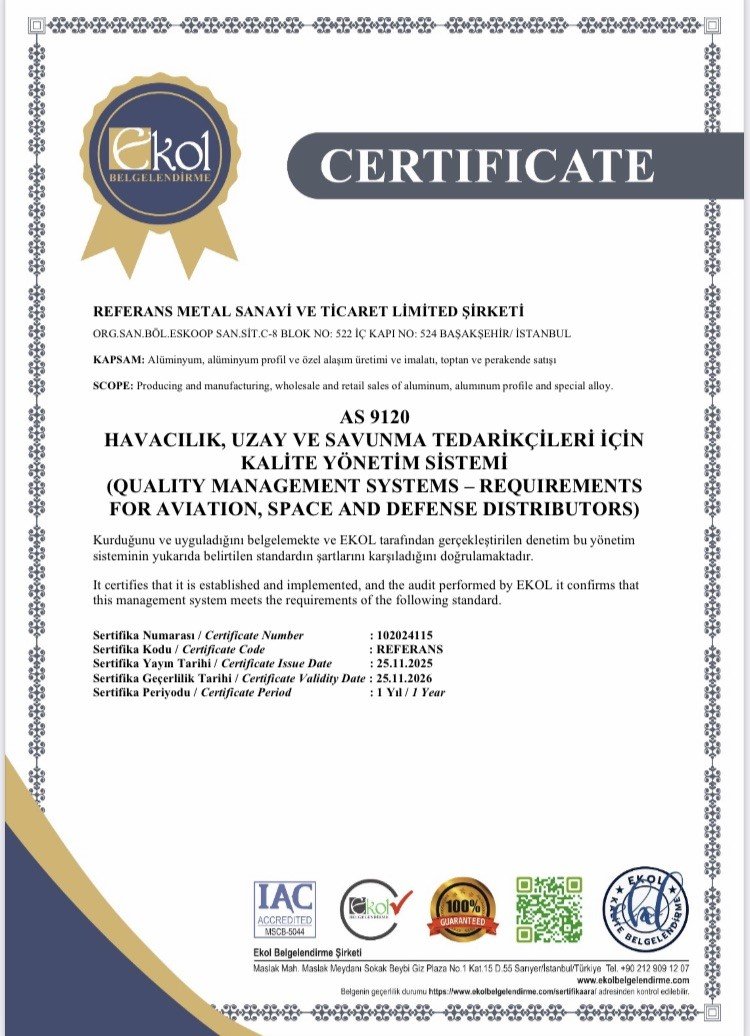 AS 9120




Plates
Sheets
Rod/Round Bar/Flat Bar
Tube/Extrusions/Profile
1050
ASTM B209 / Al99.5 / 1050 / H24
| Chemical Properties | % Value |
| Silicon (Si) | 0,5 - 0,25 |
| Manganese (Mn) | 0,00 - 0,05 |
| Magnesium (Mg) | 0,00 - 0,05 |
| Copper (Cu) | 0,00 - 0,05 |
| Titanium (Ti) | 0,00 - 0,03 |
| Iron (Fe) | 0,00 - 0,50 |
| Zinc (Zn) | 0,00 - 0,05 |
| Aluminium (Al) | 99,2 - 99,9 |
| Physical Properties | Value |
| Density | 2.70 g/cm³ |
| Melting Point | 640 °C |
| Thermal Expansion | 21.8 µm/m.°C |
| Modulus of Elasticity | 68 GPa |
| Thermal Conductivity | 230 W/m.K |
| Electrical Resistivity | %61 IACS |
| Mechanical Properties | Value |
| Yield Strength | 63 MPa |
| Ultimate Strength | 110 MPa |
| Shear Strength | 84 MPa |
| Elongation A50 mm | 6.8 % |
| Hardness | 45 HB |
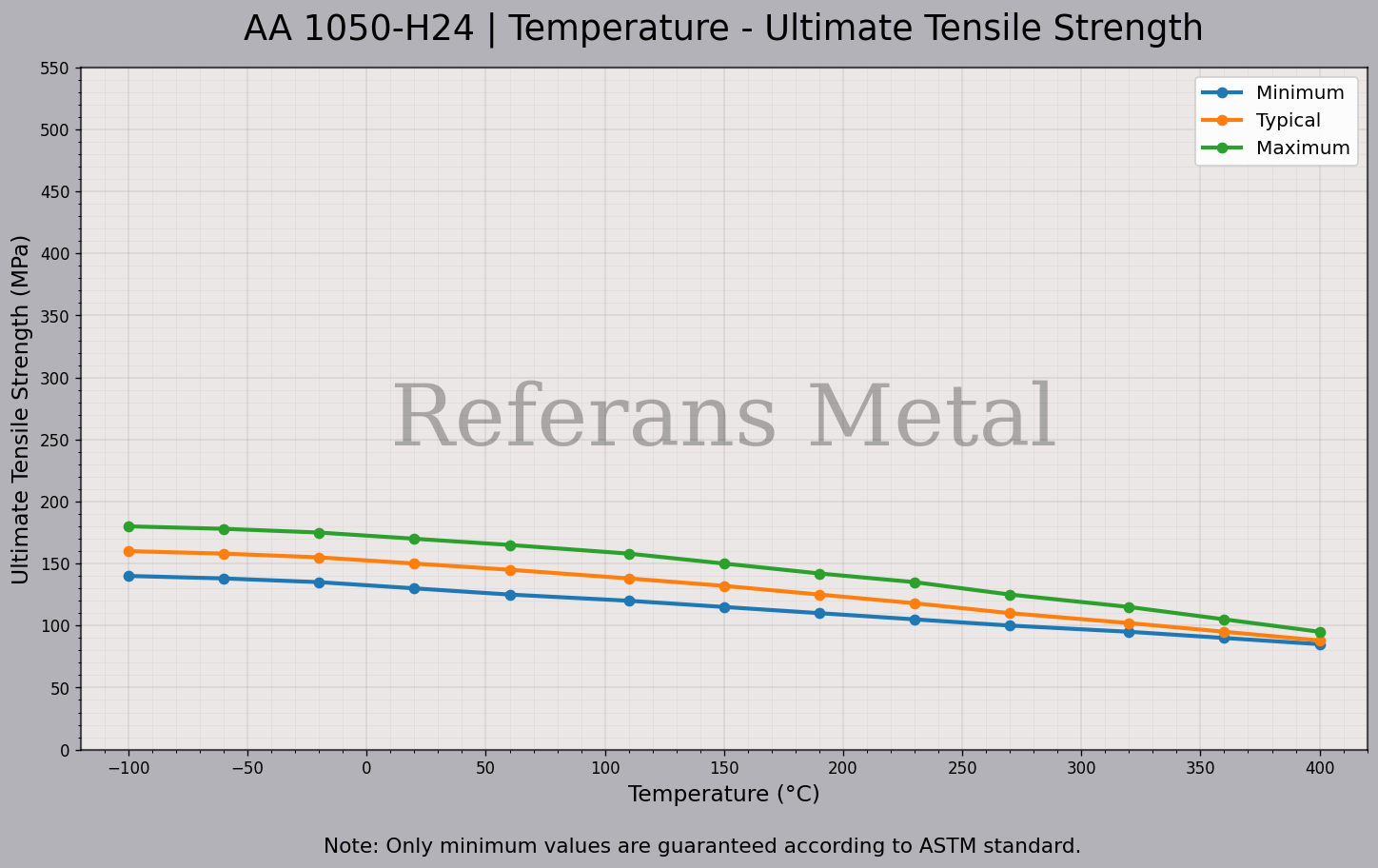
| 1050 H24 Temperature – Ultimate Tensile Strength Graph |
 |
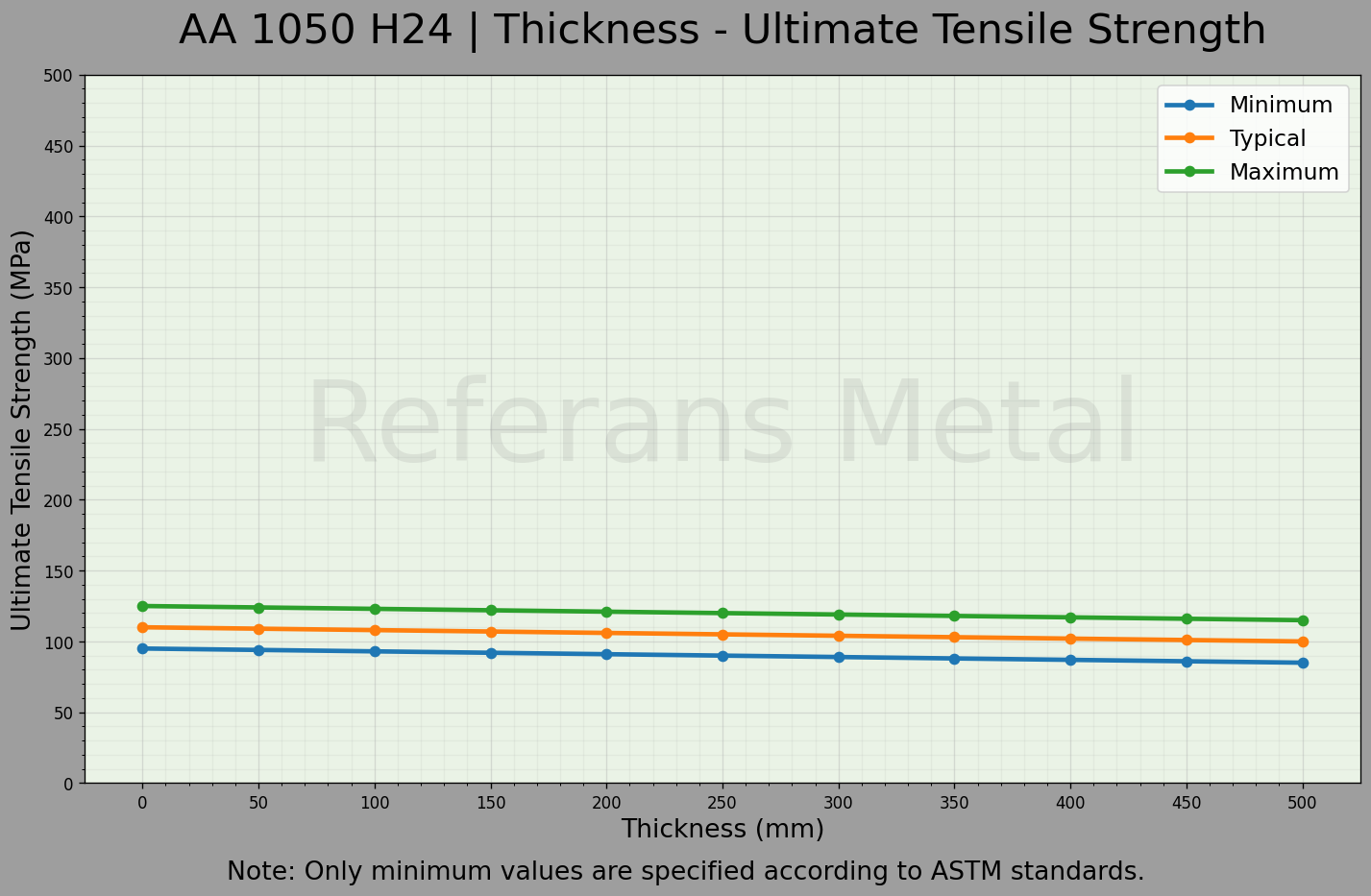
| 1050 H24 Thickness – Ultimate Tensile Strength Graph |
 |
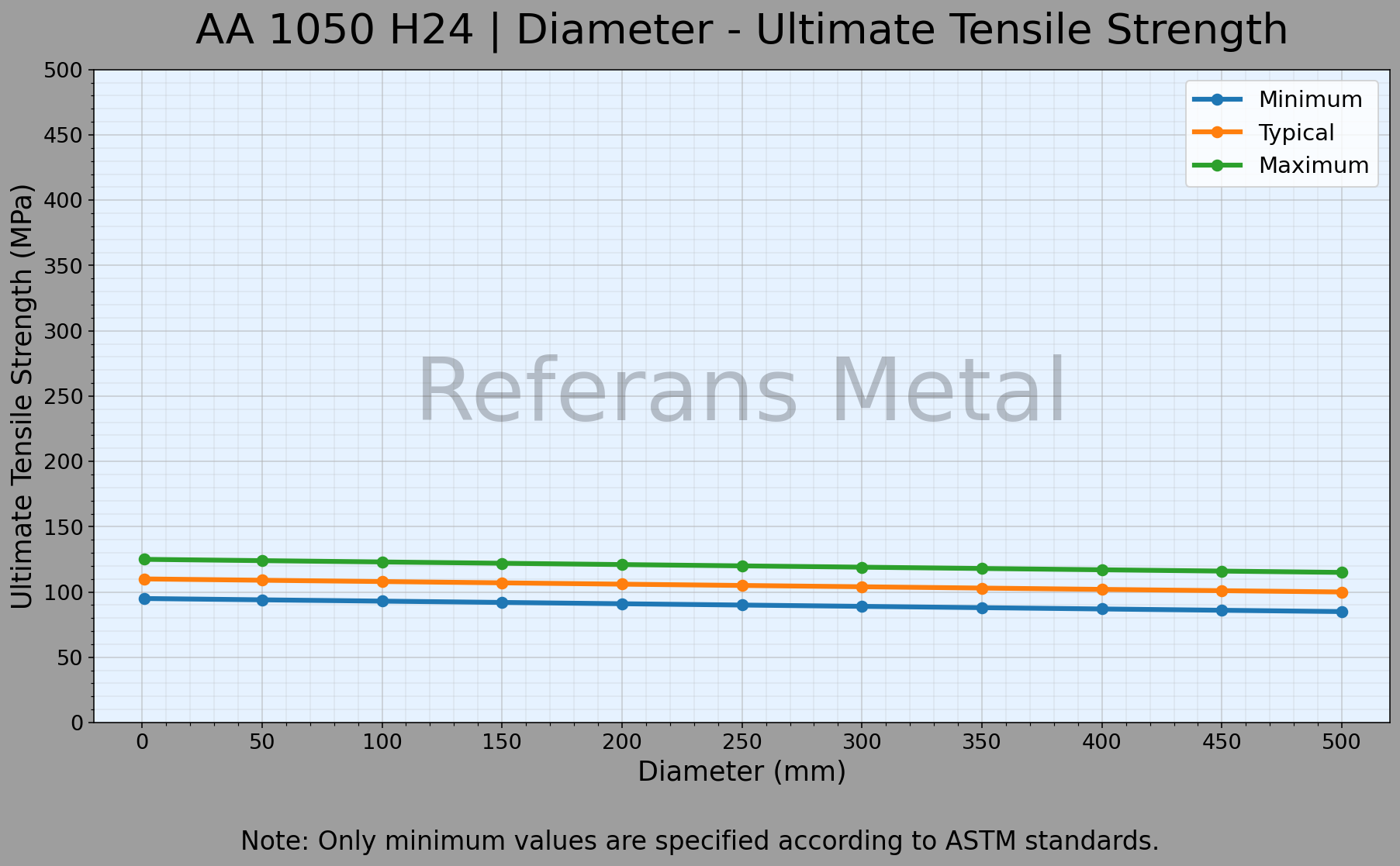
| 1050 H24 Diameter – Ultimate Tensile Strength Graph |
 |
MATERIAL COMPOSITION STANDARDS
1050 H24 can be available in the following standards.
• 1050 H24 Sheet; ASTM B209, L-3051, UNS A91050, WNR 3.0255, ISO Al99.5
Characteristic Properties of 1050 H24:
- Strength: Moderate
- Machinability: Poor
- Weldability: Very Good
- Formability: Good
- Corrosion Resistance: Excellent
- Heat Treatment: Yes
Commonly Known Applications for 1050 H24:
Used as equipment material in the chemical industry,
In road signs,
And many other usage areas including kitchen utensils.
STOCK
We produce/supply 1050 H24 in sheet form.
- Sheet
DELIVERY:
| Mechanical Properties | |||
| Thickness (mm) | Yield Strength (Min.) | Ultimate Strength (Min.) | Elongation A50 mm % |
| Over 0.4 up to & incl. 0.8 | 370 MPa | 430 MPa | %6 |
| Over 0.8 up to & incl. 1.6 | 380 MPa | 440 MPa | %7 |
| Over 1,6 up to & incl. 6,0 | 390 MPa | 440 MPa | %7 |
 Weight Calculator