
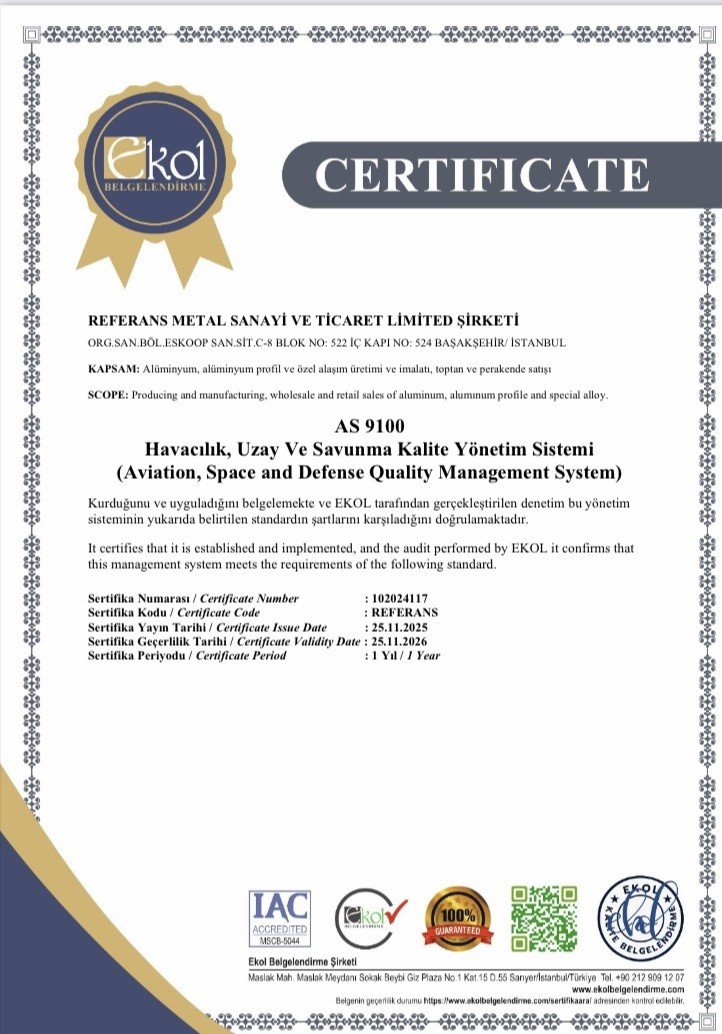
 AS 9100
 SPACE 2009
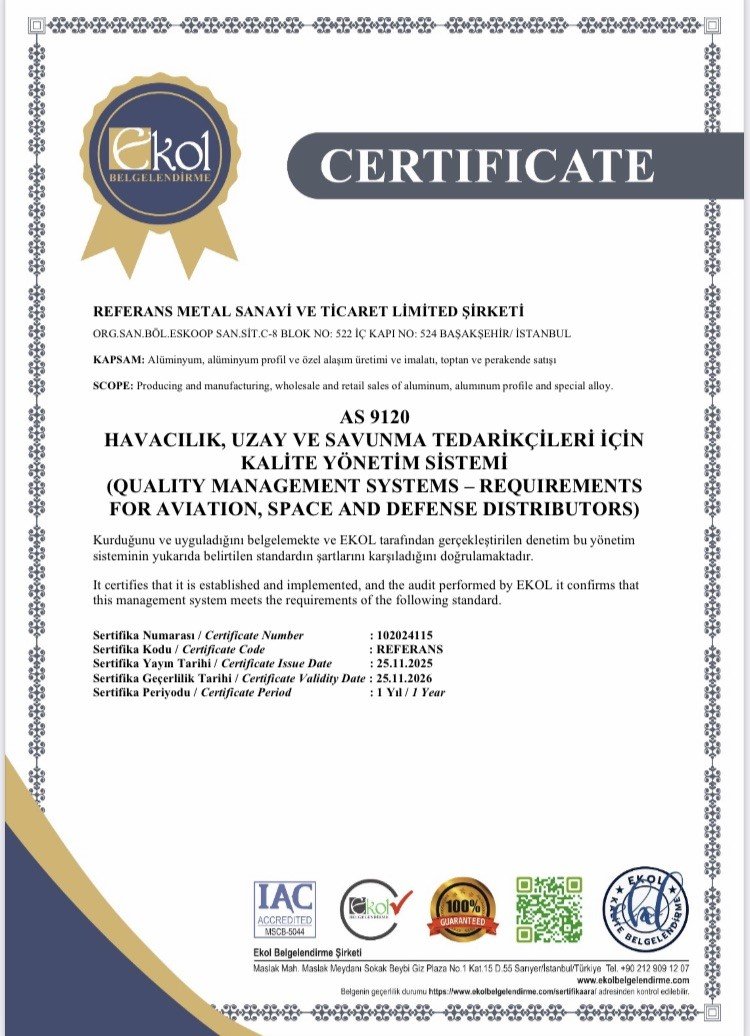 AS 9120




Plates
Sheets
Rod/Round Bar/Flat Bar
Tube/Extrusions/Profile
2014 clad
AIR 9048.080 / AlCu4SiMg / 2014 clad / T62
| Chemical Properties | % Value |
| Silicon (Si) | 0,5 - 1,2 |
| Chromium (Cr) | 0,00 - 0,10 |
| Manganese (Mn) | 0,40 - 1,20 |
| Magnesium (Mg) | 0,20 - 0,80 |
| Copper (Cu) | 3,90 - 5,00 |
| Titanium (Ti) | 0,00 - 0,15 |
| Iron (Fe) | 0,00 - 0,70 |
| Zinc (Zn) | 0,00 - 0,25 |
| Aluminium (Al) | Balance |
| Physical Properties | Value |
| Density | 2.8 g/cm³ |
| Melting Point | 507 °C |
| Thermal Expansion | 22.7 µm/m°C |
| Modulus of Elasticity | 72 GPa |
| Thermal Conductivity | 130 W/m.K |
| Electrical Resistivity | 40 % IACS |
| Mechanical Properties | Value |
| Proof Strength | 440 MPa |
| Yield Strength | 500 MPa |
| Shear Strength | 290 MPa |
| Elongation A50 mm | 7.3 % |
| Hardness | 130 HB |
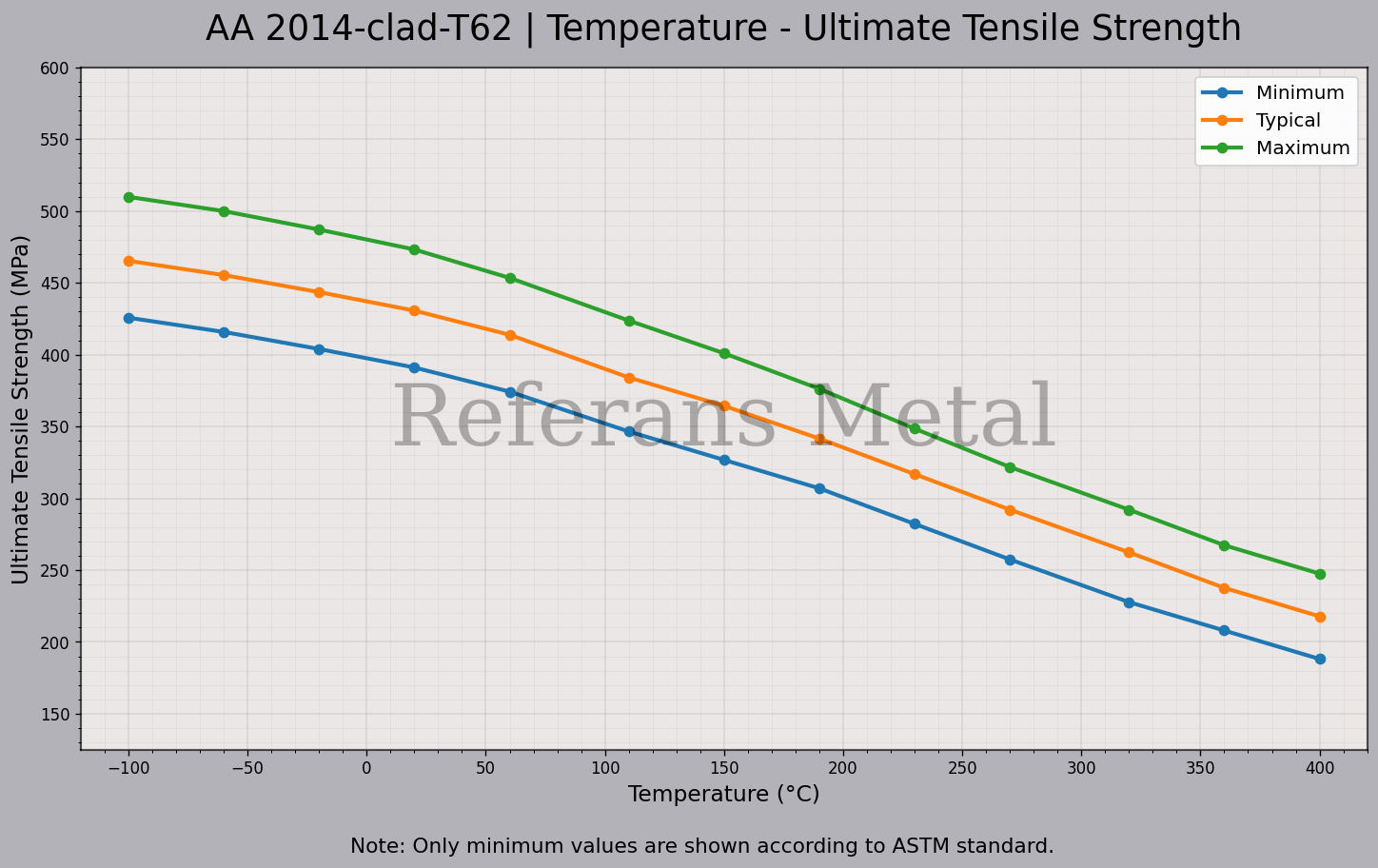
| 2014 Clad T62 Temperature – Ultimate Tensile Strength Graph |
 |
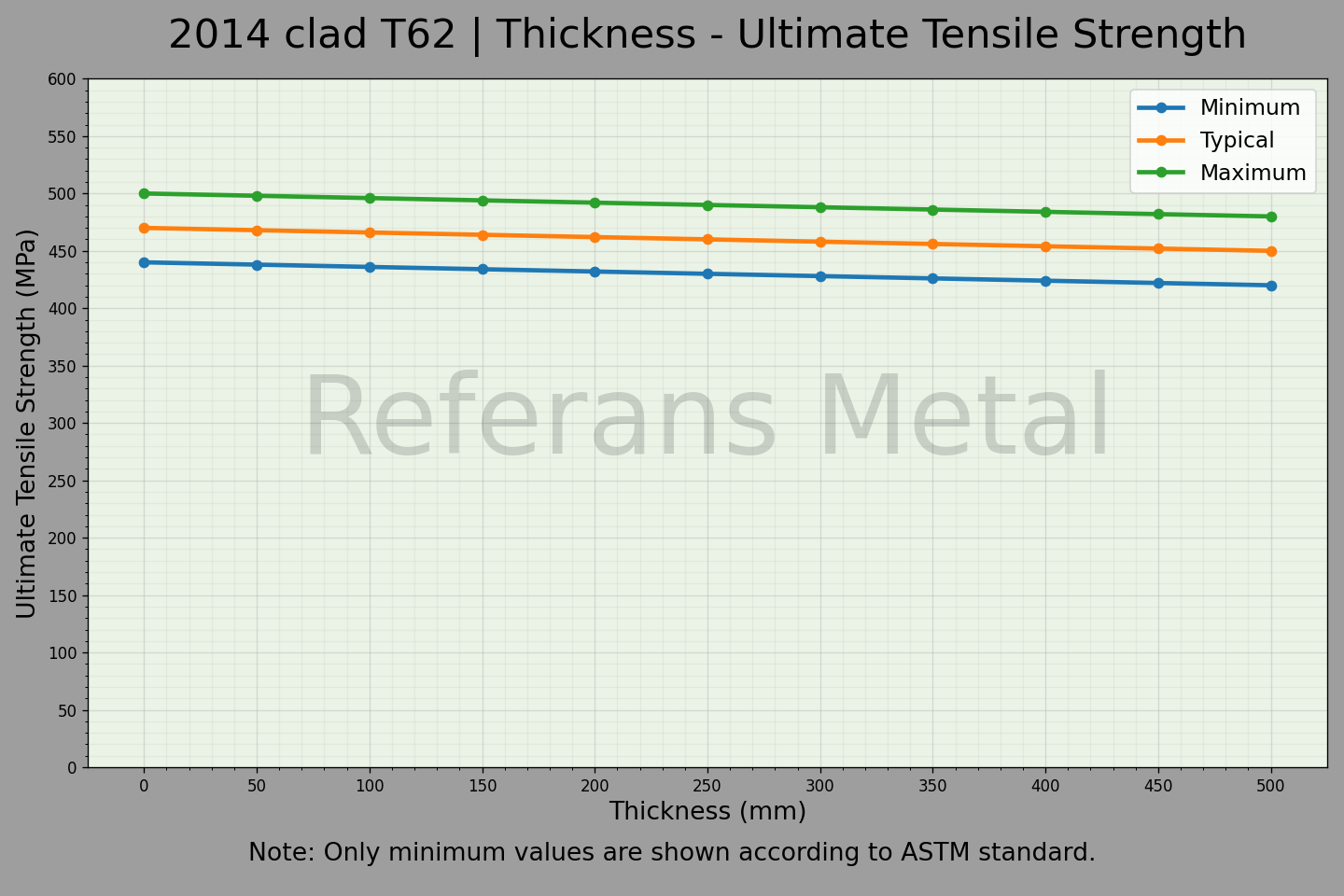
| 2014 Clad T62 Thickness – Ultimate Tensile Strength Graph |
 |
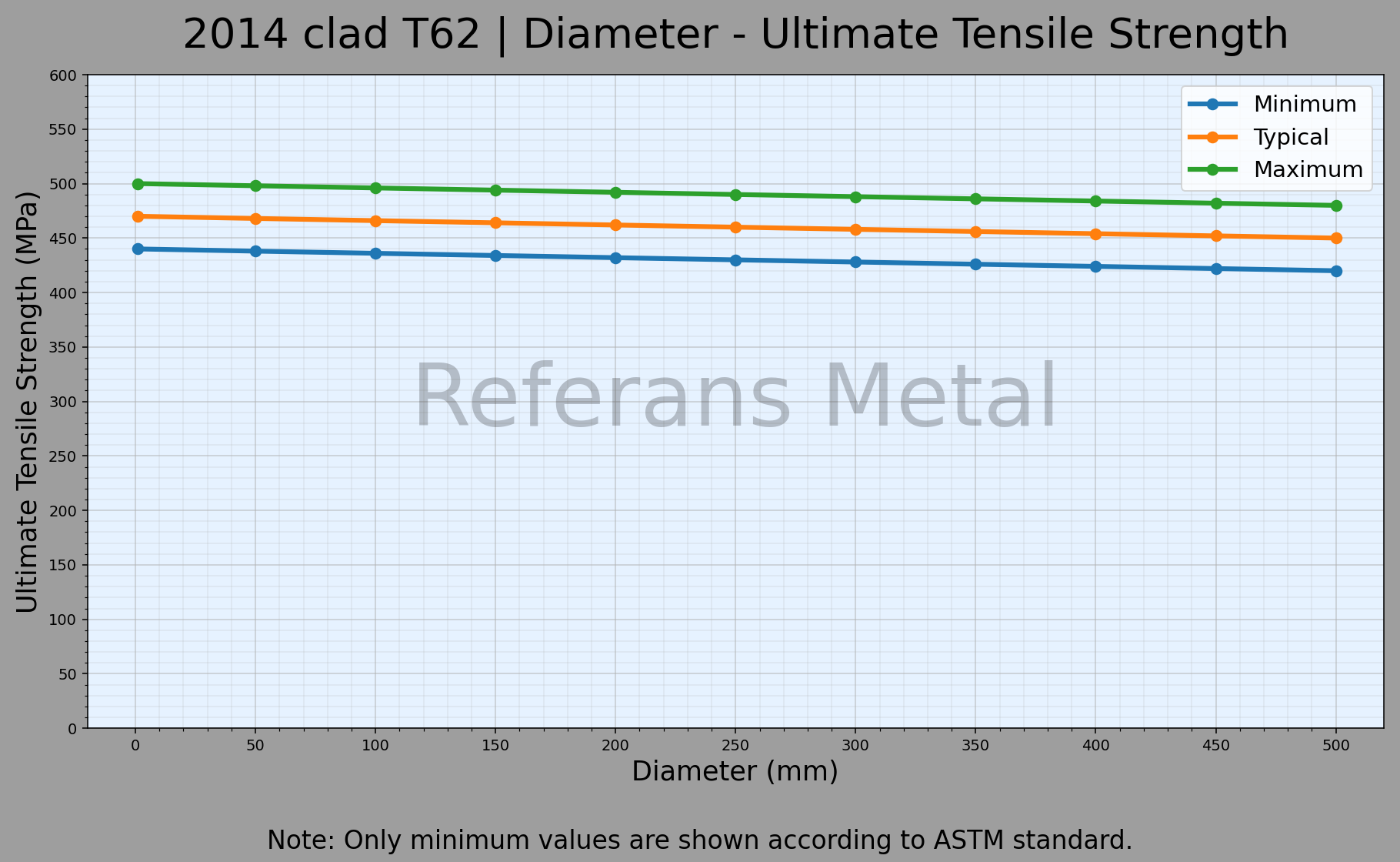
| 2014 Clad T62 Diameter – Ultimate Tensile Strength Graph |
 |
2014 clad T62 aluminum alloy is a wrought Al-Cu-Mg-Si based aluminum alloy developed for applications requiring high strength. The clad structure means that the surface of the alloy is coated with a layer of relatively pure aluminum, which significantly improves its corrosion resistance. Although the 2014 alloy naturally has high strength, its bare form has limited corrosion resistance; therefore clad coating is especially preferred in aerospace applications. The T62 temper indicates that the alloy has undergone solution heat treatment, mechanical deformation, and artificial aging, a process that increases tensile strength and yield strength while maintaining a certain level of ductility.
One of the most important characteristics of this alloy is its high mechanical strength. The 2014 clad T62 alloy is widely used for load-bearing structural components. In terms of strength, it offers strength levels similar to the 2024 alloy, while in some tempers it can provide better high-temperature strength performance. Compared with 6061 alloy, 2014 provides significantly higher tensile strength, although 6061 has better corrosion resistance and weldability. On the other hand, 7075 alloy may reach higher overall strength values, but 2014 alloy can demonstrate more stable mechanical properties in elevated-temperature structural applications.
In terms of machinability, the 2014 clad T62 alloy offers considerable advantages. Due to its excellent machinability, it is widely used in machining processes. Components such as aircraft fittings, structural parts, and aerospace hardware are often produced from this alloy. The bending capability is limited, as is common with high-strength aluminum alloys; the T62 temper provides high strength while making formability lower than T4 or O tempers. Nevertheless, certain forming operations can still be performed with appropriate processing parameters.
Regarding coating capability and surface treatments, the 2014 clad alloy performs well. Thanks to the clad layer, the alloy becomes more resistant to atmospheric corrosion, and it can also undergo surface treatments such as anodizing. Its vibration and fatigue response is particularly important for aerospace structures, and the 2014 alloy exhibits good fatigue strength. This property allows it to be used in aircraft fuselage components, wing structures, and heavy-duty machine parts.
In terms of weldability, the 2014 alloy is generally not recommended for welding because cracking and strength loss may occur during the welding process. Therefore, the alloy is usually joined using riveting, bolting, or mechanical fastening methods. Typical application areas include aerospace and aviation industries, defense systems, high-strength machinery components, automotive performance parts, and industrial equipment. Its high strength, good machinability, and improved corrosion resistance provided by the clad layer make the 2014 clad T62 alloy an important engineering material.
STANDARDS OF MATERIAL COMPOSITION
2014 T62 clad may be produced in accordance with the following standards.
• 2014 T62 Alclad Sheet; ASTM B209, ISO AlCu4SiMg, UNS A92014, WNR 3.1255, MIL-A-21180, AIR 9048.080
Characteristic Properties for 2014 T62 clad:
- Strength: Very good
- Machinability: Medium-high
- Weldability: Poor (build-up welding is the best option)
- Formability: Good
- Corrosion Resistance: Low (Improved by cladding)
- Heat Treatment: Yes
Some Well-Known Applications for 2014 T62 clad:
In cooling towers and pipelines,
As military vehicle components and in weapon manufacturing,
Generally used in the automotive and aerospace sectors.
STOCK
We carry out the production/supply of 2014 T62 clad sheet.
- Sheet
 Weight Calculator