
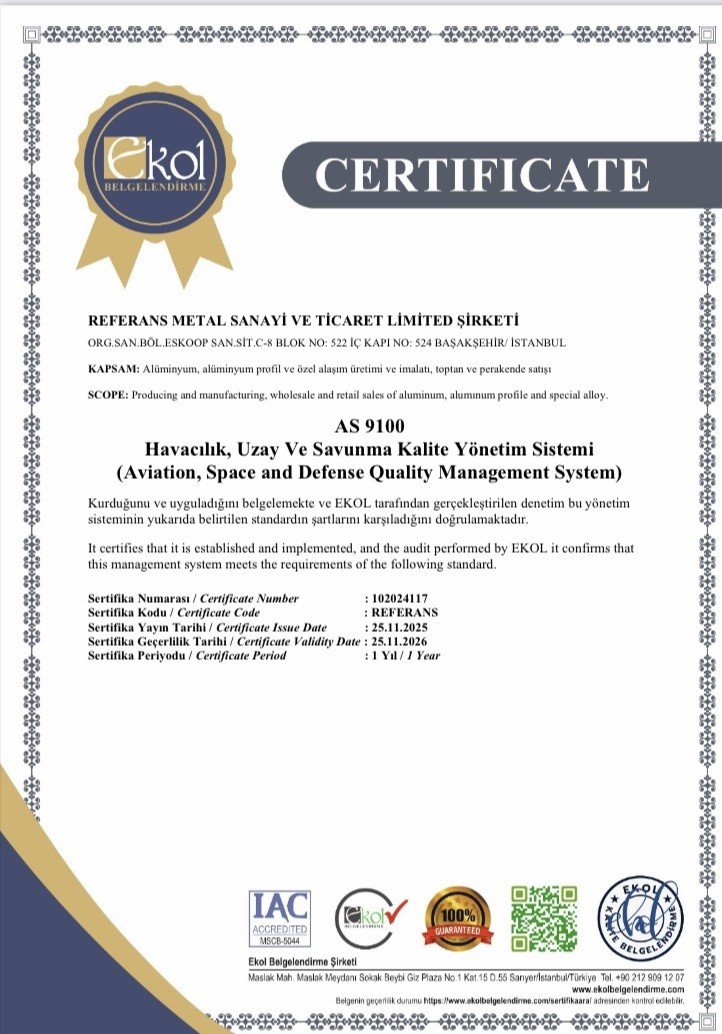
 AS 9100
 SPACE 2009
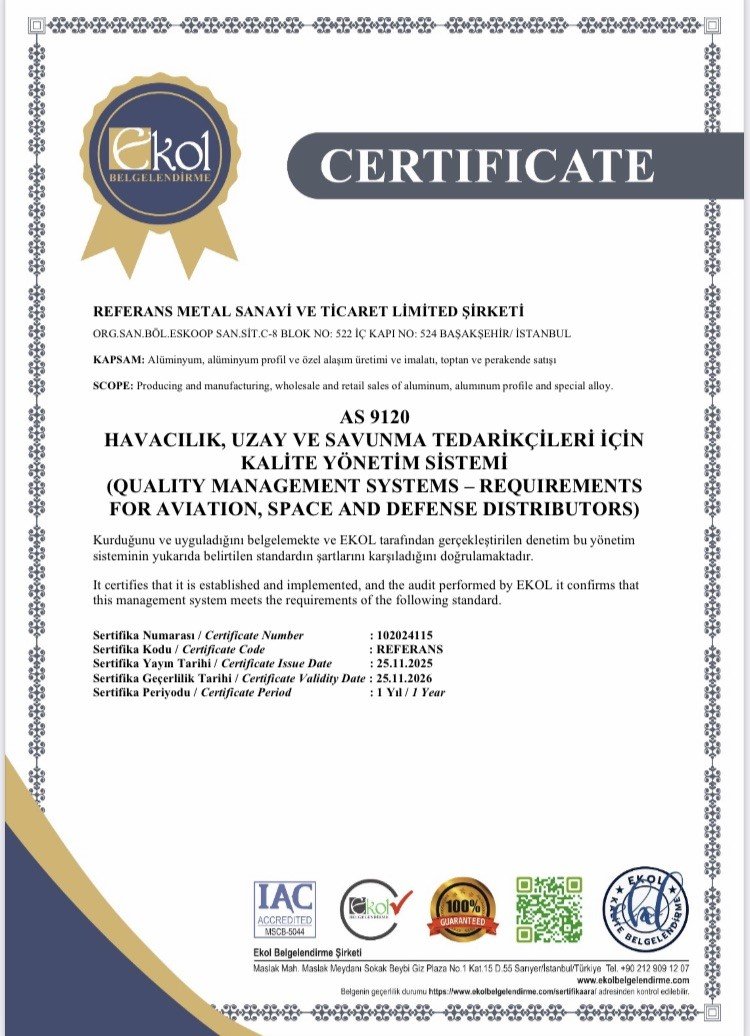 AS 9120




Plates
Sheets
Rod/Round Bar/Flat Bar
Tube/Extrusions/Profile
2219 clad
AMS 4095 / AlCu6Mn / 2219 clad / T351
| Chemical Properties | % Value |
| Silicon (Si) | 0,00 - 0,70 |
| Manganese (Mn) | 0,20 - 0,40 |
| Magnesium (Mg) | 0,00 - 0,10 |
| Copper (Cu) | 5,80 - 6,80 |
| Titanium (Ti) | 0,02 - 0,10 |
| Iron (Fe) | 0,00 - 0,30 |
| Zinc (Zn) | 0,80 - 1,30 |
| Aluminium (Al) | Balance |
| Physical Properties | Value |
| Density | 2.84 g/cm³ |
| Melting Point | 543 °C |
| Thermal Expansion | 22.5 µm/m-°C |
| Modulus of Elasticity | 74 GPa |
| Thermal Conductivity | 120 W/m-K |
| Electrical Resistivity | 30 % IACS |
| Mechanical Properties | Value |
| Proof Strength | 180 MPa |
| Yield Strength | 305 MPa |
| Shear Strength | 150 MPa |
| Elongation A50 mm | %10 |
| Hardness | 79 HB |
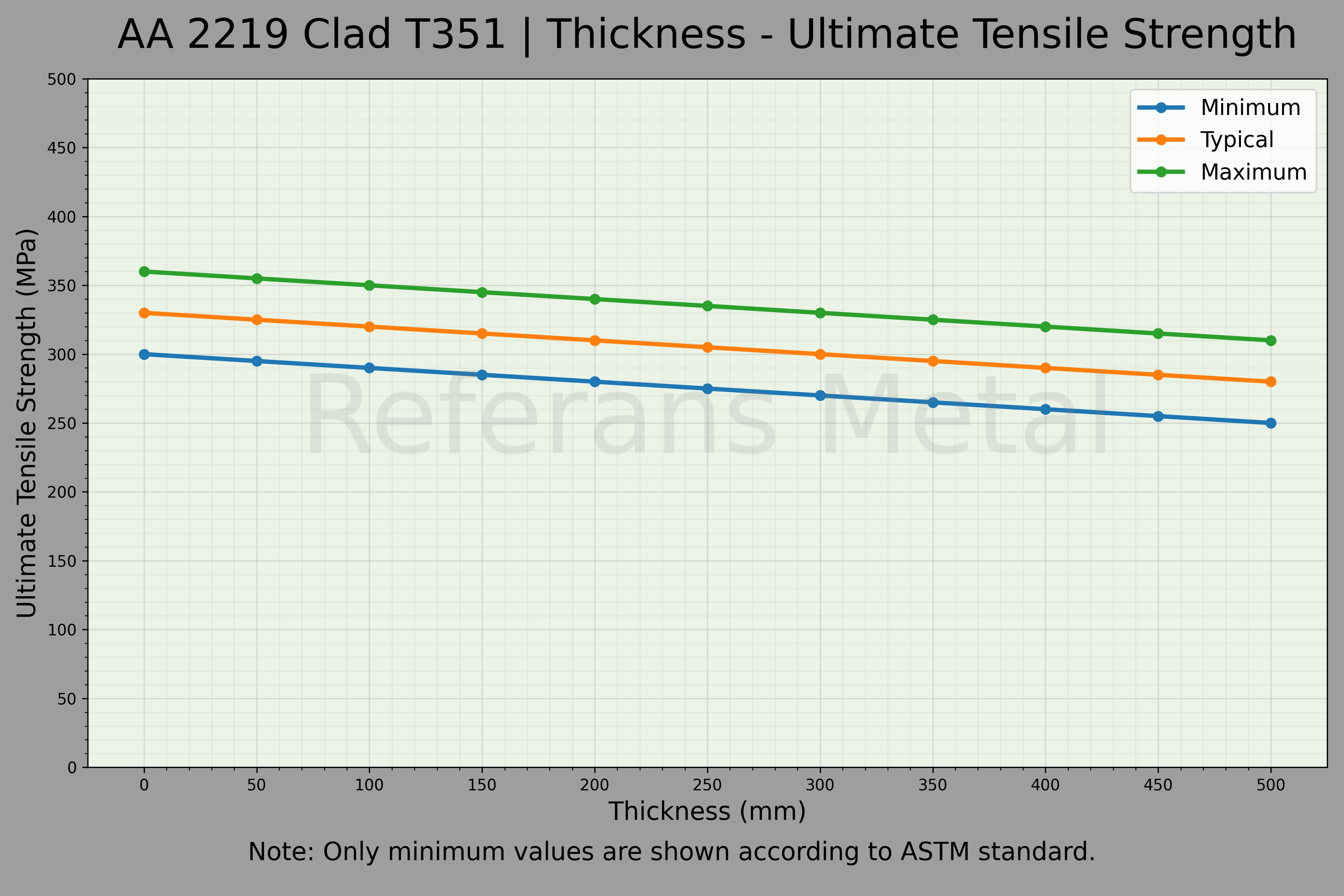
| 2219 Clad T351 Thickness – Ultimate Tensile Strength Graph |
 |
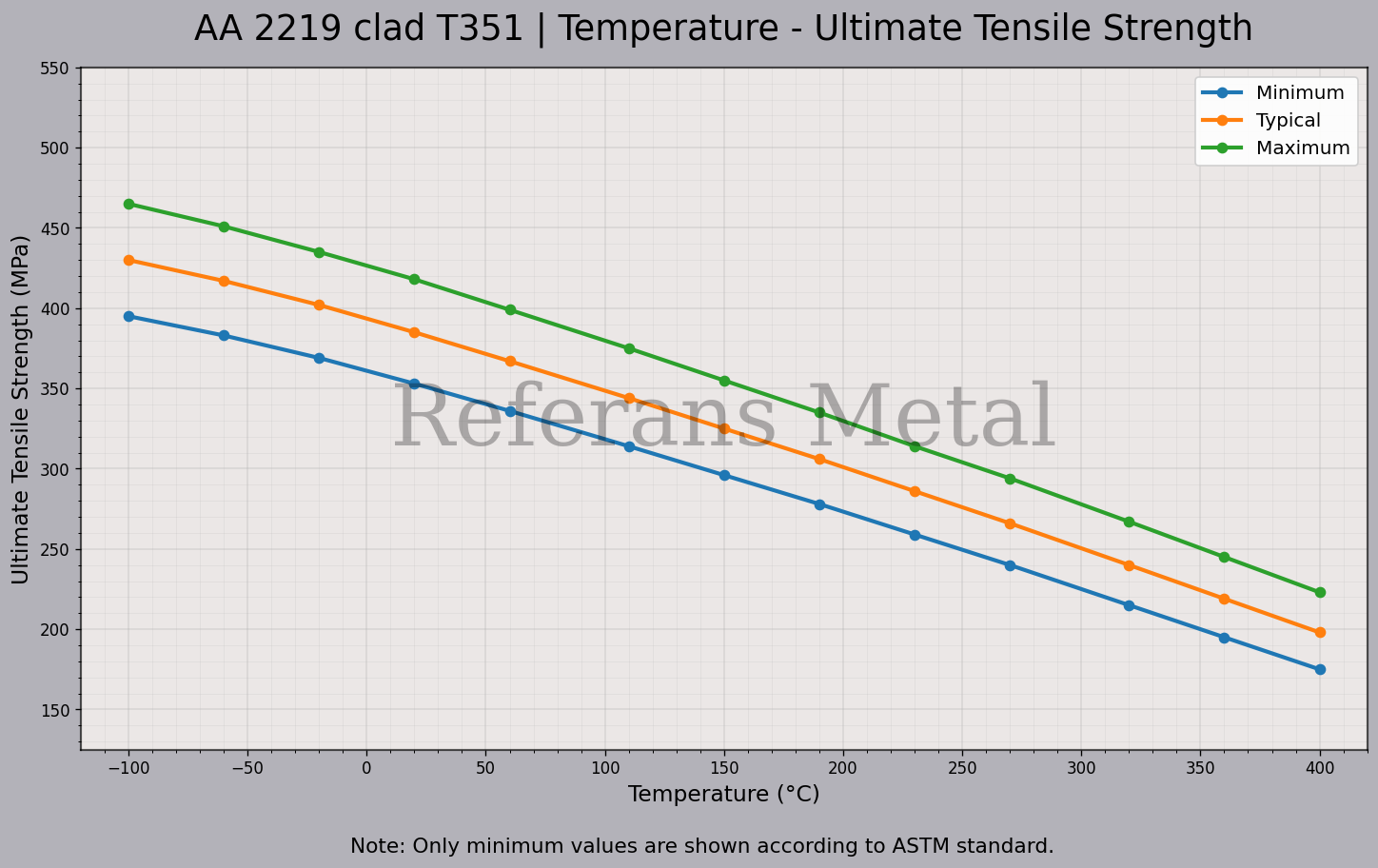
| 2219 Clad T351 Temperature – Ultimate Tensile Strength Graph |
 |
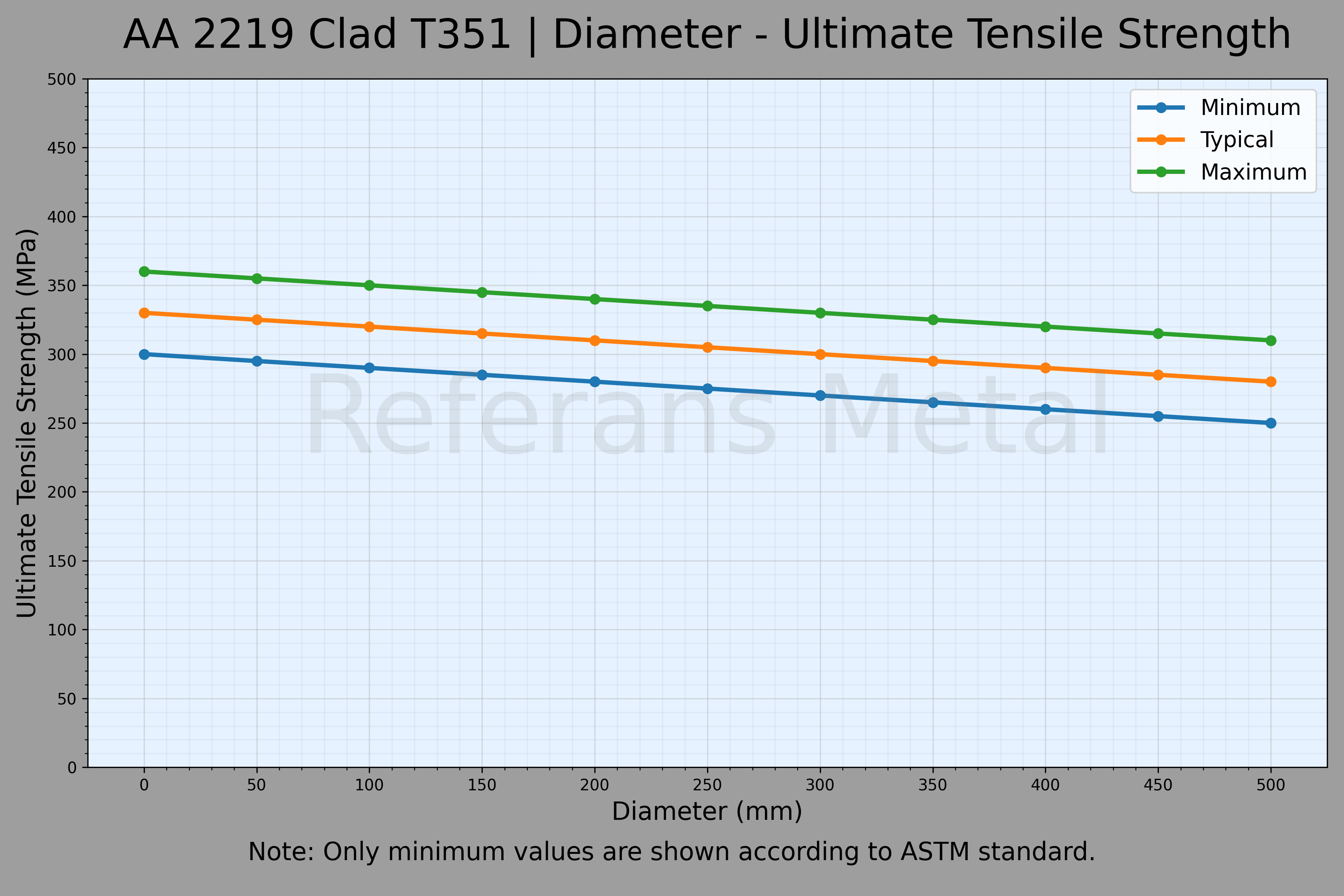
| 2219 Clad T351 Diameter – Ultimate Tensile Strength Graph |
 |
2219 clad T351 aluminum alloy is a copper-based (Al-Cu) alloy that stands out especially with its high-temperature strength and structural performance. Its clad (coated) version provides enhanced corrosion resistance thanks to a pure aluminum layer on the surface while preserving the high strength properties of the core material. The T351 temper includes solution heat treatment, stress relieving, and natural aging processes; thus, the material offers both dimensional stability and reliable mechanical performance. The reason it is especially preferred in aerospace applications is that it maintains its strength better at elevated temperatures compared to many other aluminum alloys.
In terms of corrosion resistance, the 2219 clad T351 alloy is significantly superior compared to unclad 2219. The clad coating forms a protective barrier, especially in atmospheric and mildly chemical environments. This feature makes the alloy advantageous for marine applications, fuel tanks, and cryogenic tank applications. However, although alloys such as 2024-T3 provide high strength, they are generally weaker in terms of corrosion resistance and often require cladding. The 7075-T6 alloy, despite its very high strength, is more sensitive to stress corrosion; in this respect, 2219 clad provides a more balanced performance.
In terms of strength and high-temperature performance, the 2219 alloy stands out with its ability to maintain strength particularly in the 150–300°C range. Thanks to this property, it is widely used in rocket fuel tanks, spacecraft, and high-temperature structural components. Compared to the 6061-T6 alloy, 2219 performs better at higher temperatures, while 6061 is a more common and economical option in general engineering applications. Additionally, when compared with the 2014 alloy, 2219 offers better weldability and more balanced mechanical properties.
In terms of machinability and bending properties, the 2219 T351 alloy has good machinability; however, due to its high strength, tool wear may increase in some cases. Its bending capability is at a moderate level; it is more limited especially compared to T3 or O tempers. Nevertheless, forming is possible with correct process parameters. In terms of vibration response, the alloy exhibits good damping behavior and shows stable performance under dynamic loads. This property is important in reducing vibration-induced fatigue damage in aerospace structures.
Weldability and coatability properties make the 2219 alloy stand out in many applications. This alloy can be successfully joined especially with TIG and MIG welding methods and largely retains its mechanical properties after welding. In this respect, it is more advantageous than alloys such as 2024 and 7075, as these alloys are generally weaker in terms of weldability. In terms of coatability, the clad version already provides surface protection, reducing the need for additional processes. All these properties make the 2219 clad T351 alloy an indispensable material in critical sectors such as aerospace, space, defense, and cryogenic systems.
MATERIAL COMPOSITION STANDARDS
2219 T351 clad can be available under the following standards:
• 2219 T351 Alclad Sheet; ASTM B209, UNS A92219, AMS 4095, ISO AlCu6Mn
Characteristic Properties of 2219 T351 clad:
- Strength: Very good
- Machinability: Poor
- Weldability: Quite good
- Formability: Reasonable
- Corrosion Resistance: Above average
- Heat Treatable: Yes
Well-Known Applications of 2219 T351 clad:
Used as structural elements in engineering applications,
In welding applications requiring high strength,
In aircraft fuselages and as feed rockets.
STOCK
We produce/supply 2219 T351 clad in sheet form.
- Sheet
 Weight Calculator