
 AS 9100
 SPACE 2009
 AS 9120


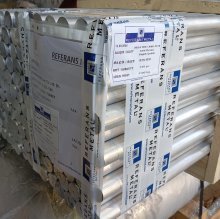

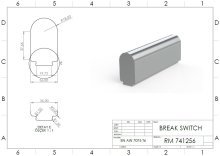

Cold Drawn Round Bar
Cold Drawn Tube
2014A
Cold Drawn/Finished (CF) / AlCu4SiMg (Soğuk Çekim) / 2014A / T3
| Chemical Properties | % Value |
| Silicon (Si) | 0,50 - 0,90 |
| Chromium (Cr) | 0,00 - 0,10 |
| Manganese (Mn) | 0,40 - 1,20 |
| Magnesium (Mg) | 0,20 - 0,80 |
| Copper (Cu) | 3,90 - 5,00 |
| Titanium (Ti) | 0,00 - 0,15 |
| Iron (Fe) | 0,00 - 0,70 |
| Zinc (Zn) | 0,00 - 0,25 |
| Aluminium (Al) | Balance |
| Physical Properties | Value |
| Density | 2.80 g/cm³ |
| Melting Point | 507 °C |
| Thermal Expansion | 22.7 µm/m.°C |
| Modulus of Elasticity | 73 GPa |
| Thermal Conductivity | 134 W/m.K |
| Electrical Resistivity | 34% IACS |
| Mechanical Properties | Value |
| Yield Strength | 240 MPa |
| Ultimate Strength | 405 MPa |
| Shear Strength | 260 MPa |
| Elongation A50 mm | 17% |
| Hardness | 100 HB |
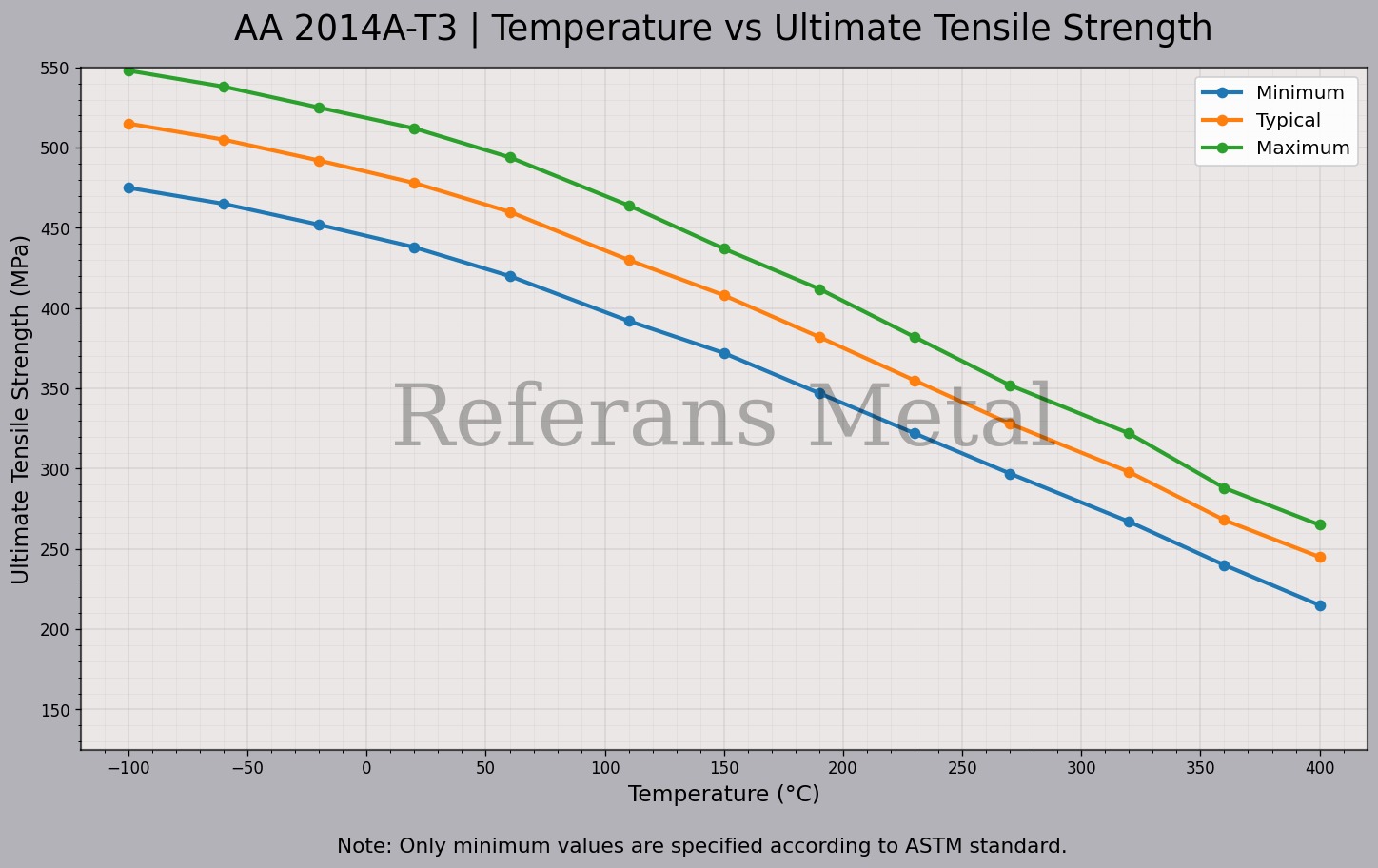
| 2014A T3 Temperature – Ultimate Tensile Strength Graph |
 |
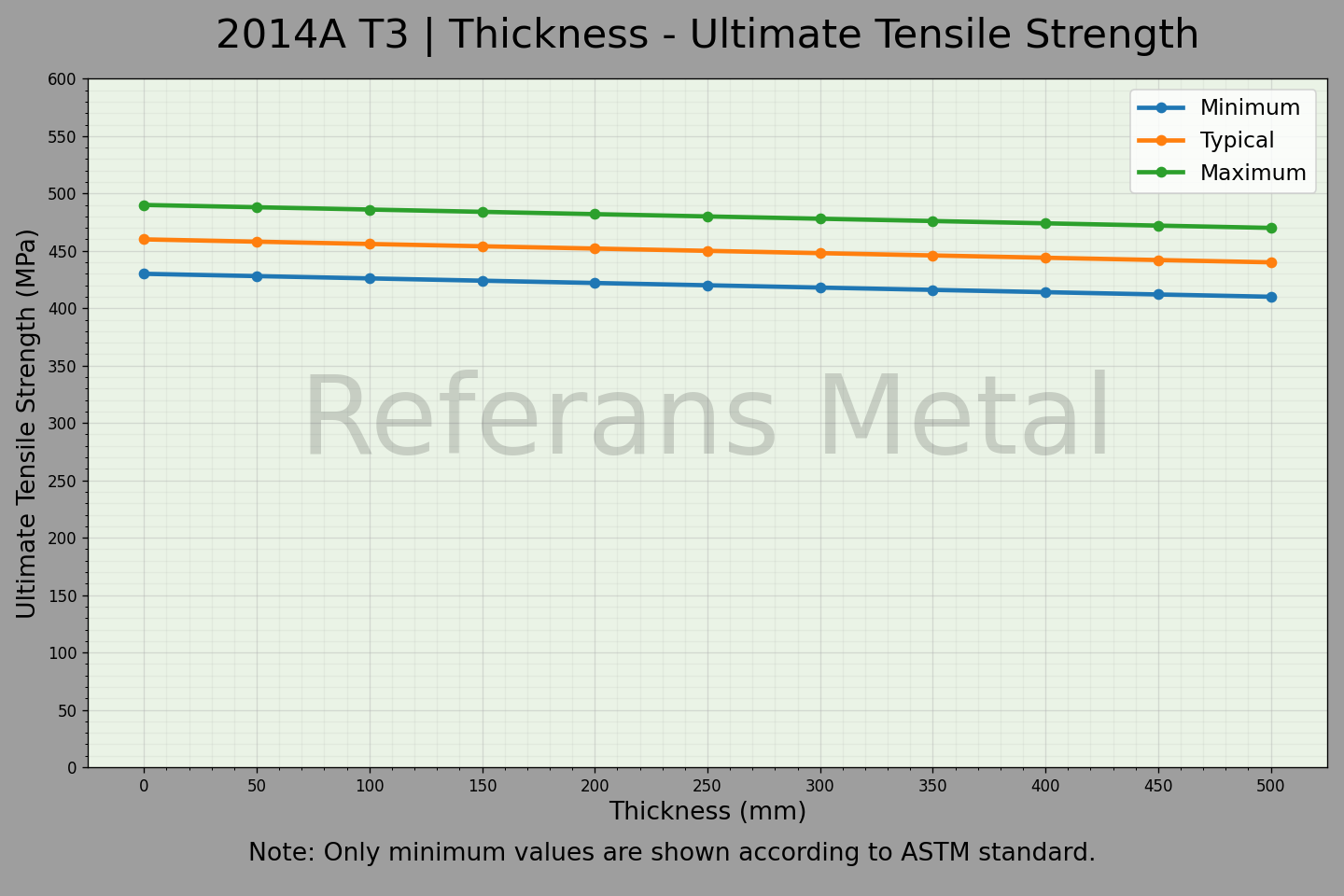
| 2014A T3 Thickness – Ultimate Tensile Strength Graph |
 |
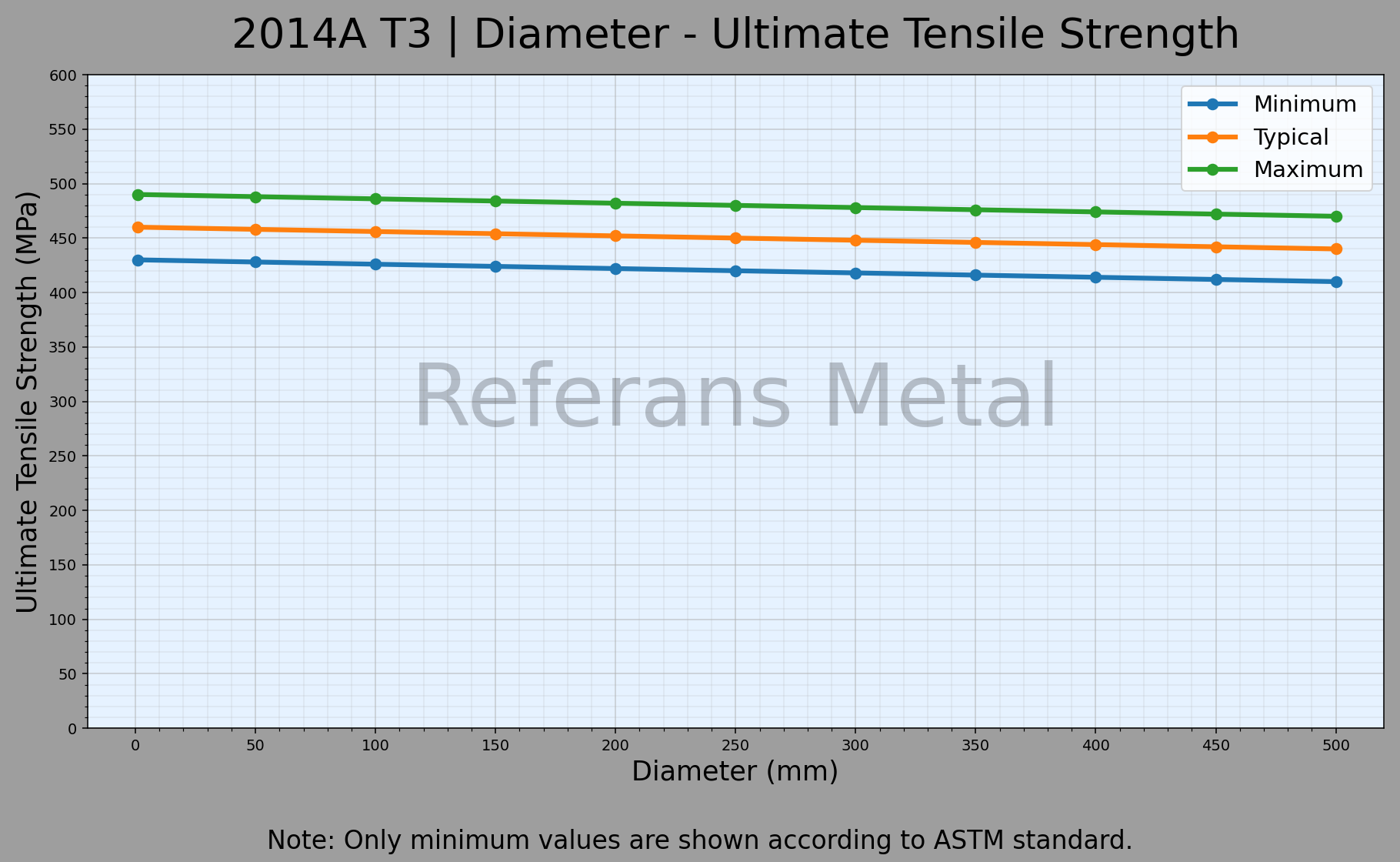
| 2014A T3 Diameter – Ultimate Tensile Strength Graph |
 |
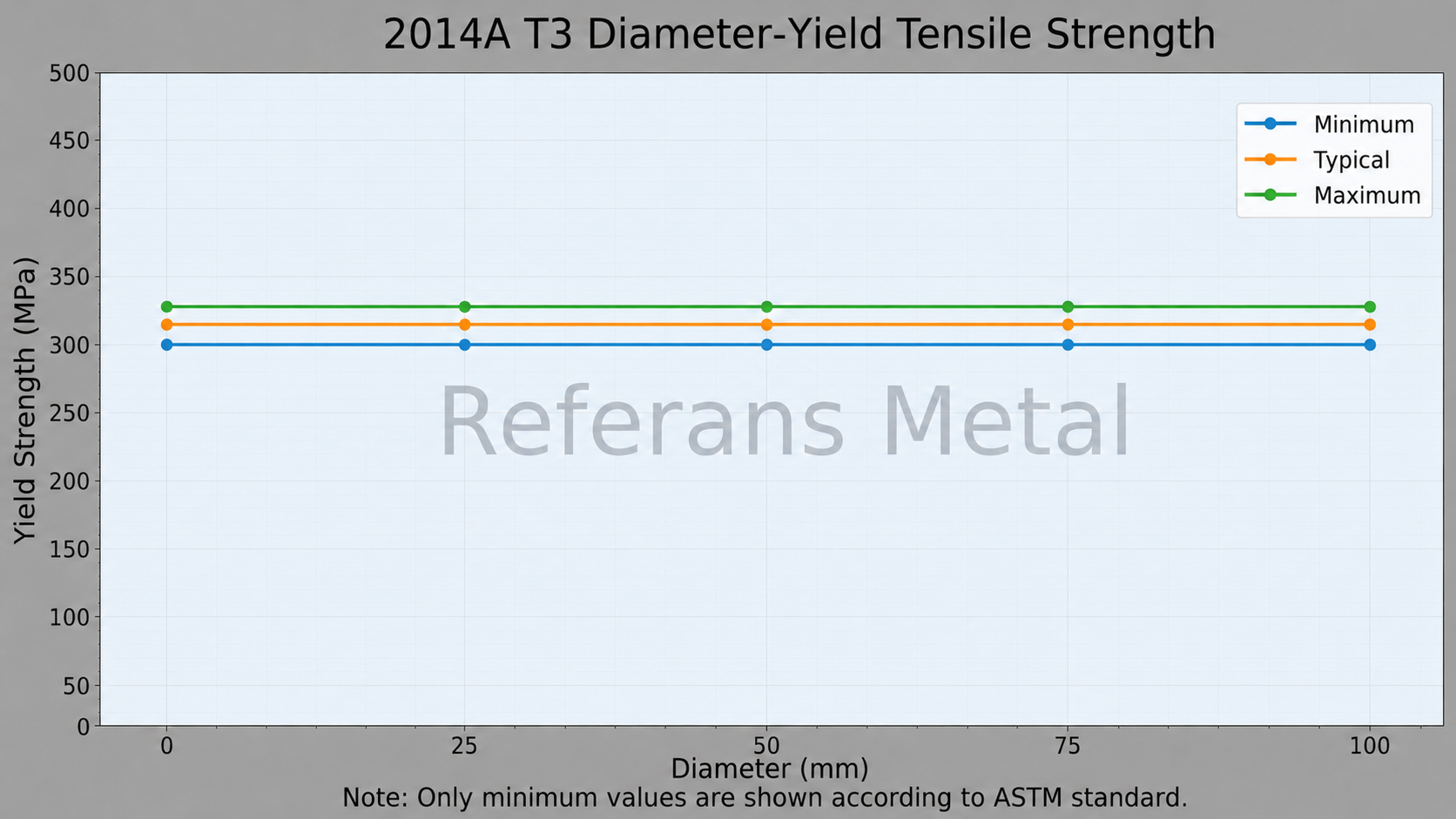
| 2014A T3 Diameter-Yield Tensile Strength |
 |
.png) 2014A T3 is widely used particularly in the aerospace and defense industries in structural components requiring high strength. Aircraft structural fittings, structural plates, machine parts, and high load-bearing components are typical applications of this alloy. Compared with alloy 2024, 2014A generally offers better machinability and in some cases higher compressive strength. In contrast, 7075 alloy may provide higher strength but usually exhibits lower machinability and more challenging formability characteristics.
2014A T3 is widely used particularly in the aerospace and defense industries in structural components requiring high strength. Aircraft structural fittings, structural plates, machine parts, and high load-bearing components are typical applications of this alloy. Compared with alloy 2024, 2014A generally offers better machinability and in some cases higher compressive strength. In contrast, 7075 alloy may provide higher strength but usually exhibits lower machinability and more challenging formability characteristics.STANDARDS FOR MATERIAL COMPOSITION
2014A T3 complies with the following standards:
• 2014A T3 Cold Drawn Round Bar; ASTM B211, UNS A92014, ASTM B928, WNR 3.1255, ISO AlCu4SiMg
• 2014A T3 Cold Drawn Sheet; ASTM B211, UNS A92014, ASTM B928, WNR 3.1255, ISO AlCu4SiMg
• 2014A T3 Cold Drawn Wire; ASTM B211, UNS A92014, ASTM B928, WNR 3.1255, ISO AlCu4SiMg
• 2014A T3 Cold Drawn Tube; ASTM B211, UNS A92014, ASTM B928, WNR 3.1255, ISO AlCu4SiMg
Characteristic Properties of 2014A T3:
- Strength: Excellent
- Machinability: Very Good
- Weldability: Poor (Filler welding preferred)
- Formability: Good
- Corrosion Resistance: Poor (Improves with coating)
- Heat Treatment: Yes
Some Well-Known Applications of 2014A T3:
Aerospace and aviation industry,
Pipelines and truck/machinery equipment,
Power plants and general automotive industry.
STOCK
2014A T3 is produced and supplied in rod/sheet and tube/profile forms.
- Rod / Sheet
- Tube / Profile
DELIVERY:
 Weight Calculator