
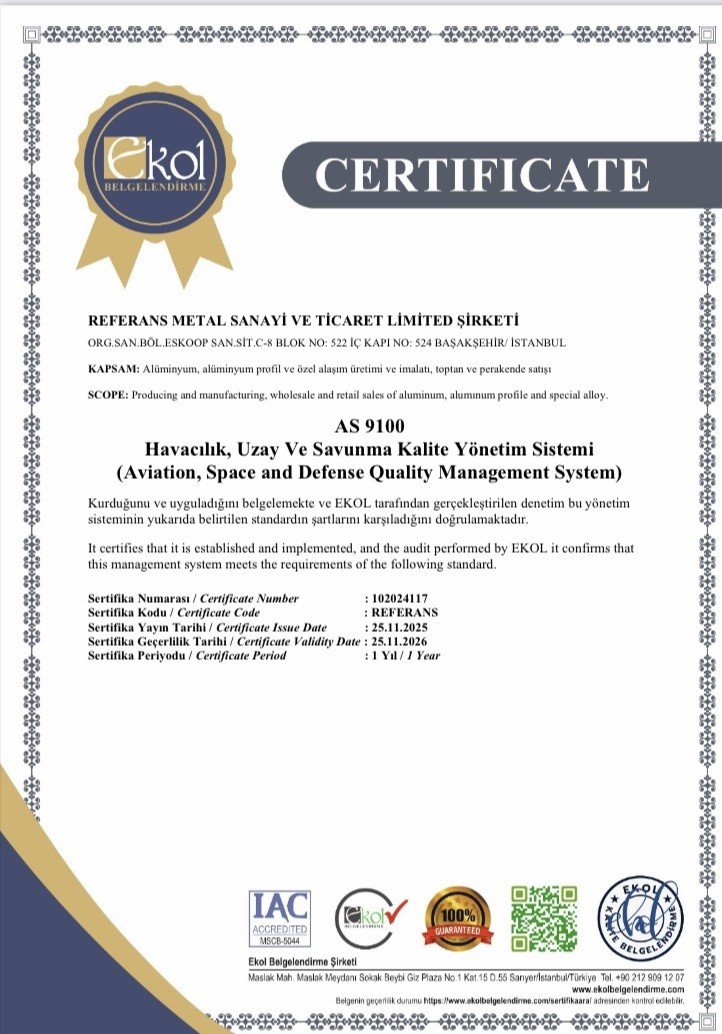
 AS 9100
 SPACE 2009
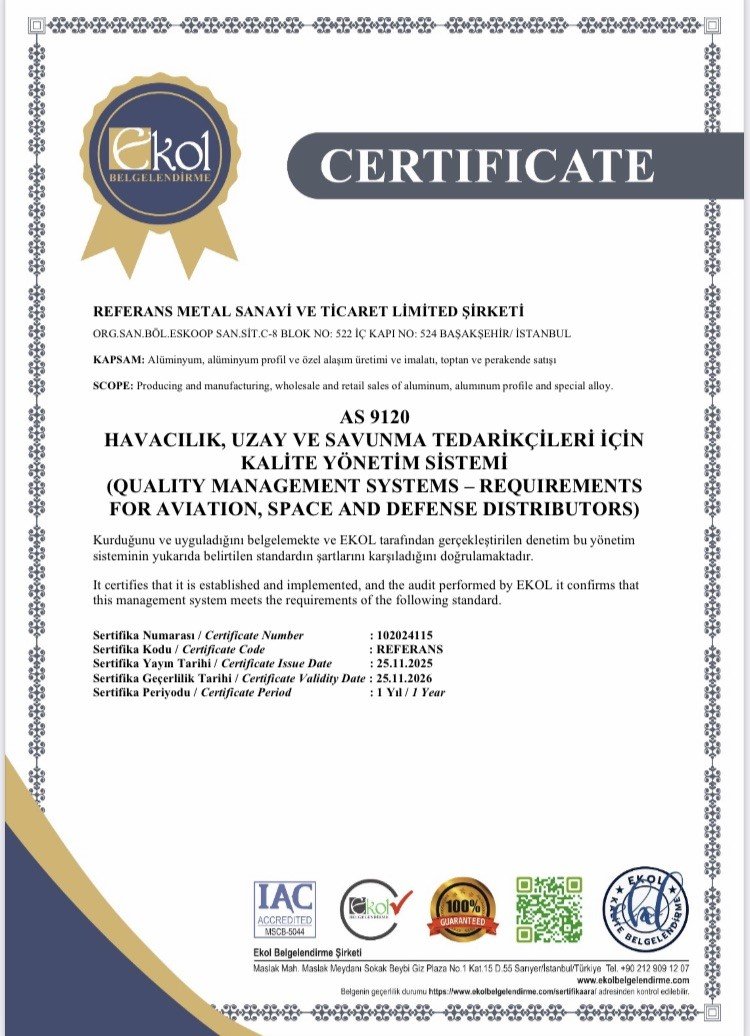 AS 9120




2219
EN AW / AlCu6Mn / 2219 / T8
| Chemical Properties | % Value |
| Silicon (Si) | 0,00 - 0,20 |
| Manganese (Mn) | 0,20 - 0,40 |
| Magnesium (Mg) | 0,00 - 0,02 |
| Copper (Cu) | 5,80 - 6,80 |
| Titanium (Ti) | 0,00 - 0,15 |
| Iron (Fe) | 0,00 - 0,30 |
| Zinc (Zn) | 0,00 - 1,00 |
| Aluminium (Al) | Balance |
| Physical Properties | Value |
| Density | 2.84 g/cm³ |
| Melting Point | 543 °C |
| Thermal Expansion | 22 µm/m°C |
| Modulus of Elasticity | 74 GPa |
| Thermal Conductivity | 170 W/m.K |
| Electrical Resistivity | 44% IACS |
| Mechanical Properties | Value |
| Yield Strength | 330 MPa |
| Ultimate Strength | 450 MPa |
| Shear Strength | 270 MPa |
| Elongation A50 mm | 15% |
| Hardness | 130 HB |
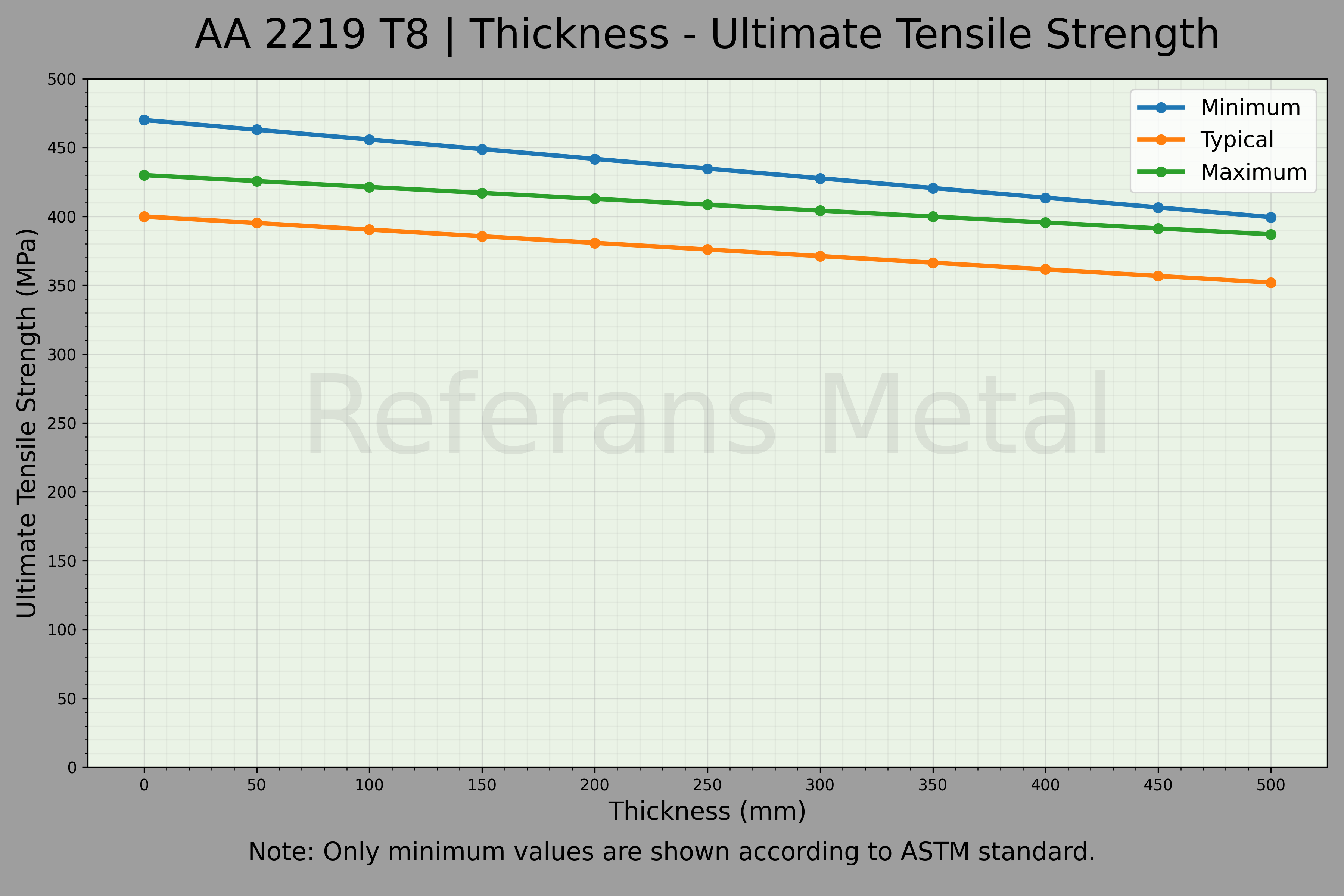
| 2219 T8 Thickness – Ultimate Tensile Strength Graph |
 |
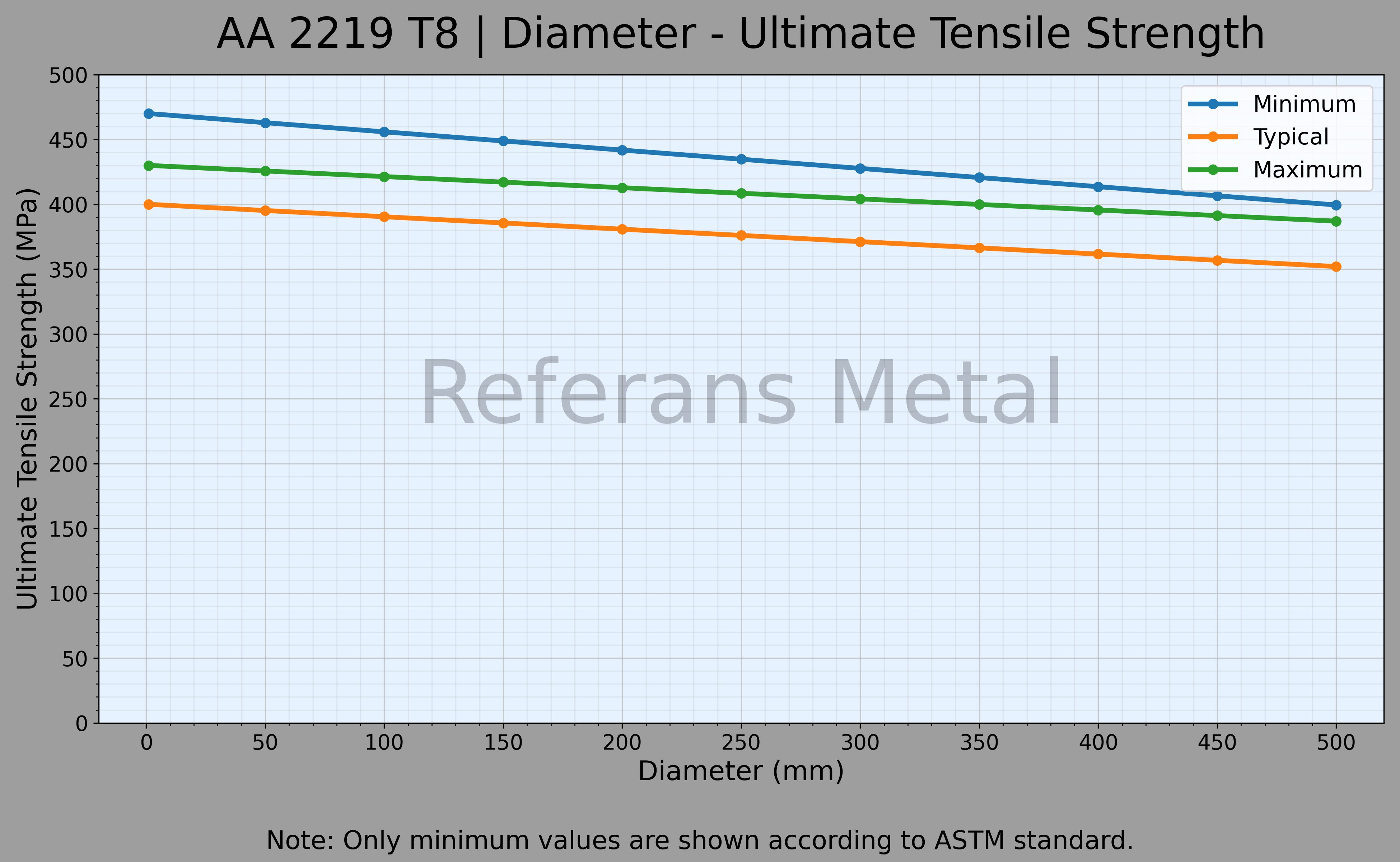
| 2219 T8 Diameter – Ultimate Tensile Strength Graph |
 |
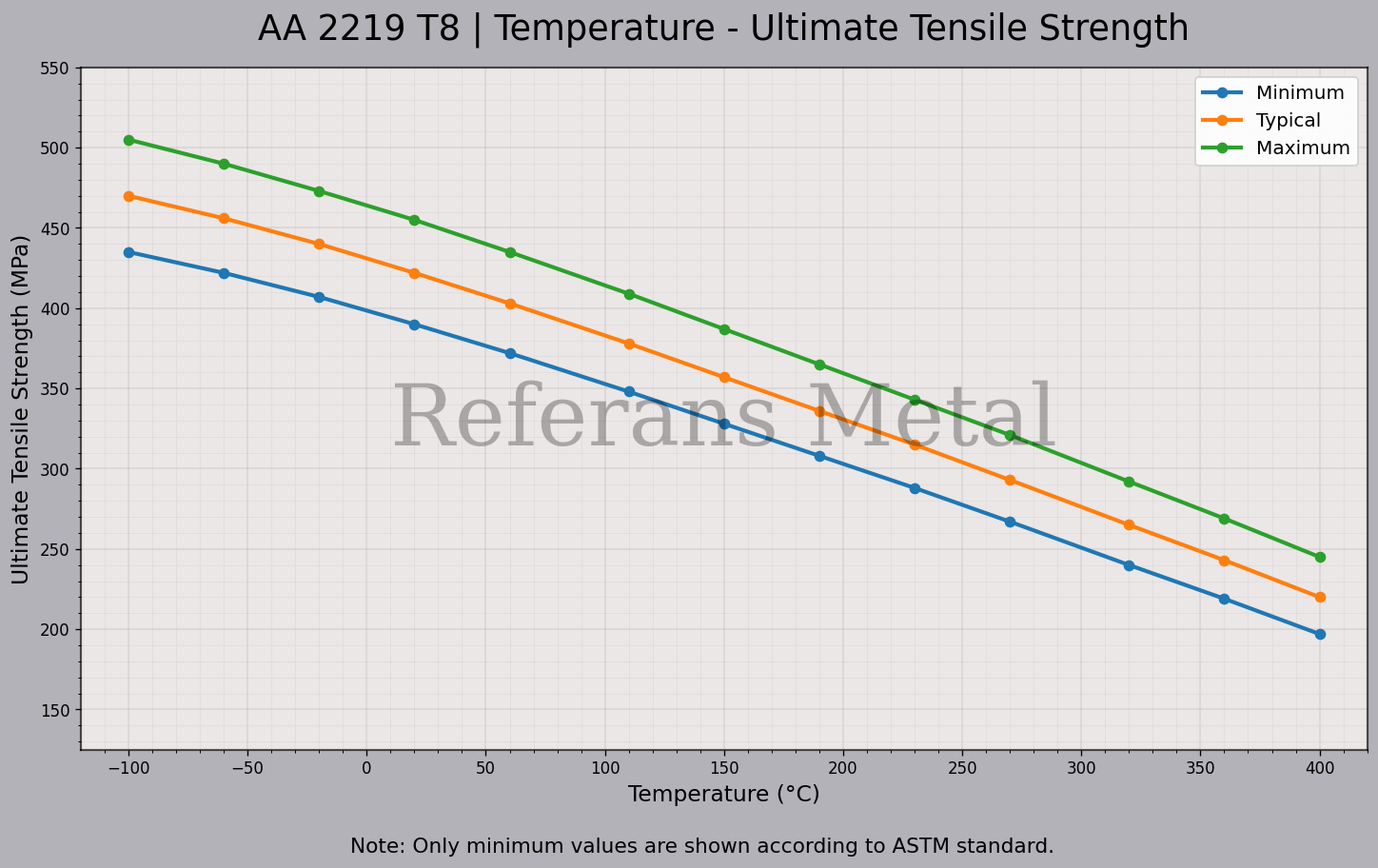
| 2219 T8 Temperature – Ultimate Tensile Strength Graph |
 |
2219-T8 aluminum alloy is a copper-based (Al-Cu) wrought alloy known for its high strength and excellent elevated temperature performance. It is widely preferred in aerospace applications due to its ability to maintain mechanical properties at high temperatures. The T8 temper is achieved through a combination of solution heat treatment, cold working, and artificial aging, which provides the alloy with high yield and tensile strength. Compared to general-purpose alloys such as 6061, 2219 offers significantly better high-temperature strength, while providing superior weldability compared to 7075.
In terms of corrosion resistance, 2219-T8 does not perform as well as 5xxx series alloys due to its copper content; however, this drawback can be largely mitigated with appropriate surface treatments and coatings. Its coatability is quite good, and when combined with anodizing and protective coatings, its resistance to environmental effects can be improved. Compared to 2024 alloy, 2219 offers better post-weld performance and more stable mechanical properties, although it has similar limitations in corrosion resistance.
Regarding machinability, 2219-T8 provides moderate performance. Compared to free-machining alloys such as 2011 or 2007, it requires more attention during machining operations. However, with proper cutting parameters and tooling, good surface finishes can be achieved. Its bending (formability) capability is limited due to the T8 temper; therefore, forming operations are typically performed before reaching the T8 condition. In this respect, 6061-T6 offers better formability.
In terms of vibration and fatigue behavior, 2219 alloy demonstrates a well-balanced performance. Its high-strength structure allows it to remain stable under vibrational loads, making it a reliable material for cryogenic tanks, rocket fuel tanks, and space structures. Although 7075 provides higher strength, 2219 can be a safer alternative in terms of fatigue and crack propagation. Therefore, it is preferred in systems subjected to long-term loading.
Weldability is one of the most important advantages of 2219 alloy. It offers significantly better welding performance than other high-strength aluminum alloys and largely retains its mechanical properties after welding. This feature makes it widely used in critical industries such as aerospace, defense, space, and cryogenic systems. While alloys like 5083 offer better corrosion resistance, 2219 stands out with its high-temperature strength and weldability.
MATERIAL COMPOSITION STANDARDS
2219 T8 is available in the following standards:
• 2219 T8 Sheet; ASTM B209, UNS A92219, ISO AlCu6Mn, MIL-A-22771
• 2219 T8 Plate; ASTM B209, UNS A92219, ISO AlCu6Mn, MIL-A-22771
Key Characteristics of 2219 T8:
- Strength: Very good
- Machinability: Poor
- Weldability: Quite good
- Formability: Average
- Corrosion Resistance: Considerable
- Heat Treatable: Yes
Well-Known Applications of 2219 T8:
Primarily used in the aerospace industry.
Used in pressure vessels, aircraft fuselages, landing gear,
and in many applications including bridges.
STOCK
We supply 2219 T8 in sheet/plate form.
- Sheet
- Plate
 Weight Calculator